
How to Introduce Eggs to Baby in 10 Essential Steps
Start introducing eggs to your baby around 6 months by offering small, fully cooked portions of the whole egg to promote tolerance. Eggs are a great first food because they provide essential nutrients like protein and vitamins that support your baby’s growth.
Begin with soft, mashed textures so it’s easy for your little one to swallow.
Gradually increase the variety and frequency to 2-3 times per week, mixing things up to keep mealtime interesting.
Always watch for allergy signs like rashes or digestive issues—these are important to catch early.
And remember, avoid runny eggs until after age 5 to keep things safe.
Serve eggs in safe, manageable pieces to prevent choking hazards.
Stay patient if your baby refuses at first—it’s all part of the process.
Keep going to uncover more helpful tips for smooth egg introduction!
Key Takeaways
- Start offering fully cooked eggs around 6 months, introducing both yolk and white gradually for allergy prevention. It’s best to take it slow and see how your baby responds.
- Serve eggs in soft, manageable forms like mashed, scrambled, or finely chopped to reduce choking risks. This way, it’s easier for your little one to handle and enjoy.
- Introduce eggs multiple times weekly using varied preparations to build tolerance and promote acceptance. Keep things interesting by switching up the textures and flavors.
- Monitor closely for allergic reactions such as skin rashes, vomiting, or breathing difficulties after each feeding. If you notice anything unusual, stop feeding eggs and consult your pediatrician.
- Use patience and persistence, mixing eggs with familiar foods and adjusting textures based on your baby’s developmental stage. Remember, every baby is different, so go at a pace that feels right for yours.
When Is the Best Age to Start Feeding Eggs to Your Baby?
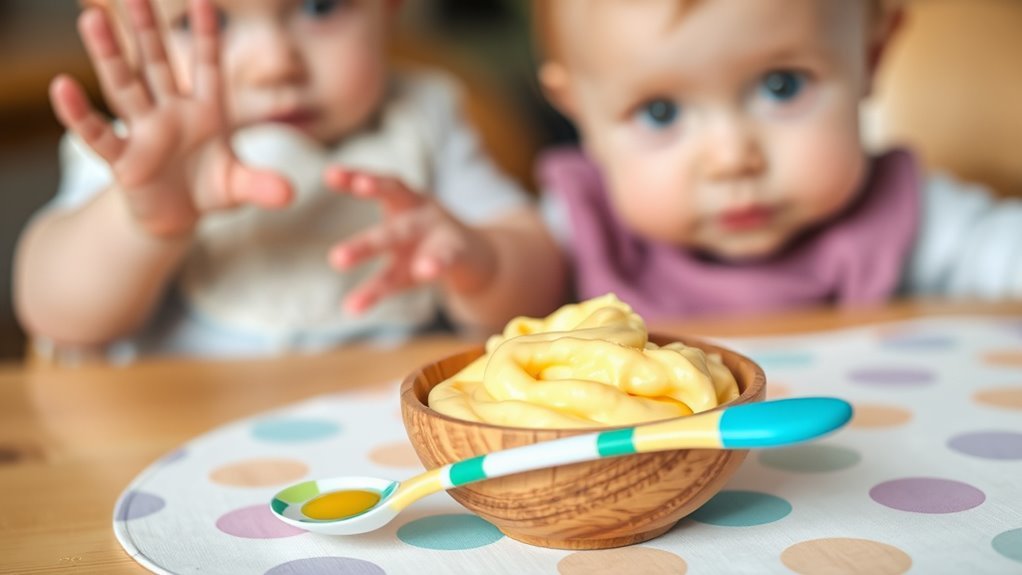
Although every baby develops at their own pace, you can generally start feeding eggs around 6 months, when most babies begin solids. This timing aligns with your baby’s growing digestive maturity and readiness for new foods.
Introducing eggs at this stage not only fits well with solid food introduction but also helps reduce the risk of developing an egg allergy later. If your baby has an increased allergy risk, some experts suggest starting as early as 4 months, but only under a healthcare provider’s guidance.
Waiting until after 6 months might delay your baby’s exposure to potential allergens, which could increase sensitivity. The American Academy of Pediatrics supports introducing eggs once your baby shows signs of readiness for solids.
What Parts of the Egg Should You Introduce First and Why?

You should introduce your baby to the whole egg, including both the white and yolk, from the start. This helps your baby get used to the full range of proteins and nutrients. It supports healthy growth and reduces allergy risks.
Offering small amounts of well-cooked eggs around six months encourages immune tolerance. This sets a strong foundation for your baby’s health. Starting early can really make a difference.
Whole Egg Benefits
When should you introduce the different parts of an egg to your baby? Introducing the whole egg early supports allergy prevention and provides essential nutrients crucial for your baby’s development.
Cooked eggs are safe and nutrient-rich, offering a balanced introduction to both yolk and white. Starting with the whole egg in small amounts helps your baby get used to the flavors and textures together.
Here’s why introducing the whole egg matters:
- Promotes early tolerance, lowering allergy risks.
- Provides essential nutrients like choline and vitamin D for brain growth.
- Combines high-quality proteins and healthy fats in one food.
- Encourages acceptance by familiarizing your baby with the entire egg.
Always serve fully cooked eggs to keep your baby safe and healthy. It’s a simple step that makes a big difference!
White And Yolk
Since egg yolks are softer and packed with nutrients like choline and vitamin D, many parents start by introducing yolks first to make digestion easier for their baby. However, for allergy prevention and early tolerance, it’s best to introduce eggs by offering both the yolk and egg whites eventually.
Egg whites carry a higher allergenic risk, so you should wait until your baby is around 9 to 12 months old before introducing them. Always serve both yolk and egg whites fully cooked to reduce the risk of infection.
Introducing both parts as baby food exposes your baby’s immune system to the full range of egg proteins, helping build early tolerance. This balanced approach supports safe, nutritious introduction of eggs while minimizing allergy risks.
How to Prepare Eggs Safely for Babies
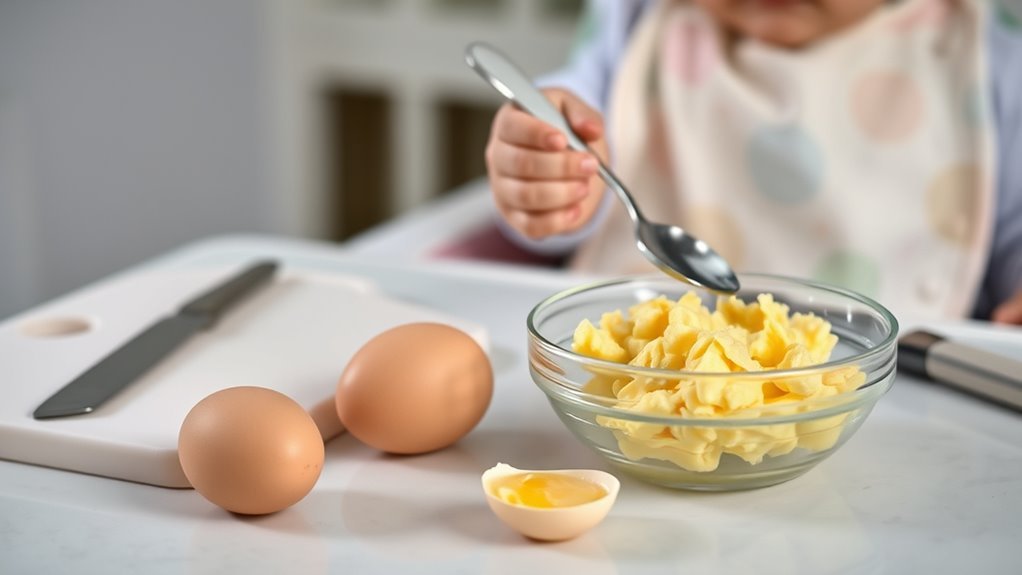
Although eggs are a nutritious choice for babies, you must prepare them fully cooked to eliminate the risk of Salmonella and reduce allergenic proteins. Raw eggs or runny yolks increase Salmonella risk and the chance of foodborne illness, so avoid them, especially for children under five.
Focus on safe preparation to protect your little one.
Here are four tips to prepare eggs safely for your baby:
- Cook eggs thoroughly by boiling, scrambling, or baking to ensure fully cooked eggs and destroy harmful bacteria.
- Serve eggs in soft, manageable forms like mashed or finely chopped to minimize choking hazard.
- Use pasteurized eggs if you need to prepare dishes with runny parts but want to keep them safe.
- Always store eggs in the refrigerator and check freshness before cooking to prevent foodborne illness.
Starting With Small Egg Portions and Increasing Gradually
Start by offering your baby a tiny amount of well-cooked, mashed egg—about ¼ teaspoon—to watch for any reactions.
Slowly increase the portion size as your baby shows they tolerate it well.
Always give small, easy-to-eat servings and wait a few days before adding more to keep your baby safe.
Begin With Tiny Servings
When you introduce eggs to your baby, begin with a tiny portion like ¼ teaspoon of well-cooked, mashed egg to see how they react. Starting with a small amount helps you observe reaction carefully and guarantees your baby’s safety.
Always use tiny servings of plain, well-cooked egg without added salt or spices. Monitor for reactions over a few days before increasing the portion.
Here’s how to start:
- Offer a small amount to minimize allergy risks and choking hazards.
- Observe reaction closely for any signs of intolerance or allergy.
- Use only well-cooked eggs to aid digestion and safety.
- Gradually increase servings but wait at least three days between changes.
This approach helps your baby adjust comfortably to eggs.
Gradually Increase Amounts
As your baby tolerates the initial small serving of egg, you can slowly increase the amount over days or weeks. Just keep a close eye out for any signs of allergy or intolerance.
Start by offering a small amount, like ¼ teaspoon of well-cooked mashed egg. Then, gradually increase the serve size while you watch your baby’s reactions.
Be sure to observe their tolerance closely. Wait at least three days before raising portions or trying new egg preparations.
Introducing eggs in various forms—mashed, strips, or baked goods—can help your baby get used to different textures.
Try to serve eggs twice weekly to encourage tolerance development and reduce allergy risks.
How to Spot Egg Allergy Signs in Babies
How can you tell if your baby is allergic to eggs? Spotting an egg allergy early is crucial to keep your little one safe. Allergic reactions can show up quickly or take a few hours, so you need to watch closely for signs of allergy and symptoms in babies after introducing eggs.
Here are key signs to watch for:
- Skin reactions like hives, redness, rash, or swelling of the face or lips indicate an allergic response.
- Digestive issues such as vomiting, diarrhea, or stomach pain may signal a food allergy.
- Respiratory problems including wheezing, coughing, nasal congestion, or difficulty breathing require immediate attention.
- Eczema flare-ups or other skin irritations can also be a sign of egg allergy.
If you notice any of these symptoms, contact your pediatrician promptly to address the allergic response and keep your baby safe.
It’s always better to be cautious when it comes to your baby’s health!
Reducing Choking Risks When Serving Eggs to Babies
Because your baby’s chewing and swallowing skills are still developing, you need to serve eggs in soft, manageable forms like mashed or scrambled, and cut into small, bite-sized pieces to reduce choking risks. Avoid offering large chunks of egg whites or yolks, as these can become choking hazards.
Always fully cook eggs to guarantee they’re soft and easy for your baby to chew, preventing risks associated with raw or runny eggs. During mealtime, supervise your baby closely and make sure they’re seated upright in a highchair to minimize accidental choking.
It’s normal for babies to gag as they learn to eat, but you should recognize this as different from choking. Teach yourself basic first aid so you’re prepared if an emergency arises.
Safely Introducing Lightly Cooked or Runny Eggs
While you might be enthusiastic to introduce your baby to a variety of egg preparations, it’s important to avoid lightly cooked or runny eggs until they’re at least 5 years old due to the risk of Salmonella infection.
Fully cooking eggs until both the white and yolk are firm markedly reduces bacterial contamination, ensuring food safety for young children.
When your child is older, you can cautiously offer lightly cooked eggs, but only use pasteurized eggs to minimize risks.
Always provide supervision during meals and watch closely for any signs of foodborne illness.
To safely introduce lightly cooked eggs, remember to:
- Wait until your child is at least 5 years old before offering runny or partially cooked eggs.
- Use fully cooked eggs for babies and toddlers to avoid bacterial contamination.
- Choose pasteurized eggs when serving lightly cooked eggs to older children.
- Supervise your child at mealtime and monitor for signs of foodborne illness closely.
How Often to Offer Eggs to Your Baby
You can offer eggs to your baby about two to three times a week to balance nutrition and allergy prevention. Try different preparations like scrambled, boiled, or baked to introduce new textures and flavors.
Always watch for any allergy reactions as you increase servings gradually. It’s all about finding what works best for your little one!
Recommended Serving Frequency
Introducing eggs to your baby about two to three times per week helps provide steady nutrition and allows you to watch for any allergic reactions.
This serving frequency balances the benefits of repeat exposure with the need to supervise for reactions carefully. When feeding eggs, you’ll encourage your baby’s acceptance and reduce the risk of food allergies by maintaining this regular schedule.
Keep in mind that diversity in preparation matters, but you’ll explore that later.
Here’s why this schedule works for you and your baby:
- Consistent serving frequency supports steady nutrient intake.
- Repeat exposure can lower food allergy risks.
- Monitoring for reactions at each introduction ensures safety.
- A steady rhythm builds comfort with feeding eggs regularly.
Varied Egg Preparations
Offering eggs to your baby about three times a week strikes a good balance between exposure and comfort. Use varied preparations like scrambled eggs, hard-boiled eggs, and egg muffins to introduce different textures and flavors.
Always serve a well-cooked egg in small, manageable portions, finely chopped if needed, to guarantee safety and ease of eating. This approach encourages acceptance and supports your baby’s nutritional needs.
| Preparation | Texture | Serving Tip |
|---|---|---|
| Scrambled eggs | Soft, fluffy | Serve warm, finely chopped |
| Hard-boiled eggs | Firm, easy to hold | Cut into small pieces |
| Egg muffins | Baked, slightly dense | Offer in bite-sized chunks |
Varied preparations help your baby enjoy eggs without monotony and promote dietary diversity. So, mixing it up keeps things interesting and tasty for your little one!
Monitoring Allergy Reactions
Although eggs are a nutritious addition to your baby’s diet, it’s important to offer them about two to three times per week. This helps you carefully monitor for any allergic reactions while also helping build tolerance.
When you introduce eggs, start with small amounts and watch your baby closely for any signs of allergic reactions during and after feeding. Keep track of each feeding and any reactions you notice. This way, you’ll have clear information to share with your healthcare provider if needed.
Here’s how to monitor effectively:
- Introduce eggs gradually, watching for immediate and delayed signs.
- Offer eggs in various preparations to see which your baby tolerates best.
- Record each feeding and any reactions to spot patterns.
- Increase frequency only if no allergic reactions appear after several exposures.
Stay observant to guarantee your baby’s safety and comfort. You’ve got this!
Egg Textures and Recipes for Different Baby Stages
When your baby is just starting to try eggs, you’ll want to serve them smooth and well-mashed or pureed to make swallowing easy and safe.
As your baby grows and develops chewing skills, you can introduce soft-cooked egg strips or small, bite-sized egg pieces. Offering well-cooked eggs in textures suited to your baby’s age helps prevent choking and supports their eating development.
Simple egg recipes for babies like baked egg muffins or mini omelets can be cut into manageable portions. Older babies enjoy finger foods such as egg toast strips or egg-filled pancakes.
| Baby Stage | Egg Textures & Recipes |
|---|---|
| 6 months | Mashed egg, pureed eggs |
| 8-10 months | Soft-cooked egg strips, mini omelets |
| 12+ months | Bite-sized egg pieces, egg toast strips |
Adjust textures as your baby grows to keep mealtime safe and enjoyable.
What to Do If Your Baby Refuses Eggs
If your baby refuses eggs, don’t worry—you can try different textures like mashed, scrambled, or baked to discover what they prefer. Sometimes, textured foods make a big difference in food acceptance.
Remember, patience is key, as new foods often take time to be accepted. Here’s what you can do:
- Offer eggs in manageable pieces, soft and well-cooked, to make eating easier and safer.
- Use repeated exposure by presenting eggs multiple times over days or weeks; babies often need several tries before accepting new foods.
- Mix eggs with familiar favorites or purees to gently introduce the flavor without overwhelming your baby.
- Stay patient and persistent—refusing eggs is normal at first, but with time, your baby’s acceptance can grow.
Frequently Asked Questions
How Do I Introduce Eggs to My Baby for the First Time?
Start by offering a small teaspoon of well-cooked, mashed egg mixed with breast milk or formula.
Watch closely for any allergic reactions, and gradually increase the amount while keeping eggs soft and easy to swallow.
It’s important to go slow and make sure your baby is comfortable with the new texture and taste.
If all goes well, you can slowly give a bit more over time.
What Is the 3 3 3 Rule for Eggs?
The 3-3-3 rule for eggs means you introduce eggs at 6 months, offer them three times a week, and watch for reactions over three days.
This method lowers allergy risks by gradually building your baby’s tolerance. It’s a simple way to help your little one get used to eggs without overwhelming their system.
What Is the 3 6 9 Rule for Babies?
The 3-6-9 rule helps you introduce eggs safely: start at 3 months for high allergy risk babies, 6 months for most, and 9 months with caution if allergies or eczema exist.
You’ll watch for reactions carefully. It’s all about keeping your little one safe and comfortable while trying new foods.
How Quickly Would a Baby React to an Egg Allergy?
When it comes to egg allergy, you’ll know pretty quick—usually within minutes to two hours.
Keep a close eye on your baby because reactions can hit fast, like lightning out of a clear blue sky.
Conclusion
Introducing eggs to your baby can be a smooth journey when you follow these essential steps. Did you know that about 8% of children under 5 experience egg allergies? Starting with small portions, watching for reactions, and gradually increasing servings helps keep your baby safe.
Remember, patience and variety are key—offer different textures and recipes to find what your little one loves. With care, eggs can become a nutritious staple in your baby’s diet.
By introducing eggs carefully and paying attention to your baby’s reactions, you not only reduce allergy risks but also ensure they get important nutrients like protein and vitamins. Keep the process fun and flexible, trying out various egg preparations like scrambled, boiled, or mixed into other foods. This way, eggs can become a regular, healthy part of your baby’s meals, supporting their growth and development every step of the way.