What Do Baby Rabbits Eat and How Do You Feed Them
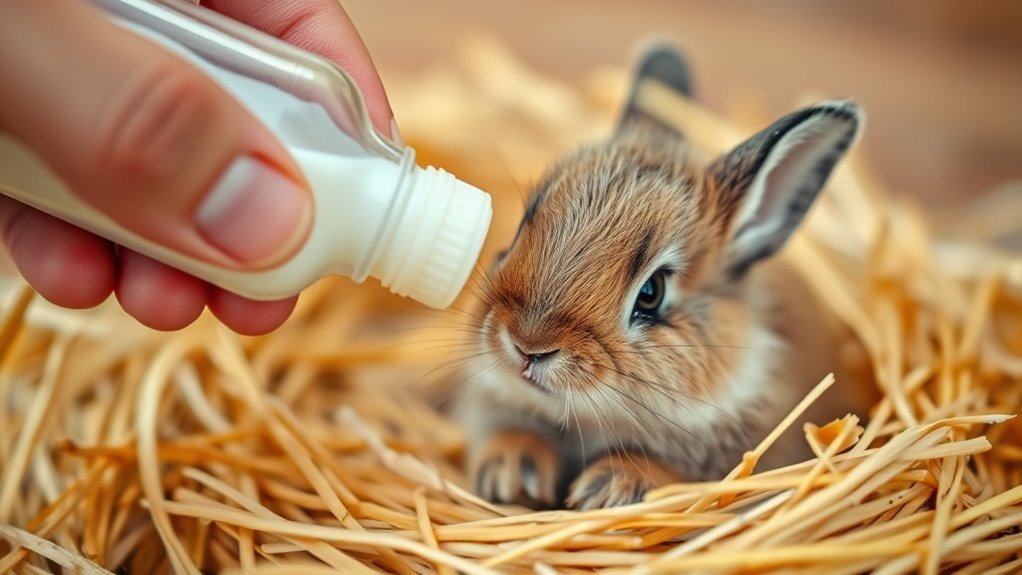
You start feeding baby rabbits with their mother’s milk, or a milk replacer if needed, to support early growth. This is super important because their tiny bodies need all the nutrients they can get in those first few weeks.
Around 2 to 3 weeks, you can introduce small amounts of hay to help prepare their digestion.
Between 6 and 8 weeks, gradually shift their diet from milk to primarily hay. Adding fresh greens slowly is key here to avoid upsetting their little tummies.
When feeding them, use a syringe or eyedropper gently and do it in a calm space to keep them comfortable.
Keep going with this routine, and you’ll discover how to guarantee their healthy development every step of the way. It’s all about patience and paying attention to what your baby rabbits need as they grow.
Key Takeaways
- Baby rabbits initially depend on mother’s milk and begin nibbling hay around 2-3 weeks to prepare their digestive system.
- Weaning starts at 6-8 weeks, gradually shifting from milk to primarily alfalfa hay and introducing small amounts of fresh greens.
- Use a syringe or eyedropper for feeding milk replacer if mother is unavailable, feeding gently with rabbits kept upright to avoid choking.
- Gradually expand their diet with a variety of fresh greens as they mature, ensuring a slow transition to prevent digestive upset.
- Maintain a calm, dim environment during feeding and avoid rushing the transition to support healthy growth and reduce stress.
It’s really all about taking things slow and steady with these little guys. They need that gentle care to help them grow strong and healthy!
Feeding Baby Rabbits: What to Give at Each Growth Stage

Although baby rabbits depend entirely on their mother’s milk at first, you’ll notice them starting to nibble on hay around 2 to 3 weeks old. At this stage, feeding focuses on milk, but introducing hay gently prepares their digestive system for solid foods.
Baby rabbits rely on mother’s milk initially but begin nibbling hay by 2 to 3 weeks old.
If the mother isn’t available, a specially formulated milk replacer is essential to mimic natural nutrition. Between 6 to 8 weeks, you’ll begin the weaning process, gradually shifting their diet from milk to hay—preferably alfalfa for its higher protein content—along with small amounts of greens.
By 6 weeks, hay becomes their primary food, supporting healthy growth stages. As baby rabbits mature, you can slowly add a variety of fresh greens to diversify their diet.
Proper timing and careful progression during each growth stage guarantee they develop strong digestive systems and thrive. Your attentive feeding routine sets a solid foundation for their long-term health.
Safe and Stress-Free Feeding Techniques for Baby Rabbits
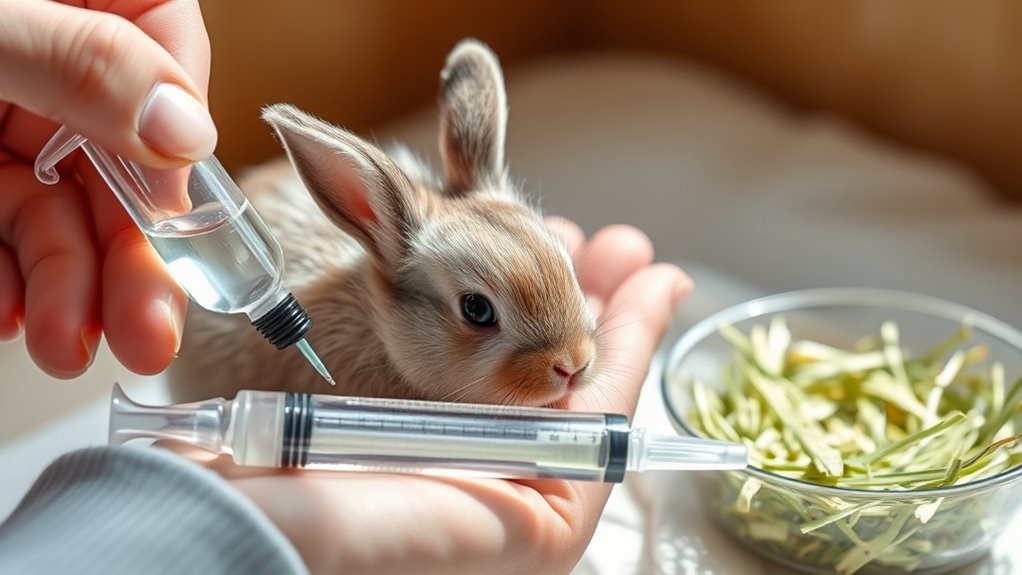
When feeding baby rabbits, you’ll want to use a syringe or eyedropper to keep them upright and gently guide the liquid toward the side or bottom of their mouth. This helps prevent choking.
Start with just a few drops per feeding and increase gradually based on their age and weight. Use a gentle, consistent feeding technique to avoid aspiration and reduce stress.
Create a calm, quiet environment—dim lighting helps promote relaxed feeding behavior. As their eyes open, begin to introduce solids like hay and greens carefully, supporting a smooth transition from milk to solid foods.
Avoid rushing this process to minimize digestive upset. By maintaining a stress-free environment and feeding routine, you help baby rabbits feel secure and comfortable during feeding times.
This careful approach ensures they get the nutrition they need while preventing common feeding issues. It really paves the way for healthy growth and development.
Frequently Asked Questions
What Do You Feed a Baby Bunny Without a Mother?
You feed a motherless baby bunny kitten or goat milk replacer using a syringe, starting with small amounts every six hours.
Keep them warm and quiet, and introduce solids gradually once their eyes open.
It’s important to be gentle and patient with them. They need lots of care to grow strong!
How Long Can a Baby Bunny Go Without Food?
You know what they say, “An ounce of prevention is worth a pound of cure.”
A baby bunny can go 24-48 hours without food, but don’t wait—feed it promptly.
Doing so helps avoid dehydration and serious health risks.
How Often Do Newborn Baby Rabbits Need to Be Fed?
You need to feed newborn baby rabbits every 6 hours during their first few weeks. This frequent schedule guarantees they get enough nutrition and mimics natural nursing patterns.
It really helps them grow healthy and strong. Keeping a regular feeding routine is key, so they don’t miss out on any important nutrients.
How to Keep Wild Baby Rabbits Alive?
If you want to keep wild baby rabbits alive, don’t throw a wild party—minimize handling.
Feed carefully with proper milk replacer, and release them at dusk once they’re ready to nibble hay and greens on their own.
It’s all about being gentle and patient. Just let them grow at their own pace!
Conclusion
Feeding baby rabbits properly is essential for their growth and health. Did you know that 80% of a rabbit’s digestive system depends on fiber from hay? This means introducing hay early is really important.
By following safe, stress-free feeding techniques and adjusting their diet as they grow, you’ll help your little bunnies thrive. It’s all about patience and paying close attention to their needs.
Remember, your careful attention now sets the foundation for a happy, healthy rabbit in the future. Keep it gentle and consistent!
Feeding baby rabbits the right way, including plenty of hay and fresh water, is key to their development. As they grow, gradually introduce fresh vegetables and pellets to balance their diet. Always watch for any signs of discomfort or digestive issues. With the right care and proper feeding, your baby rabbits will grow into strong, healthy adults. So, keep it simple, safe, and stress-free—your little bunnies will thank you for it!