Where Do Children Sleep Best?
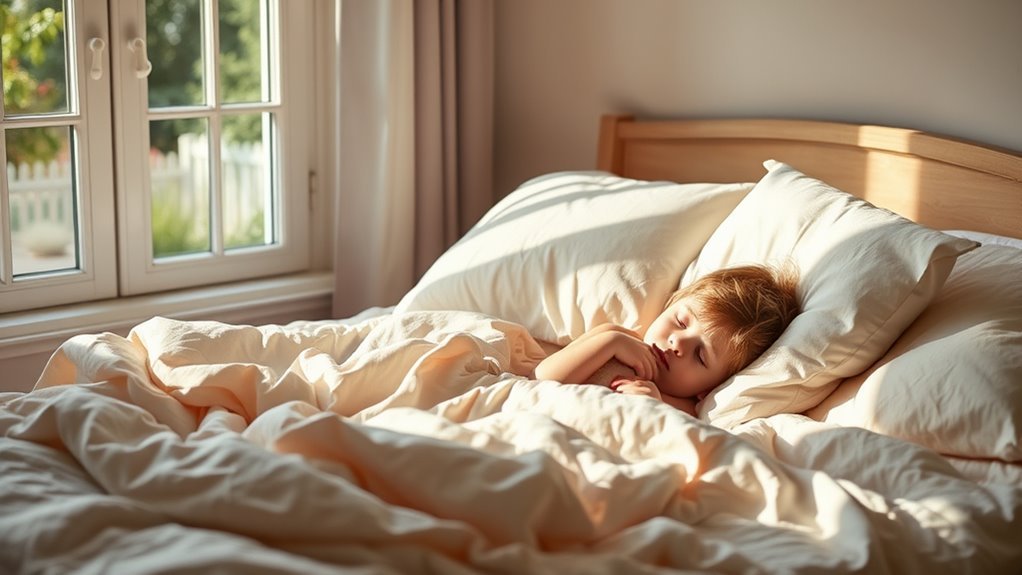
Your child sleeps best in a quiet, dark room with a comfortable, supportive mattress and breathable bedding to keep them cool. Creating the right sleep environment is key to helping your little one get restful, restorative sleep.
Keeping the temperature between 65-70°F helps create a cozy atmosphere that’s just right—not too hot or too cold.
Stick to a consistent bedtime routine and regular schedule to help your child fall asleep faster and stay asleep longer.
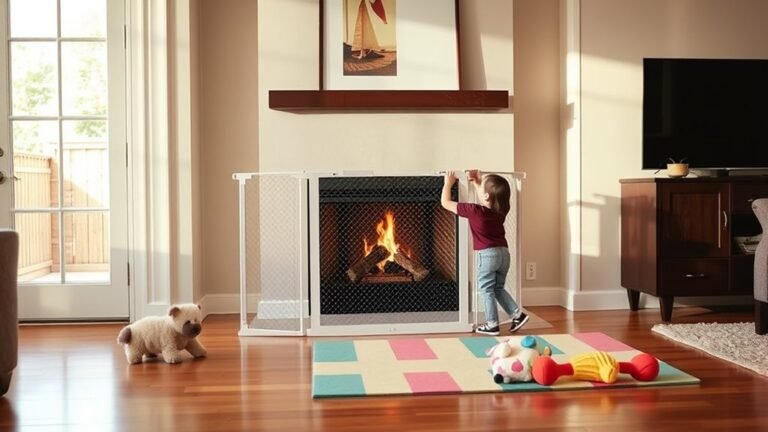
Removing electronic distractions and securing the sleep space adds safety and peace of mind.
If you want to improve your child’s sleep even more, there are simple ways to support natural sleep rhythms. These small changes can make a big difference in how well your child sleeps through the night.
Key Takeaways
– Children sleep best in quiet, dark, and cool rooms with temperatures between 65-70°F (18-21°C).
A supportive and comfortable mattress with breathable bedding really helps improve their sleep quality.
- Having consistent sleep routines and regular schedules is key. It helps kids fall asleep faster and stay asleep longer.
- Keeping sleep spaces clutter-free and safe is important too. It reduces hazards and makes the environment feel secure and restful.
- Also, try to limit electronic devices and screen time before bedtime. This supports better sleep for children overall.
Ideal Environments for Children’s Sleep
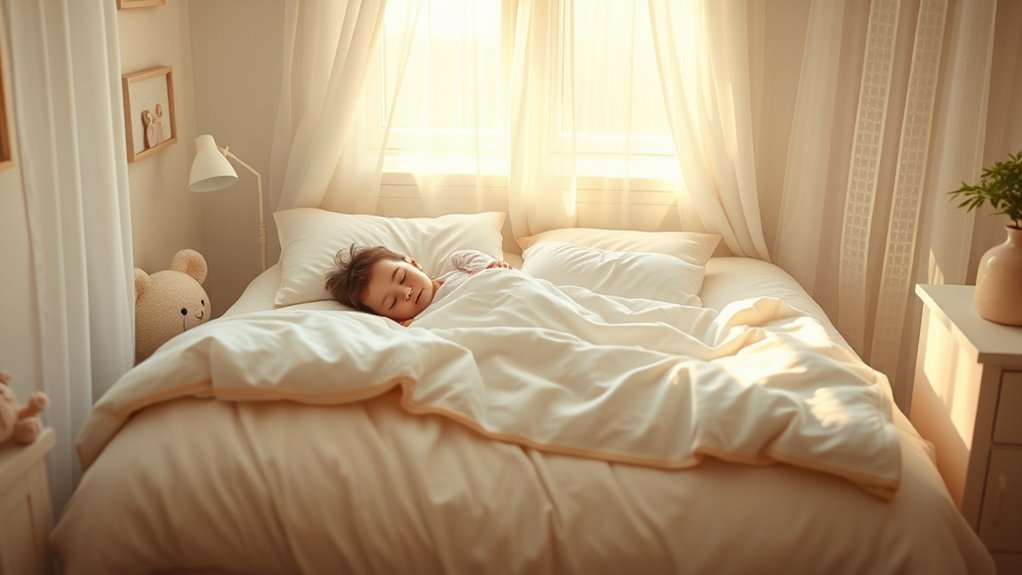
When you create a quiet, dark, and cool room with a temperature between 65-70°F (18-21°C), you set the stage for your child to sleep soundly. A comfortable, supportive mattress paired with breathable bedding ensures they rest well throughout the night.
Keep electronic devices and noise distractions out of the sleeping area to promote longer, uninterrupted sleep. Establishing a consistent bedtime routine and regular sleep schedule helps your child fall asleep faster and stay asleep longer.
Also, make sure the sleeping space is safe by securing furniture and removing hazards, giving both you and your child peace of mind. By focusing on these elements, you create an ideal environment that supports your child’s healthy sleep habits and overall well-being.
Factors Influencing Sleep Quality in Children
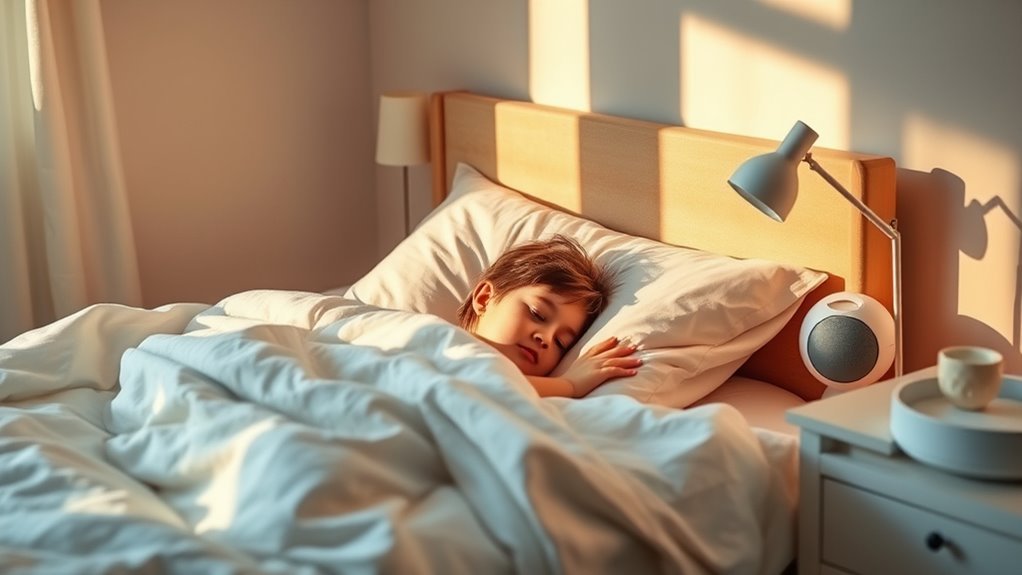
Although many factors affect your child’s sleep quality, creating a consistent bedtime routine and maintaining a regular sleep schedule play crucial roles. You can boost their rest by ensuring they sleep in a quiet, dark, and cool room, ideally between 65-70°F (18-21°C).
A comfortable, supportive mattress and bedding also make a big difference. Reducing screen time at least an hour before bed helps your child fall asleep faster and sleep more soundly.
Don’t forget that adequate exposure to natural light during the day supports their circadian rhythm. This promotes better sleep at night.
Frequently Asked Questions
When to Use Were and Where?
You use “were” for past tense or hypothetical situations, like “They were happy” or “If I were you.”
Use “where” to indicate location or ask questions, such as “Where is the park?” or “I know where.”
See? It’s pretty straightforward once you get the hang of it! Just remember: “were” deals with time or imagination, and “where” deals with places or directions.
What Are the Two Meanings of Where?
You’ll find that “where” has two meanings: it can mean a physical place, like a room, or a stage in a process, like a point in a routine.
You’ll use it to ask about location or timing.
What Is an Example of Where?
An example of “where” is in the sentence, “I know where you left your keys.”
You use “where” to ask or specify the place something happens or exists. It helps you understand the location clearly.
Where Wear and Were?
You use “where” to ask about location,
“wear” when talking about clothing you put on,
and “were” as the past tense of “are” for plural subjects or “you.”
Don’t confuse their meanings or sounds.
It’s easy once you get the hang of it!
Conclusion
You might believe that children sleep best in their own rooms, but the truth is more complex. While independence can promote good rest, many kids actually sleep better when they feel close and secure—sometimes with a parent nearby.
Understanding what truly helps your child feel safe and comfortable can transform their sleep quality. So, trust your instincts and create a space that meets their unique needs.
Because where they sleep best is where they feel most loved. Creating a secure and comforting environment is key to helping your child get the restful sleep they need. Remember, the best sleep happens when your child feels safe, loved, and comfortable—whether that’s in their own room or close to you. It’s all about what makes them feel cared for and secure.