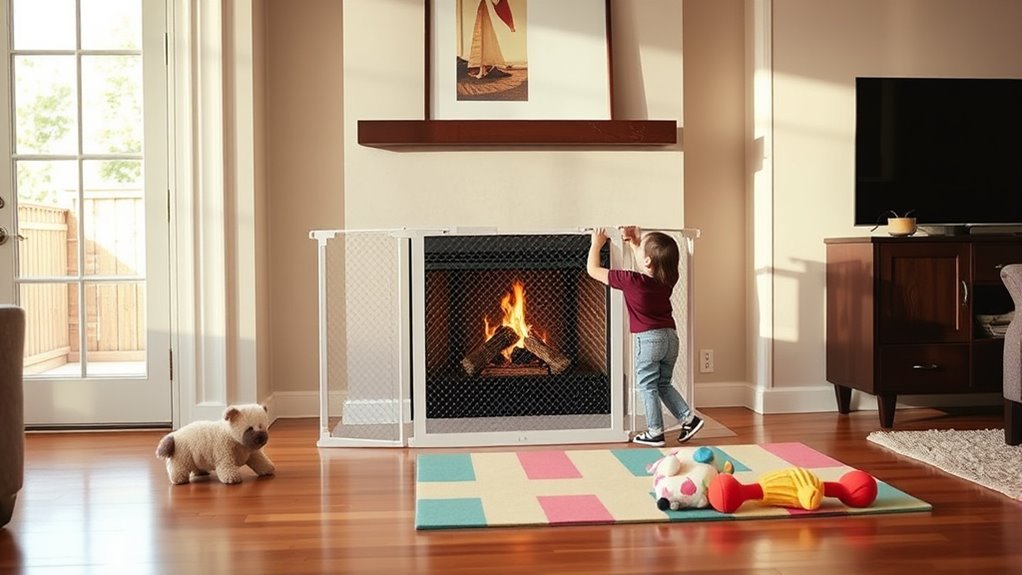
How Do You Baby Proof a Fireplace Safely in 10 Steps?
You can baby-proof your fireplace safely by installing a secure, heat-resistant gate at least 30 inches away from the fire. Padding sharp hearth edges with soft cushions is another great way to protect curious little ones.
Also, make sure to store fuel and remote controls well out of their reach to prevent accidents.
It’s a good idea to limit fireplace use when children are nearby. Allow the fireplace to cool down completely before letting kids play around the area.
Don’t forget to secure all electrical parts with covers and clips to avoid any shocks or hazards.
Proper ventilation is key for safety, so be sure your fireplace is well-ventilated. Installing carbon monoxide detectors nearby will help keep harmful gases at bay.
Follow these steps closely, and you’ll find even more ways to keep your little ones safe around the fireplace.
Key Takeaways
- Install a sturdy, heat-resistant gate at least 30 inches (electric) or 3 feet (open) away with child-proof locks for secure barriers. This helps keep little ones from getting too close to the fireplace.
- Pad hearth edges and corners with soft, non-slip, heat-resistant cushions to prevent cuts and head injuries. It’s a simple way to soften any accidental bumps.
- Store fuel, remotes, and fireplace accessories out of children’s reach in locked cabinets or high shelves. Keeping these items away reduces the risk of accidents.
- Use protective screens or glass doors to contain sparks and maintain a safe distance of at least 3 feet from flames. This adds an extra layer of security around the fire.
- Ensure proper ventilation, install carbon monoxide detectors, and unplug or secure electrical components to prevent hazards. Safety isn’t just about barriers—it’s about the air quality and electrical safety too.
Why Baby-Proof Your Fireplace: Understanding the Risks
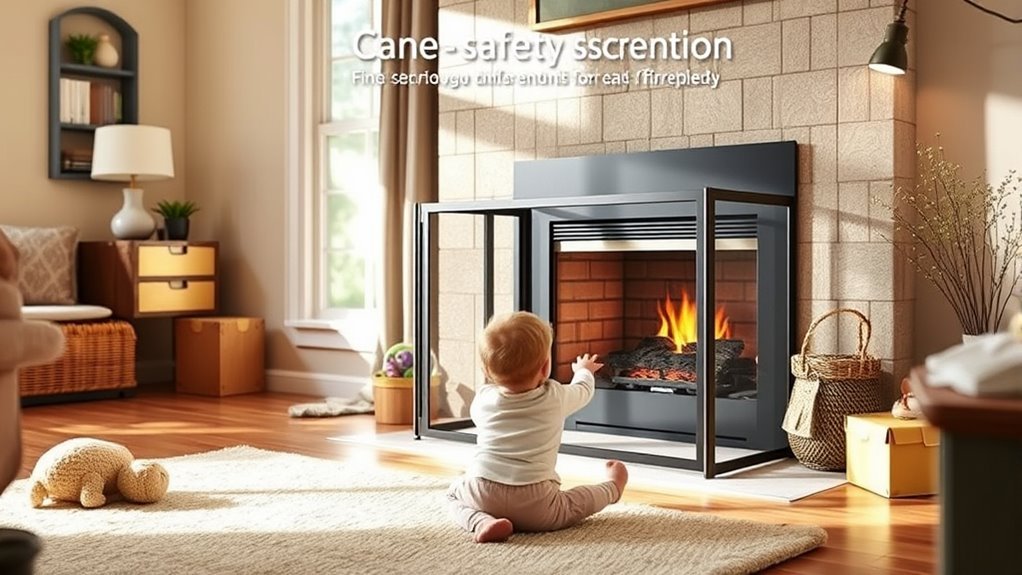
Because fireplaces have hot surfaces, glass doors, and exposed flames, they pose serious burn risks to children. When you’re thinking about fireplace safety, it’s essential to recognize these dangers early.
Kids can easily get burned by touching glass doors or hot bricks. Plus, sharp corners and unprotected hearths increase the chances of cuts or head injuries, especially for crawling infants.
Children risk burns from hot surfaces and injuries from sharp edges and unguarded hearths, especially when crawling.
Beyond burns and cuts, fireplaces can release sparks, ash, and harmful carbon monoxide if not properly maintained. This can threaten your child’s respiratory health.
You also need to be cautious about leaving remote controls, fuel, and accessories within reach. They can cause accidental activation or even poisoning.
Childproofing your fireplace isn’t just about keeping kids away; it’s about creating a safer environment that prevents burns, falls, and other accidents. Taking the right steps to secure your fireplace reduces risks and gives you peace of mind.
Fireplace safety starts with understanding these hazards and acting to protect your little ones.
Install a Secure Gate to Block Fireplace Access
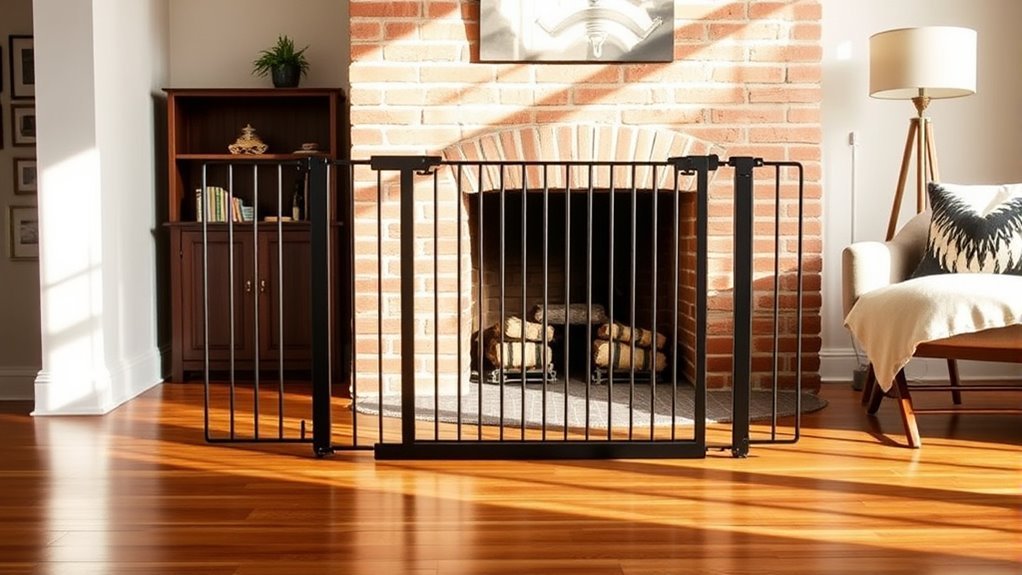
After recognizing the hazards your fireplace presents, the next step is to physically block your child’s access to it. Installing a secure fireplace gate is essential for child-proof safety.
Choose a sturdy gate made from non-metal, heat-resistant materials to prevent burns if your child touches it. Position the gate at a safe distance—at least 30 inches away for electric fireplaces and three feet for open fire models—to reduce risk.
Make sure the gate is firmly secured so it won’t tip or move when your child leans or pushes on it. Opt for a gate with a locking mechanism placed out of your child’s reach to stop unauthorized removal.
And don’t forget to regularly inspect the gate for stability and any damage to maintain its effectiveness. By installing a reliable fireplace gate, you create a strong barrier that helps keep your little one safe, giving you peace of mind while maintaining a child-proof environment around your fireplace.
Pad Hearth Edges to Baby-Proof Against Injuries

While installing a gate blocks direct access to your fireplace, you’ll also want to pad the hearth edges to protect your child from bumps and bruises. The hearth edges are often sharp and hard, posing a safety risk if your little one falls or bumps into them.
To reduce this risk, use soft, impact-absorbing materials to pad these edges securely. Make sure the padding stays firmly attached to avoid creating tripping hazards.
Regularly check the condition of the padding, replacing it as it wears or shifts to maintain maximum safety. Padding the hearth edges works best when combined with other protective measures like gates, providing all-encompassing defense against accidental injuries.
Use Peel-and-Stick Cushions for Raised Hearth Safety
Padding your hearth edges goes a long way in preventing injuries, but raised hearths need extra attention. Using peel-and-stick cushions is an effective way to boost safety around your fireplace.
Padding hearth edges helps prevent injuries, with raised hearths needing extra care and peel-and-stick cushions boosting safety.
These cushions stick firmly to surfaces like brick or stone, creating a soft barrier that reduces injury risk from bumps or falls.
To maximize the safety benefits of peel-and-stick cushions on your raised hearth, keep these tips in mind:
- Choose cushions with non-slip backing to prevent slipping or tripping during play.
- Cut the cushions to fit snugly along your hearth’s unique dimensions for full coverage.
- Regularly check that the cushions remain securely attached and replace any that show wear.
- Apply cushions evenly around all exposed edges and corners for thorough protection.
Store Fuel and Remote Controls Out of Children’s Reach
Where should you keep fireplace fuel and remote controls to guarantee your child’s safety? Always store wood, pellets, and other fuel sources in a secure, high cabinet or closet, well out of children’s reach.
Keep remote controls for gas fireplaces or electric starters locked away in a drawer or placed on a high shelf to prevent accidental activation or choking hazards. It’s a good idea to use childproof locks on remote controls, especially to cover batteries. This stops little hands from opening them and swallowing small parts.
Never leave fuel containers or remote controls unattended near the fireplace. Make it a habit to regularly check your fuel storage and remote control spots as your child grows and becomes more mobile. Safety first, right?
| Hazard | Risk to Child | Safety Measure |
|---|---|---|
| Fuel (wood/pellets) | Burns or poisoning | High, locked storage |
| Remote controls | Choking, accidental use | Locked drawer/shelf |
| Batteries | Swallowing small parts | Childproof locks |
| Unattended items | Easy access to hazards | Never leave out |
| Growing mobility | Reaching stored items | Regular checks |
Keep Kids Away From Sparks, Ash, and Hot Surfaces
After securing fuel and remote controls out of reach, the next step is to keep children away from sparks, ash, and hot surfaces around the fireplace. To do this effectively, you’ll want to create a safe zone that prevents burns and injuries by limiting access to dangerous areas.
Here’s what you should focus on:
- Install a sturdy fireplace barrier or gate to restrict kids from getting too close during use.
- Use protective screens or glass doors that stay closed to contain sparks and hot debris.
- Keep children at least three feet away from hot surfaces and open flames at all times.
- Regularly clean and maintain the fireplace to reduce sparks and minimize uncontrolled embers.
Limit Fireplace Use and Monitor Cooling Times Carefully
You should limit fireplace use when children are nearby to reduce risks and always keep them at least 30 inches away during and after use.
Make sure to monitor the cooling time carefully, waiting at least 30 minutes to an hour before letting kids near the area.
Using a heat-resistant gate can help keep little ones safe while the fireplace cools down. It’s a simple way to give you peace of mind.
Restrict Fireplace Usage
Since children are naturally curious and quick to explore, you should limit fireplace use when they’re nearby, especially during active play or crawling times. Prioritizing fireplace safety means carefully managing when and how you use your fireplace to reduce risks.
To enhance childproofing efforts, avoid leaving fires unattended to prevent accidental burns. It’s really important to stay vigilant.
You should also establish a clear cooling period, typically 30 minutes to an hour, after extinguishing the fire. Using a thermometer or heat sensor can help confirm the fireplace has cooled to a safe temperature.
Keep children away until surfaces are completely cool to the touch. This way, you can help keep everyone safe and sound.
Supervise Cooling Duration
While it may be tempting to let children near the fireplace soon after use, always wait at least 24 hours to make sure the area has fully cooled. Fireplace surfaces, including glass doors and metal parts, can remain dangerously hot for hours.
To supervise effectively, use a heat-resistant or infrared thermometer to check the surface temperature before allowing access. Remember, electric fireplaces may cool faster, but you still need to verify that all parts are safe to touch.
Monitor the cooling time closely and enforce a strict rule that children stay away until the fireplace is completely cool. By limiting fireplace use and supervising the cooling duration carefully, you reduce the risk of burns and ensure a safer environment for your little ones.
Ensure Safe Distance
Although limiting fireplace use may seem inconvenient, it’s essential for reducing the risk of burns and injuries when children are around. Maintaining a safe distance considerably minimizes exposure to fireplace hazards, enhancing child safety in your home.
To ensure safety, keep these tips in mind:
- Limit fireplace use when children are present to avoid unnecessary risks.
- Wait at least 30 minutes after extinguishing a fire before allowing children near the fireplace.
- Maintain at least 30 inches distance from electric fireplaces and about three feet from wood or gas fires.
- Use physical barriers or gates to enforce a safe distance during and after fireplace use.
Secure Electrical Parts to Keep Kids Safe
To keep your little ones safe around the fireplace, you’ll want to secure all electrical parts carefully. Start by using plastic socket covers on electrical outlets to block curious fingers.
Install rocker switch covers on control switches, so kids can’t turn the fireplace on or off accidentally. And don’t forget to unplug the electric fireplace after use to avoid any electrical hazards.
Secure electrical cords with clips or ties to prevent pulling or chewing. It’s also a good idea to regularly check all electrical components for damage or loose connections to keep everything safe.
| Safety Step | What to Use | Purpose |
|---|---|---|
| Block access | Plastic socket covers | Prevent kids from inserting objects |
| Cover controls | Rocker switch covers | Stop accidental fireplace activation |
| Manage cords | Cord clips or ties | Avoid pulling or chewing hazards |
Taking these steps guarantees your fireplace area remains safe for your little explorers. Safety first, right?
Choose Secure, Non-Slip Padding and Covers
Because toddlers love to explore every corner, you should choose secure, non-slip padding and covers for your fireplace area to prevent bumps and bruises. Using peel-and-stick cushions or foam padding helps cover sharp edges and raised hearths effectively.
Make certain the materials are heat-resistant and safe for use near your fireplace, so they withstand any warmth without degrading.
When selecting padding and covers, keep these tips in mind:
- Choose non-slip options that stay firmly in place during active play.
- Opt for easily removable covers to clean and access the fireplace when needed.
- Regularly inspect and replace padding to maintain secure attachment.
- Ensure the padding fully covers all sharp or hard surfaces around the fireplace.
Ensure Proper Ventilation to Protect Against Carbon Monoxide
You need to make sure your fireplace is properly ventilated to keep harmful carbon monoxide from building up inside your home. Maintaining clear airflow and regularly checking your chimney and vents will help protect your family.
Installing carbon monoxide detectors nearby adds an important layer of safety you shouldn’t skip. It’s a simple step that can really make a difference. So, don’t overlook it!
Importance of Ventilation
How well does your fireplace vent harmful gases like carbon monoxide? Proper ventilation is critical to keep your home safe, especially where little ones play.
You need to ensure your fireplace’s venting system is free from blockages through regular fireplace maintenance. Without proper airflow, dangerous gases can linger indoors.
Installing carbon monoxide detectors near the fireplace adds an essential layer of protection by alerting you to any leaks or ventilation issues.
To maintain safe ventilation, remember to:
- Inspect and clean vents regularly
- Use carbon monoxide detectors close to the fireplace
- Ensure adequate airflow in the room
- Pay extra attention to older or enclosed fireplaces
Carbon Monoxide Risks
Although fireplaces provide warmth and ambiance, they can pose serious carbon monoxide risks if not properly ventilated. You must ensure proper ventilation by regularly inspecting and maintaining the chimney and vent systems to prevent dangerous carbon monoxide buildup.
Never use the fireplace if the vent is blocked or damaged, as this increases indoor carbon monoxide levels. Installing carbon monoxide detectors near the fireplace and throughout your home is essential—test them monthly to confirm they work.
Have a professional inspect and service your fireplace and chimney annually to catch leaks early. Also, avoid operating the fireplace during power outages or when vents are obstructed.
Taking these steps helps protect your baby and family from the silent dangers of carbon monoxide. It’s really about keeping everyone safe and comfortable.
Maintaining Proper Airflow
Because maintaining proper airflow is essential for safe fireplace use, you need to make sure that ventilation systems remain clear and unrestricted. Proper ventilation prevents dangerous carbon monoxide buildup, protecting your baby and family.
To keep your fireplace safe, focus on these key steps:
- Regularly inspect and clean chimney vents and flues to remove obstructions.
- Ensure adequate airflow by avoiding sealed vents or blocked openings.
Make sure to maintain a sufficient air supply in the room for efficient burning. Also, install carbon monoxide detectors near the fireplace and living areas for early warnings.
Frequently Asked Questions
How to Baby Proof a Fireplace Step?
You start by installing a sturdy gate to block access, then cover sharp edges with padding. Secure heat-resistant cushions around the hearth.
Remove hazards like remotes, and regularly check everything stays firmly in place for safety. It’s all about keeping things safe and sound for your little one!
How Do You Childproof a Fireplace?
Like guarding treasure in a castle, you childproof a fireplace by installing barriers, padding sharp edges, securing controls, and covering openings.
Always supervise your little ones to keep them safe from heat, sparks, and hazards. It’s all about staying one step ahead and keeping that cozy spot safe for everyone.
How to Childproof an Open Fireplace?
You should install a sturdy gate around the fireplace and cover sharp edges with foam padding.
Also, keep fire tools out of reach to prevent any accidents. Make sure to verify the area’s cool before kids approach.
And don’t forget to store combustible materials securely. These steps will help you childproof an open fireplace safely.
What Is the Fireplace Protection for Babies?
Fireplace protection for babies includes installing safety gates and padding sharp edges. It’s also important to unplug electric units and use socket covers around the fireplace.
Keep your little one at least 30 inches away from any heat source.
Make sure to regularly check these safeguards to keep your baby safe and sound. It’s all about creating a secure space where they can explore without danger.
Conclusion
Just like a sturdy fence keeps curious puppies from wandering into danger, baby-proofing your fireplace creates a safe zone for your little one. Remember, over 60% of home injuries in toddlers happen from overlooked hazards, so these steps aren’t just precautions—they’re peace of mind.
By securing gates, padding edges, and keeping controls out of reach, you’re turning a potential hazard into a cozy, worry-free family spot. This way, your fireplace becomes a safe part of your home where everyone can relax without worry.
Taking the time to baby-proof your fireplace safely is one of the best ways to protect your toddler from accidents. With simple steps like installing barriers and soft padding, you transform a risky area into a secure, comfortable space. So go ahead—create a safe environment that keeps your little one protected while letting your family enjoy the warmth and charm of your fireplace worry-free.