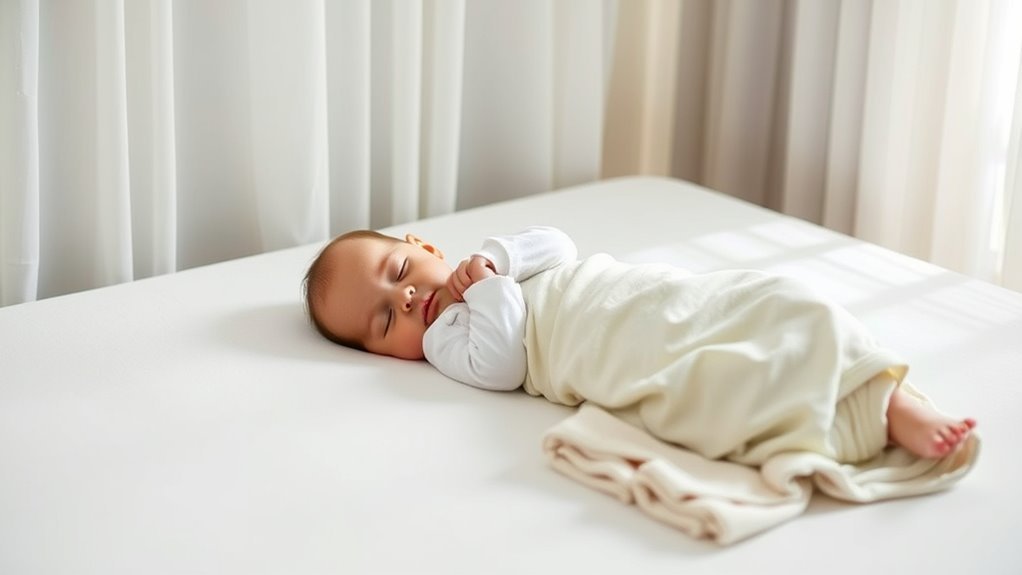
How to Dress Baby for Sleep – 3 Essential Tips
To dress your baby for sleep, start by keeping the room temperature between 68-72°F. This range helps create a cozy and safe environment for your little one to rest.
Choose breathable fabrics like cotton for lightweight onesies or pajamas. These materials keep your baby comfortable by allowing air to circulate and preventing overheating.
When it comes to layering, add just one extra layer beyond what you would wear yourself. Avoid heavy blankets since they can cause overheating and increase the risk of SIDS.
Swaddles or wearable blankets made of breathable material are a great option. Make sure they fit snugly around your baby’s chest but remain loose at the hips for healthy movement.
And remember, never cover your baby’s head while sleeping.
Following these simple tips helps your baby sleep comfortably and safely all night long. More helpful guidance is just ahead!
Key Takeaways
- Dress baby in breathable fabrics like cotton or bamboo. These materials help regulate temperature and prevent overheating during sleep.
- Use TOG-rated sleepwear that matches the room temperature. Add layers only when necessary, and avoid bundling your baby too much.
- Instead of checking your baby’s hands or feet, feel their chest or back to see if they’re warm enough. This gives a better idea of their comfort.
- Use lightweight, safe swaddle wraps or wearable blankets. They’re a great alternative to loose bedding and help ensure safe sleep.
- Adjust your baby’s layers based on the room temperature. For example, just a onesie when it’s above 72°F, a onesie plus pajamas between 65-72°F, and add a sleep sack if it’s below 65°F.
How to Dress Baby for Sleep Based on Room Temperature
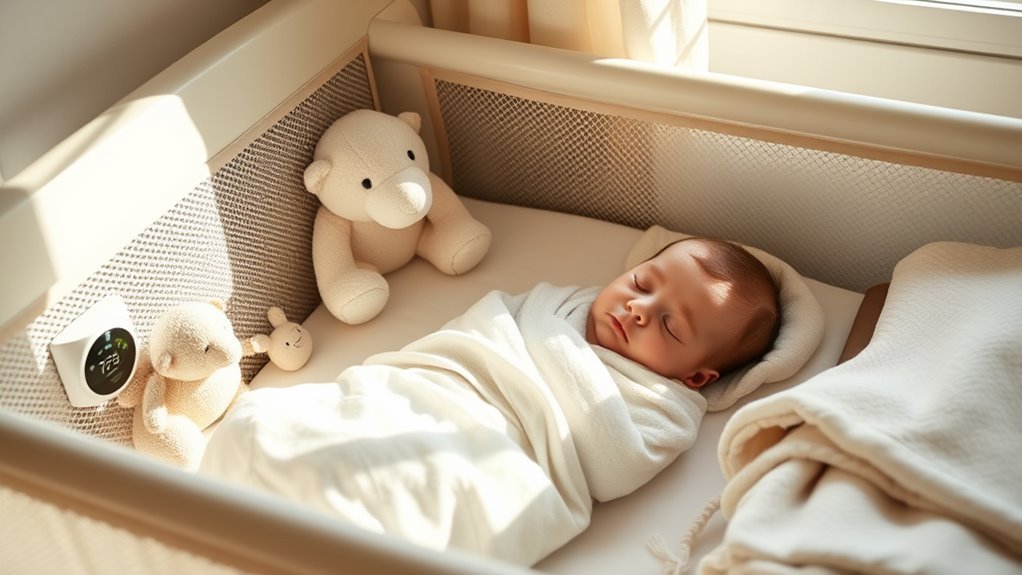
When dressing your baby for sleep, consider the room temperature first to keep them comfortable and safe. For room temperatures between 68-72°F (20-22°C), dress your baby in lightweight, breathable fabrics like cotton onesies or footed pajamas.
Choosing TOG-rated sleepwear, such as 0 TOG for moderate temperatures, helps maintain safe sleep by providing just the right insulation without causing overheating. If the room feels cooler, below 68°F (20°C), you’ll want to layer your baby’s clothing or use higher TOG sleep bags—but avoid excessive layering to prevent discomfort.
TOG-rated sleepwear offers perfect insulation; layer or use higher TOG bags for cooler rooms without overdoing it.
In warmer rooms above 75°F (24°C), minimal clothing like a short-sleeve bodysuit or just a diaper keeps your baby cool and safe from overheating. Always check your baby’s chest or back to gauge their warmth rather than relying on hands or feet.
Dressing your baby appropriately for the room temperature ensures safe sleep and helps prevent overheating or chilling throughout the night. It’s all about finding that sweet spot to keep your little one cozy and comfortable.
Safe Layering Tips to Keep Baby Cozy Without Overheating
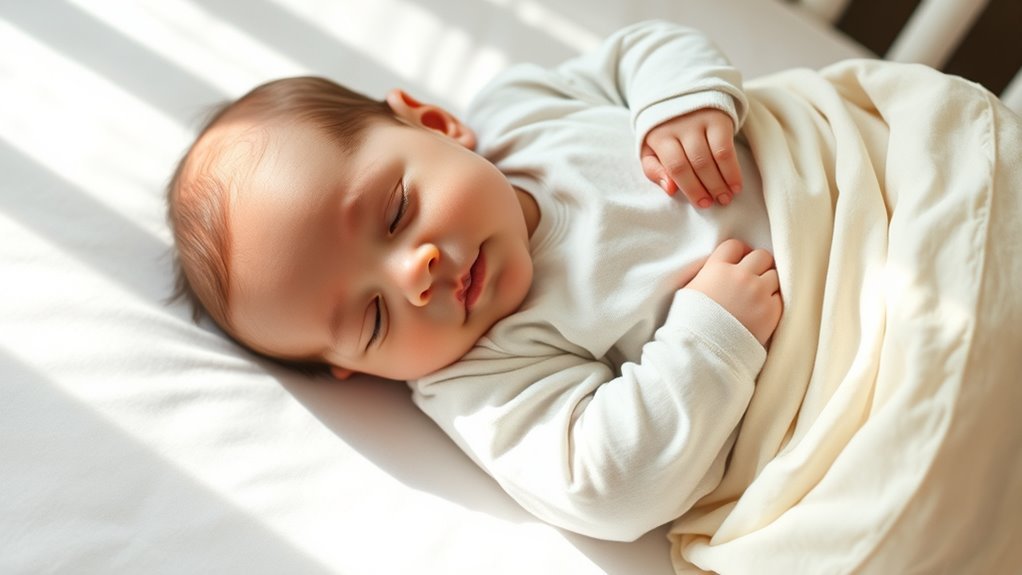
Although keeping your baby warm is important, you should dress them in no more than one extra layer beyond what you wear to sleep. When dressing your baby, choose breathable fabrics like cotton or bamboo to support temperature regulation and prevent overheating.
Avoid heavy blankets and multiple layers that trap heat. Instead, use lightweight sleep sacks or swaddle wraps designed for infant sleep safety.
Always check your baby’s chest or back for warmth, sweat, or flushed skin. Adjust layers based on the room temperature.
Layered clothing helps you adapt easily without compromising safe sleep.
| Room Temperature | Recommended Layers | Notes |
|---|---|---|
| Below 65°F | Onesie + Sleep Sack | Add a swaddle wrap if needed |
| 65°F to 72°F | Onesie + Lightweight Pajamas | Use breathable fabrics only |
| Above 72°F | Onesie only | Avoid extra layers to prevent overheating |
| Variable | Adjust layers as needed | Check skin regularly for signs |
This approach keeps your baby cozy without risking overheating.
Using Swaddles and Wearable Blankets Safely for Better Sleep
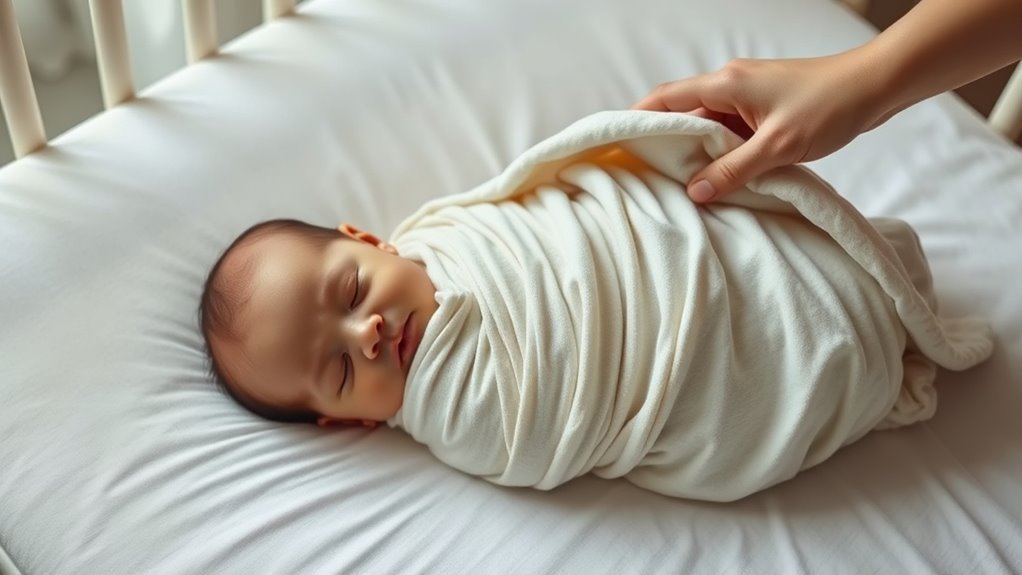
Since swaddling can help soothe your baby, it’s important to use it safely by wrapping only from the shoulders down and choosing lightweight, breathable fabrics like cotton or bamboo. Make sure the swaddle is snug around the chest but loose enough around the hips to allow natural movement and proper temperature regulation.
Also, avoid covering your baby’s head to reduce suffocation risks. When your baby starts showing signs of rolling, it’s time to *shift* out of the swaddle to keep things safe.
Wearable blankets are a great alternative once swaddling ends. They get rid of loose bedding hazards and help prevent overheating by using breathable fabrics.
Just remember to avoid weighted sleep sacks, as they can increase risks like overheating and SIDS. Whether you use a swaddle or wearable blanket, always keep temperature regulation and safe sleep environments a top priority to keep your baby comfy and secure all night.
Frequently Asked Questions
What Is the 3-3-3 Rule for Baby Sleep?
The 3-3-3 rule means you place your baby on their back by 3 months. You also keep their sleep area safe and close to you.
Plus, you adjust their clothing to help regulate temperature. This all promotes safe, healthy sleep habits during those early months.
How to Dress a Baby for Sleep at 3 Months?
Dress your 3-month-old baby in a lightweight cotton onesie or footed pajamas. It’s best to keep things breathable and soft against their skin.
Use a low-TOG sleep sack instead of loose blankets. This helps keep your baby cozy without the risk of covering their face.
Make sure to check their chest regularly. You want to be sure they’re comfortably warm but not overheated.
What Is the 5-3-3 Rule?
You might be surprised, but the 5-3-3 rule means dressing your baby in no more than five layers total, using three lightweight layers when the room’s 68–72°F.
This keeps them cozy without overheating during sleep.
What Month Is the Hardest With a Baby?
You’ll find the first three months the hardest, as you adjust to frequent feedings, diaper changes, and disrupted sleep. It’s tough, but remember, it gets easier as your baby’s routine starts settling down.
Seriously, those early days are a lot. But hang in there—you’re doing great!
Conclusion
Dressing your baby for sleep might feel tricky, but it’s all about balancing warmth and safety. You might worry about overheating, but by layering lightweight clothes and using breathable fabrics, you’ll keep your little one cozy without risk.
Remember, a well-dressed baby sleeps better, helping both of you get the rest you need. Trust these tips—you’re creating a safe, comfortable sleep environment that gives your baby the sweetest dreams.
When you dress your baby for sleep, think comfort first. Breathable fabrics like cotton help regulate temperature and prevent overheating. Layering is key—you can always add or remove a layer depending on the room temperature.
In the end, dressing your baby properly for sleep ensures they stay warm without getting too hot. This balance promotes safe sleep and peaceful nights, so both you and your baby enjoy restful sleep. Following these essential tips helps you create a cozy, secure sleep space that supports your baby’s health and happiness.