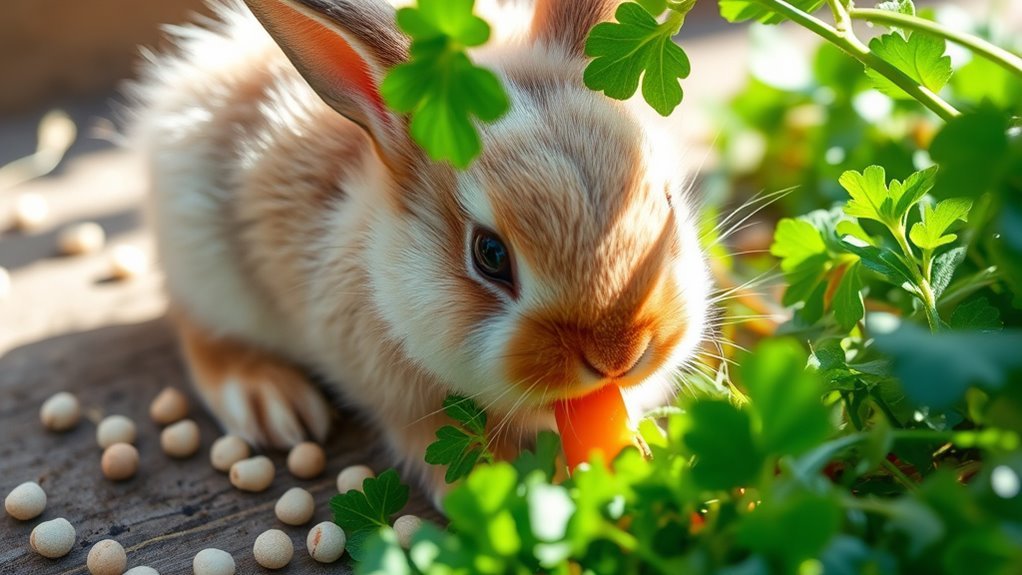
What Do Baby Bunnies Eat for Growth?
You should start your baby bunny’s growth with warm, nutrient-rich mother’s milk or a specialized milk replacer if orphaned. Feeding carefully with a syringe or dropper is important to ensure they get enough nourishment.
Around 2 to 3 weeks, introduce hay gradually. This helps support digestion and keeps their teeth healthy.
By 3 months, slowly add fresh leafy greens to their diet while keeping hay unlimited. Always provide fresh water and watch their eating habits closely.
Doing this helps guarantee healthy development.
Keep following these steps to help your bunny thrive as it grows. With the right food and care, your baby bunny will grow strong and happy!
Key Takeaways
- Baby bunnies rely on their mother’s milk or a specialized milk replacer for essential nutrients and immunity during the first few weeks. This is really important for their early growth.
- You can start introducing hay gradually at around 2 to 3 weeks. Hay helps with their dental development and digestion.
- Around 3 months, begin offering small amounts of fresh leafy greens. Make sure to transition slowly over 7 to 10 days so their little tummies can adjust.
- Always provide unlimited hay and fresh water throughout all growth stages. This helps keep their digestion working properly and keeps them hydrated.
- It’s also important to keep a calm environment with minimal handling. Reducing stress supports their healthy growth and overall well-being.
What to Feed Your Baby Bunny in the First Weeks
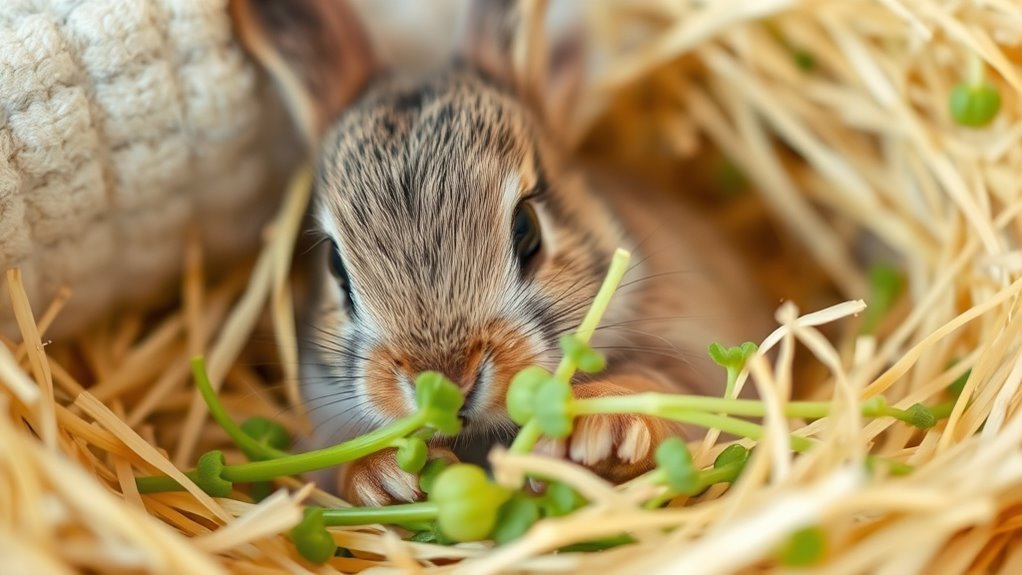
While baby bunnies depend mainly on their mother’s milk for essential nutrients and immunity in the first weeks, you’ll need to provide a specialized milk replacer like kitten or goat’s milk if they’re orphaned. Use a syringe or eyedropper for precise feeding, ensuring the milk is warm to support their digestion and prevent health issues.
Avoid cold feeding, as baby bunnies are sensitive to temperature changes. In those early weeks, keep handling to a minimum to reduce stress and avoid injury or rejection by the mother if she’s still present.
Around 2 to 3 weeks old, baby bunnies start nibbling on hay, which is vital for dental development and digestion. Introducing hay gradually during feeding helps prepare their digestive system for future solid foods.
How to Transition Baby Bunnies to Solid Foods
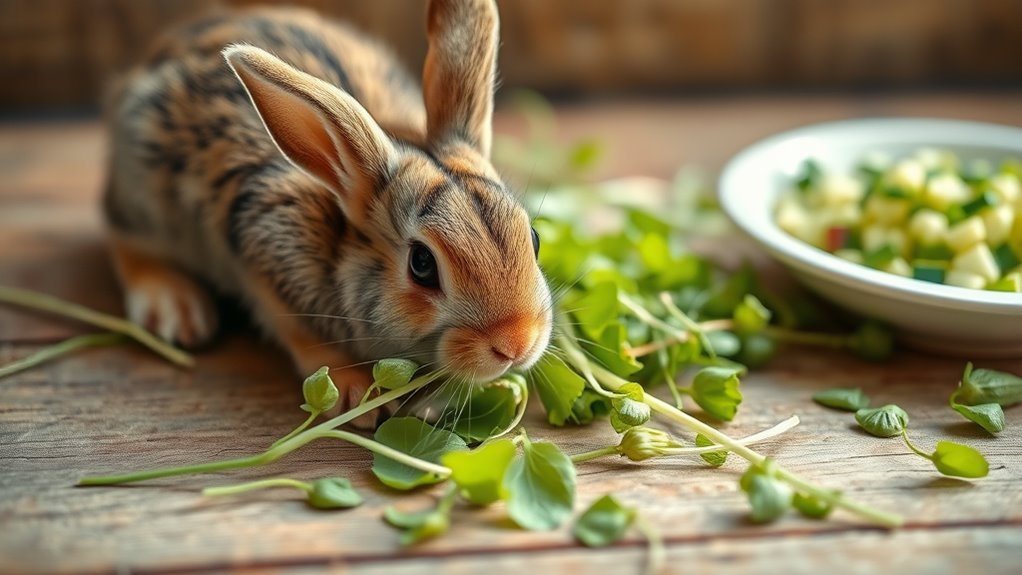
As your baby bunny approaches three months old, you’ll want to start introducing small amounts of fresh foods like leafy greens to their diet. When shifting baby rabbits to solid foods, make sure to do it gradually over 7-10 days, allowing their digestive system to adjust smoothly.
Begin by offering unlimited hay and hay pellets while slowly introducing fresh greens one at a time. This gradual change helps prevent digestive upset and lets you monitor your young rabbits’ feeding habits and preferences.
Keep providing unlimited hay and fresh water throughout the changeover to support healthy digestion and growth. Make sure your bunny is consistently eating hay before reducing milk or formula completely.
Frequently Asked Questions
What Do You Feed a Baby Bunny Without a Mother?
You feed a baby bunny without a mother kitten or goat milk replacer using a small syringe or eyedropper. Warm the milk, give small amounts upright, and gradually increase as it grows.
Later on, you can start introducing hay and pellets. It’s a gentle process, so take your time and watch how the bunny responds.
Will Baby Bunnies Drink Water?
Yes, baby bunnies will drink water starting around 3-4 weeks old. You should provide fresh, clean water in a shallow dish or bottle to keep them hydrated.
This is important as they shift from milk to solid foods. Just make sure the water is always easy for them to access.
What Food Makes Rabbits Grow Faster?
Want rabbits to grow faster? Just overload them with treats and alfalfa—said no expert ever.
Instead, you’ll want quality hay, balanced pellets, fresh greens, and clean water to support healthy, steady growth.
It’s all about giving them the right nutrition consistently. That way, they grow strong and stay happy.
How Long Can Newborn Baby Bunnies Go Without Food?
Newborn baby bunnies can only go about 24 hours without food before their health seriously declines.
You’ll need to feed them promptly, especially if their mother isn’t around. This helps keep them strong and alive.
Conclusion
As your little bunny begins its journey to adulthood, remember that gentle nourishment is key. Start with tender sips of formula, then gradually invite crunchy greens and pellets to the menu.
This smooth shift helps your fluffy friend bloom into a healthy, hopping marvel. By offering the right care and tasty bites, you’re not just feeding a bunny—you’re nurturing a bundle of joy ready to explore the world with boundless energy and charm.
Feeding baby bunnies the right diet is essential for their growth. Fresh leafy greens, specially formulated pellets, and clean water all play vital roles in their development. With proper nutrition, your bunny will thrive, stay active, and develop a strong immune system.
So, keep those crunchy veggies coming and ensure your bunny has everything needed to grow healthy and happy. After all, a well-fed baby bunny is a lively, loving companion who will brighten your days with endless hoppity fun!