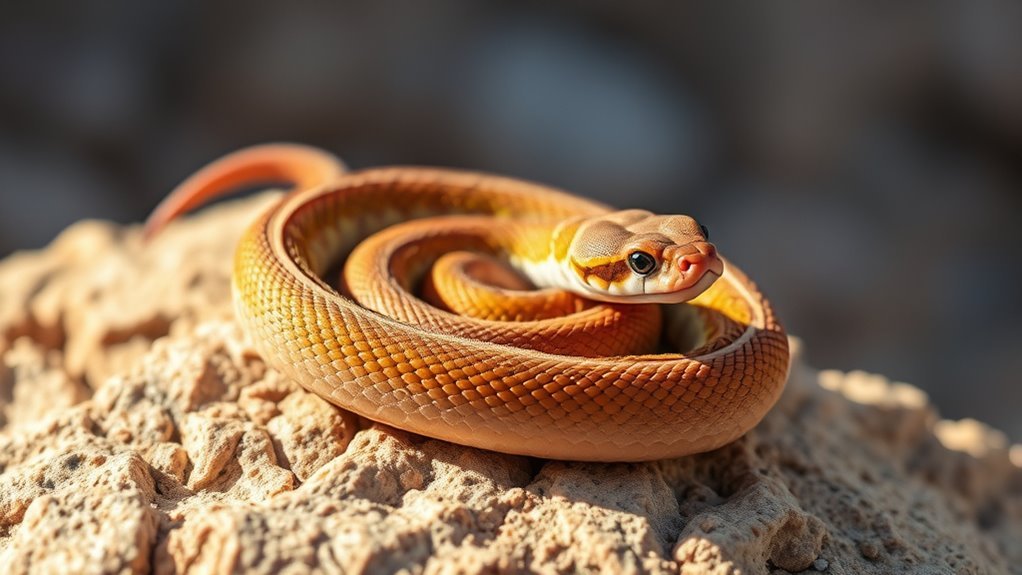
What Do Baby Rattlesnakes Have Instead of Rattles?
You don’t hear baby rattlesnakes rattle because they’re born with a soft keratin “button” instead of the full rattle segments needed to make noise.
This button is an early stage that hardens and adds segments as they grow and molt.
Since they don’t have their signature rattle yet, they rely on camouflage, staying close to their mother, and hiding in shaded areas for protection.
If you want to know how they survive before their rattles form, keep exploring their unique defense strategies.
Key Takeaways
- Baby rattlesnakes have a soft keratin “button” instead of a fully developed rattle at birth. This button is an undeveloped initial rattle segment that cannot produce sound.
- The rattle forms gradually with molts, as the button hardens and new segments are added.
- Without a rattle, babies rely on camouflage and habitat choice to avoid predators. They also stay close to their mother for protection during early development.
Why Do Baby Rattlesnakes Have a Soft “Button” Instead of a Rattle?
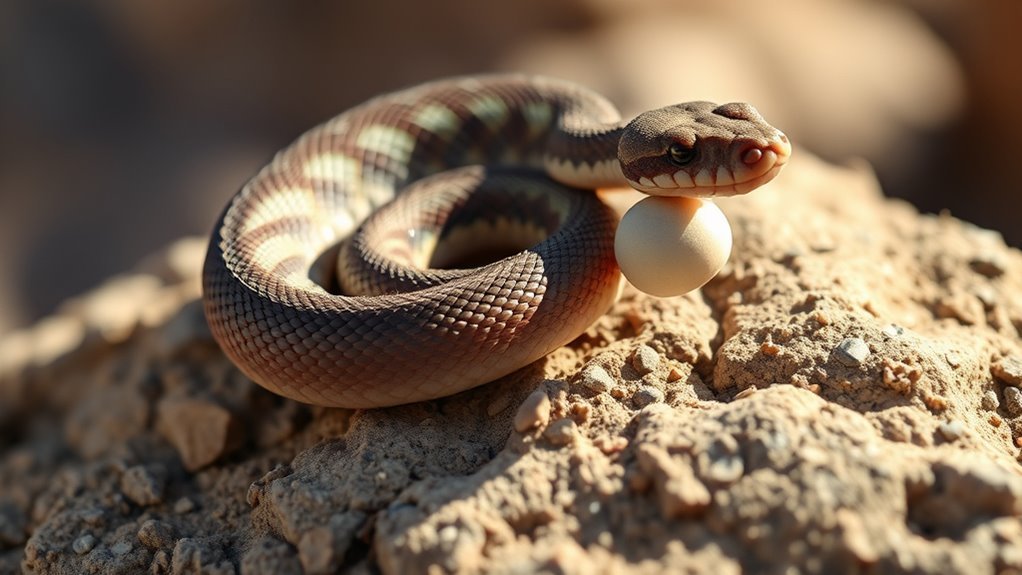
Although baby rattlesnakes don’t have the distinctive rattle sound yet, they’re born with a small, soft “button” made of keratin. This soft “button” is an undeveloped initial rattle segment, marking an early developmental stage before the full rattle forms.
Since the rattling mechanism depends on multiple hard segments rubbing together, the single soft button can’t produce the familiar sound. As you watch baby rattlesnakes grow, you’ll notice that with each molt, the soft button hardens, and new segments get added.
This gradual process transforms the button into a complete rattle capable of making noise. The presence of the soft button at birth reflects the natural growth and development required for the rattlesnake’s signature warning sound.
How Baby Rattlesnakes Protect Themselves Before Their Rattles Grow
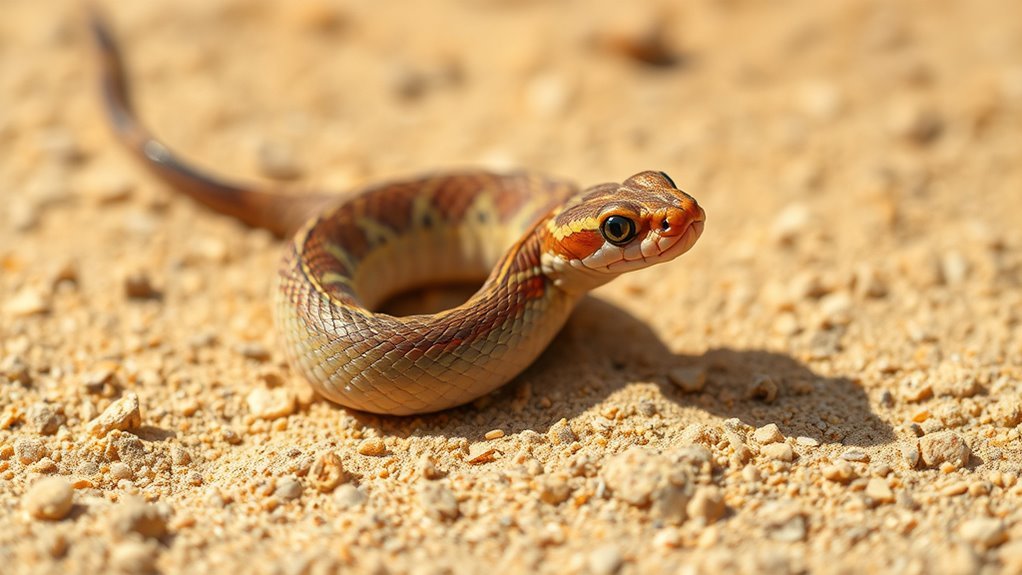
Since baby rattlesnakes start life with just a soft button instead of a full rattle, they can’t warn predators with their signature sound yet. To stay safe, these tiny snakes rely on different forms of protection until their rattles grow.
Baby rattlesnakes lack a full rattle at birth, so they depend on other strategies to stay safe.
You’ll notice that baby rattlesnakes use their natural camouflage to blend seamlessly into their surroundings, making it harder for predators to spot them. They also tend to stay close to their mother, who offers added safety in those early vulnerable days.
Here’s how baby rattlesnakes protect themselves before their rattles develop:
- Use camouflage to blend into shaded, damp areas
- Stay near their mother for extra protection
- Rely on their small size and elusive behavior to avoid detection
- Choose habitats that help them remain hidden from predators
Frequently Asked Questions
How to Tell if It’s a Baby Rattlesnake?
You can tell it’s a baby rattlesnake by looking for a small, soft button at its tail’s end instead of a full rattle.
Also, it’ll be smaller, about 6 to 12 inches long, with similar markings.
What Looks Like a Rattlesnake but Doesn’t Have a Rattle?
You’ll find milk snakes and corn snakes look like rattlesnakes but don’t have rattles. Some harmless snakes mimic their patterns, so they can trick you at first glance.
Also, there are rare rattleless rattlesnakes that actually lack rattles. So, it’s best not to rely on the rattle alone to identify them.
Do Baby Rattlesnakes Have No Rattle?
You might think baby rattlesnakes have no rattle, but they actually have a tiny, soft button instead.
Though silent at first, this button grows into a full rattle as they molt and mature over time.
Pretty cool, right? It’s like they’re carrying a little secret that only reveals itself as they grow.
Are There Any Rattlesnakes Without Rattles?
Yes, you’ll find rattlesnakes without rattles when they’re very young or just molted. Their rattles develop after shedding, so early juveniles often have only a small button or no rattle at all yet.
It’s kind of interesting because the rattle doesn’t appear right away. So, if you see a tiny snake without a rattle, it might still be a rattlesnake in its early stages.
Conclusion
You might think baby rattlesnakes are missing something without their rattles, but they’re just playing their cards close to the chest. Instead of noisy rattles, they have soft “buttons” that grow with each shed, turning into the iconic rattle you know.
Before their rattles develop, they rely on stealth and venom to keep danger at bay. So, even without the clatter, these little snakes are quietly powerful guardians of their world.
Baby rattlesnakes don’t have rattles like adults; they have these soft buttons that slowly build up over time. This clever adaptation helps them stay safe while they grow. Using stealth and venom, these young snakes protect themselves effectively, proving that even without a rattle, they’re strong and ready to face challenges in their environment.