At What Age Do Baby Skunks Start to Spray?
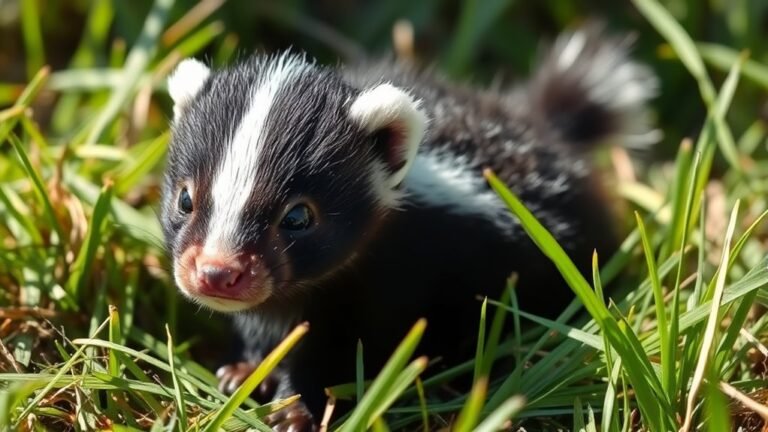
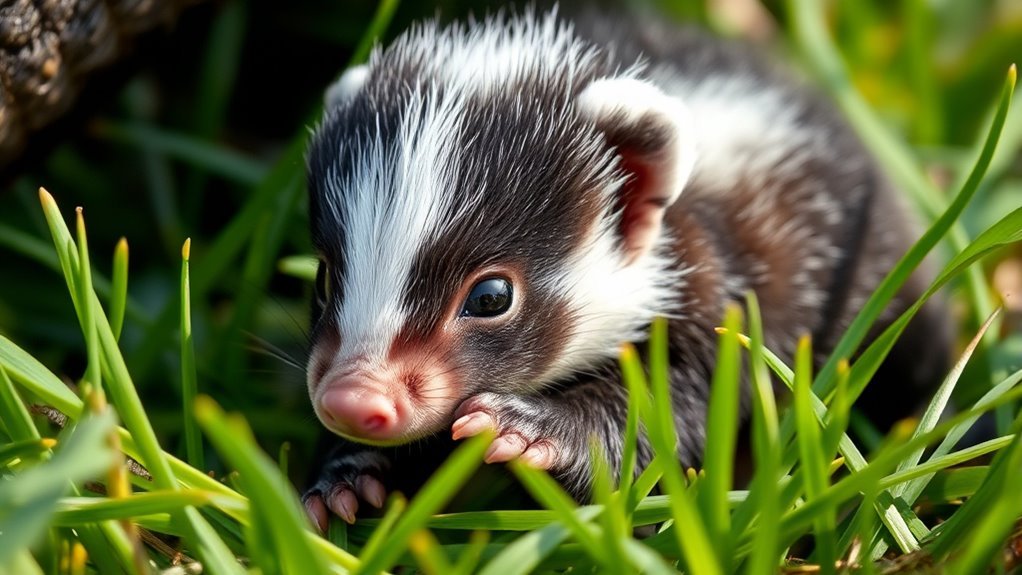
You’ll find that baby skunks can start spraying as early as eight weeks old when their scent glands and muscles begin developing. This early stage is crucial because their defense mechanism starts kicking in right away.
Even though their sprays are weak and not very accurate at this point, they still use it to deter predators.
At first, their aim isn’t great, and the spray power is quite mild. But don’t worry, over the next few months, their accuracy and strength improve a lot.
By the time they’re several months old, baby skunks can spray just as effectively as adult skunks.
Keep reading to discover how their spraying ability matures and strengthens over time. It’s pretty fascinating to see how these little creatures develop their unique defense skills!
Key Takeaways
- Baby skunks start spraying as early as 8 weeks old. Their ability to spray comes with the development of muscles and scent glands around this time.
- The first sprays they release at 8 weeks are usually weaker and not as accurate as what you’d see from an adult skunk.
- By the time they’re 3 to 4 months old, they’ve developed full control and stronger sprays.
- Even though their sprays are limited at first, baby skunks use spraying as a defense mechanism from early on.
When Can Baby Skunks Start Spraying?
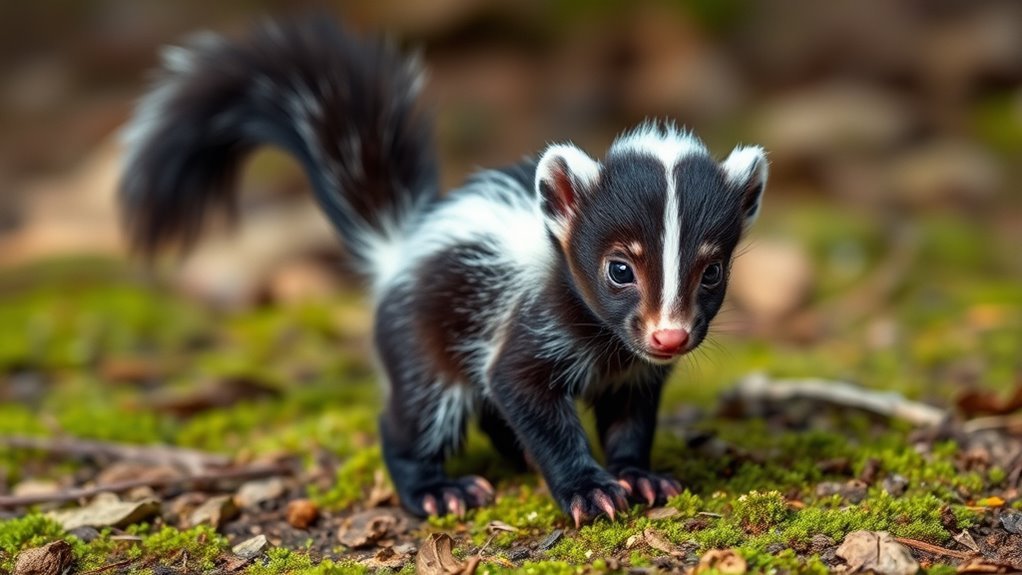
Although baby skunks are born without full control over their scent glands, they can start spraying as early as 8 weeks old once their muscles and glands develop. At this stage, young skunks begin to develop the ability to spray, thanks to improved muscle control and fully functional scent glands.
Most kits, born in late spring, reach this milestone by mid-summer. While their initial sprays are less powerful and less accurate than adult skunks, baby skunks still use this defense mechanism effectively.
Understanding when baby skunks start to spray is essential for wildlife control, especially if you encounter kits in the wild. Knowing they have the ability to spray at 8 weeks old helps you take appropriate precautions.
As these young skunks develop, their muscle control and scent gland function improve, enhancing their spraying capabilities. So, when you see baby skunks at this age, expect them to have some level of spray defense already in place.
How Does Spraying Change As Baby Skunks Grow Up?
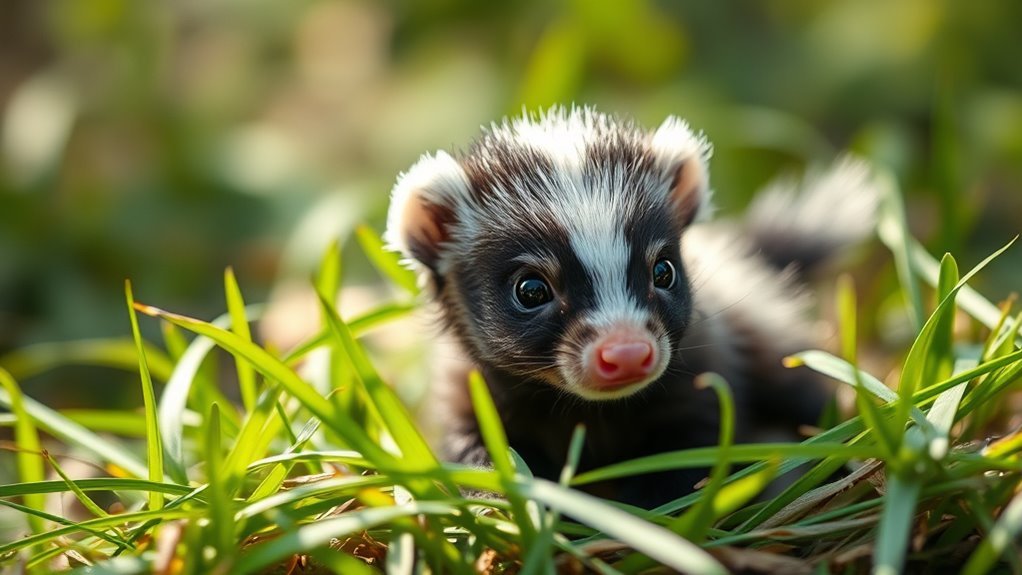
Once baby skunks start spraying around 8 weeks old, you’ll notice their ability changes a lot as they grow. At this stage, their scent glands and muscle control are still developing, so their sprays lack the power and accuracy of adults.
Baby skunks begin spraying at 8 weeks, but their power and accuracy improve as they grow.
Young skunks often spray defensively, but their aim is limited, and they can’t shoot very far. As they reach 3 to 4 months of age, their control and aim improve markedly.
By this time, baby skunks develop the strength and coordination needed to target threats more precisely. With maturity, their sprays become more potent, and they can accurately spray distances of 10 to 15 feet.
This increased control makes their defense mechanism far more effective. So, as baby skunks grow, you’ll see a clear progression—from clumsy, weak sprays to well-aimed, powerful bursts that help them protect themselves better.
Frequently Asked Questions
How Can I Tell How Old a Baby Skunk Is?
You can tell a baby skunk’s age by its size and fur development. At 6–8 weeks, it’s about 8–9 inches long with some fur.
Younger kits are smaller and hairless, while older ones grow quickly. It’s pretty neat to watch how fast they change!
Can Baby Skunks Spray Right Away?
You can bet baby skunks can spray right away, like a musketeer firing his pistol!
Though their aim’s shaky and spray weaker, they’ll defend themselves instinctively. Over weeks, they sharpen that natural skill.
Do Skunks Go Away After Spraying?
No, skunks don’t always go away after spraying. They often pause to see if the threat remains and can spray multiple times if necessary.
How to Keep a Baby Skunk From Spraying?
You can keep a baby skunk from spraying by handling it gently, avoiding sudden movements, and minimizing disturbances.
Keep it calm, quiet, and secure. Don’t provoke or startle it — that really helps reduce the chance of spraying.
Conclusion
So, you’re wondering when those cute baby skunks start spraying, right? Typically, they begin practicing their spray around 2 to 3 months old, but it’s not fully effective until they’re a bit older.
As they grow, their aim and control improve, making their defense more reliable. Imagine facing a tiny, trembling skunk—would you expect a powerful spray already?
Understanding this helps you appreciate how these little creatures develop their natural defense over time. Baby skunks start to spray as a way to protect themselves, but their ability to do so effectively comes with age and practice.
So, if you’re curious about at what age baby skunks start to spray, remember it’s around 2 to 3 months old, but the real strength and accuracy come later as they mature. This natural progression ensures they can defend themselves better as they grow into adults.