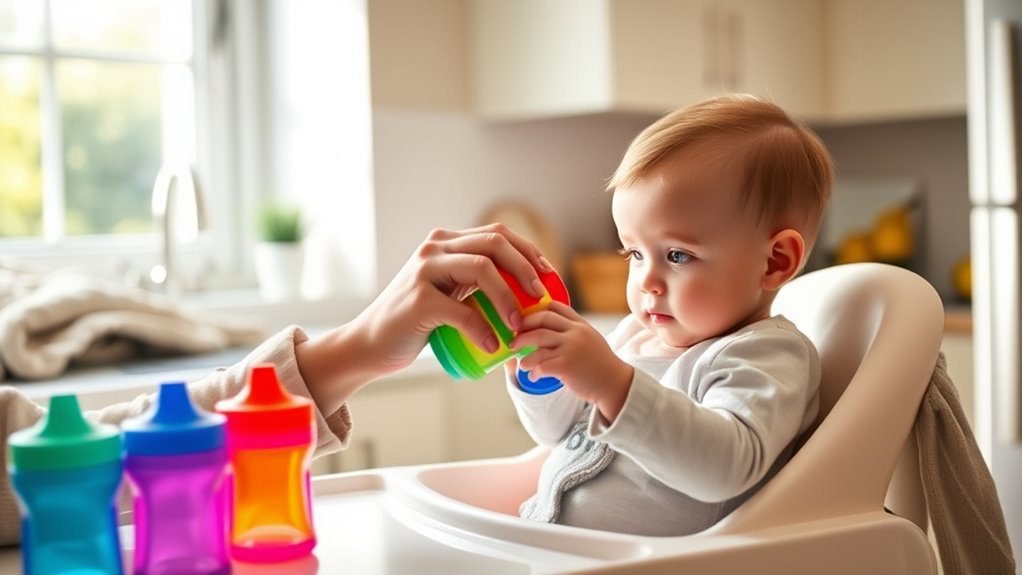
10 Steps to Introduce a Sippy Cup to Your Baby
You can start introducing a sippy cup around six months when your baby can sit with good head control. It’s a great time to help your little one get used to drinking from something new.
Choose a soft-spouted, spill-proof cup with easy grips to make it easier for your baby to hold and use.
Offer familiar fluids during mealtimes and show how to use the sippy cup. Don’t worry if your baby makes a mess—that’s totally normal!
Encouraging independent sipping is key, and using towels to clean up spills helps keep things stress-free.
Gradually replace bottles with sippy cups as your baby gets more comfortable. Avoid sugary drinks to protect your baby’s teeth while they’re learning.
Keep an eye out for signs that your baby is ready to move on to regular cups. Keep going to discover helpful tips for every step.
Key Takeaways
- Introduce a soft-spouted, spill-proof sippy cup with familiar fluids like breast milk or formula during consistent mealtimes. This helps your baby feel comfortable and secure.
- Encourage your baby to explore the cup by holding and touching it. Show them how to drink by modeling the behavior enthusiastically.
- Gradually replace bottle feedings with sippy cups during meals. This will help build your baby’s independent drinking skills over time.
- Expect spills—they’re part of the learning process! Use spill-proof cups, practice with small amounts, and clean up in easy-to-manage areas.
- Limit sippy cup use to water and milk. Avoid sugary drinks to support your baby’s oral health and encourage healthy habits.
When Is Your Baby Ready for a Sippy Cup?
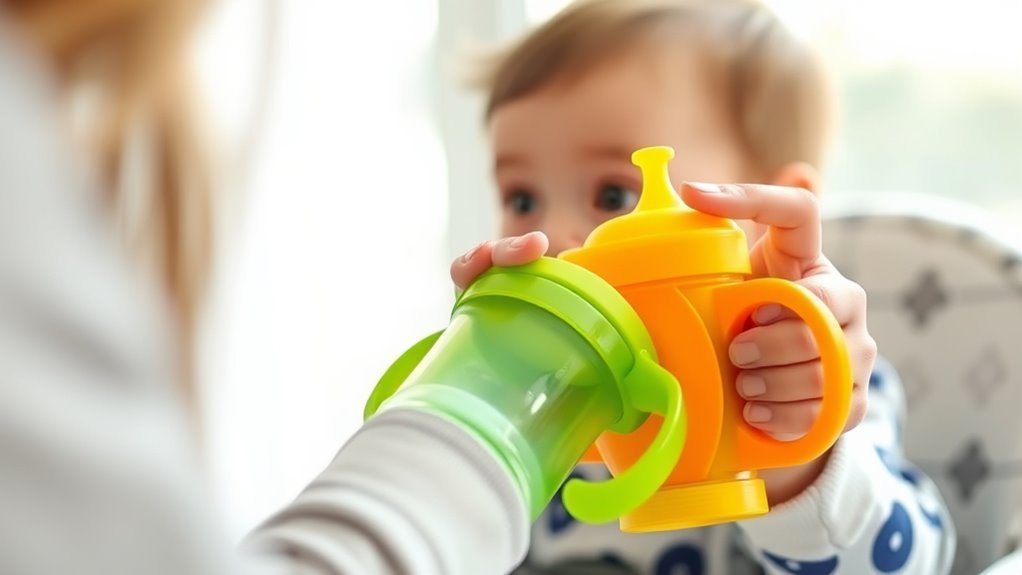
Although every baby develops at their own pace, most are ready to start using a sippy cup around six months old, once they can sit upright with good head control.
You’ll notice signs of readiness when your baby shows interest in handling objects and curiosity about drinks. If your baby is already eating purées or solids, that’s another clue they might be prepared to try a sippy cup.
Introducing it too early or too late can affect how well your baby develops oral muscles and learns proper drinking skills. Keep in mind, readiness varies—some babies might show interest before six months, while others might not until after their first year.
Watching for these signs helps you introduce the sippy cup at the right time, setting your baby up for success as they shift away from bottles. By paying attention to your baby’s readiness and ability to sit upright, you’ll know exactly when to start this important step.
Choosing the Best Sippy Cup for Your Baby
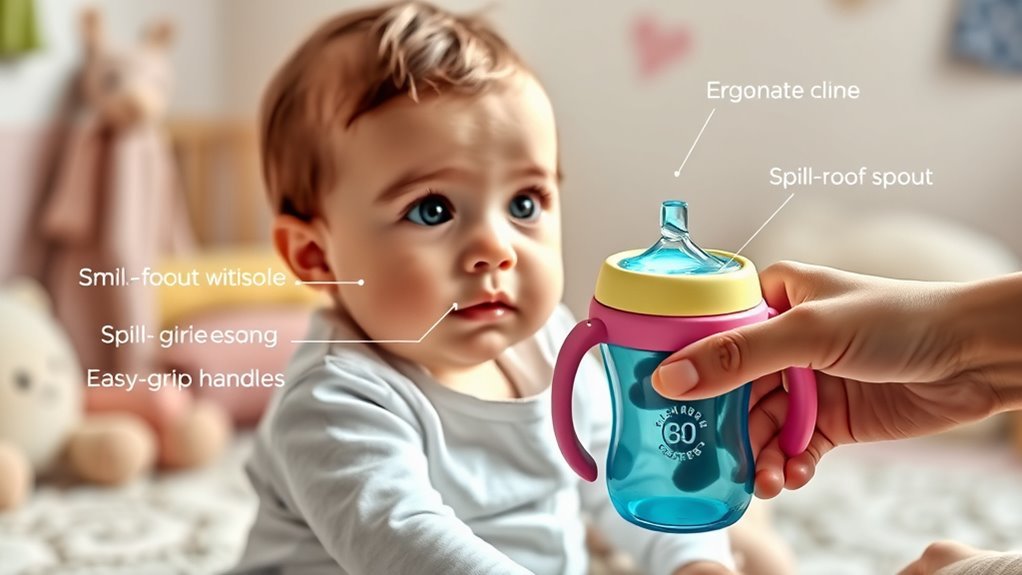
Picking the right sippy cup plays a big role in helping your baby shift smoothly from bottle feeding. To find the best sippy cup for your little one, focus on features that support an easy changeover and encourage learning to drink independently.
Here’s what to keep in mind: Choose a cup with soft, flexible spouts that mimic a bottle nipple, making the changeover gentle. Look for spill-proof valves to minimize messes while your baby practices.
Select cups with handles or grips designed for small hands, so your baby can hold it securely. And opt for age-appropriate designs recommended for babies around 6 months to match developmental readiness.
Also, prioritize BPA-free, dishwasher-safe materials for safety and convenience. By picking a sippy cup with these features, you’ll help your baby gain independence confidently and comfortably during this important feeding milestone.
How to Introduce the Sippy Cup at Mealtimes
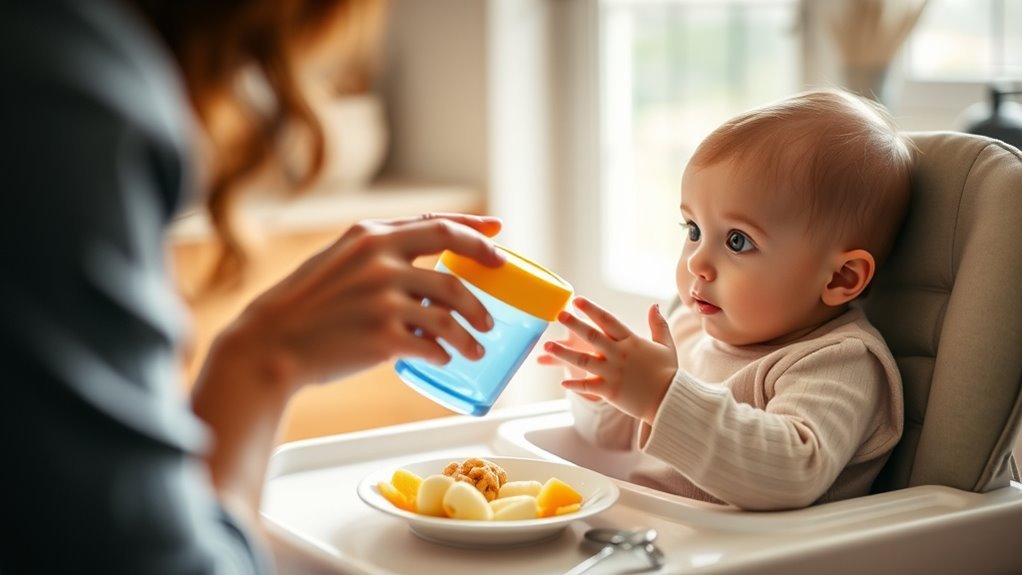
Start by offering the sippy cup with familiar fluids during mealtime to help your baby connect it with eating. Make sure your baby is comfortable and seated in their high chair.
Then, show them how to drink from the cup. Encourage your baby to explore the cup with their hands. Turning spills into a natural part of learning is totally normal.
Mealtime Routine Integration
Introducing the sippy cup during your baby’s regular mealtimes helps create a consistent routine that encourages acceptance. To smoothly integrate this new habit, follow these steps:
First, introduce the sippy cup at mealtimes when your baby is calm and attentive. Try to avoid moments when they’re fussy or distracted.
Next, fill the cup with familiar fluids like breast milk or formula. This makes it more appealing and comfortable for your little one.
You can also model how to sip from the cup yourself. When your baby sees you doing it, they’re more likely to want to try.
Finally, use positive reinforcement to encourage your baby. Praise their efforts and be patient as they explore this new skill.
Encouraging Cup Exploration
When you offer the sippy cup during mealtimes, fill it with familiar liquids like breast milk or formula. This makes your baby more willing to try it. Start with small amounts to reduce spills and make the initial exploration less messy.
Let your baby hold and touch the sippy cup at their own pace. This hands-on exploration helps build comfort. Be sure to model drinking from the cup yourself. Seeing you drink helps your baby understand how to use it.
Gradually include the sippy cup in your regular mealtime routine to create a sense of familiarity. By combining these steps, you encourage your baby to explore the sippy cup confidently. It becomes a natural part of their daily drink routine—without any pressure or frustration.
Encouraging Your Baby to Explore the Sippy Cup
Although it might take some time, encouraging your baby to explore the sippy cup during mealtimes helps build familiarity and comfort. To support this exploration, you need patience and a positive attitude.
Start by making the cup feel familiar—fill it with breast milk or formula your baby already knows. Then, gently encourage your baby to interact with the cup.
Begin by filling the cup with familiar milk, then gently encourage your baby to explore it.
Here’s how to encourage this exploration effectively:
- Introduce the sippy cup at mealtimes to create a consistent routine.
- Demonstrate how to hold and sip from the cup with enthusiastic facial expressions.
- Let your baby touch, mouth, and experiment with the cup freely, without pressure.
- Offer gentle encouragement and celebrate small successes to keep the experience positive.
Managing Spills and Messes During the Transition
You’ll notice plenty of spills as your baby learns to handle the sippy cup, so expect some messes. Start with small amounts of liquid and use towels or bibs to catch drips and make cleanup easier.
Practicing in easy-to-clean spaces can help you both stay calm during this messy shift. It’s all part of the learning process, so hang in there!
Expect Frequent Spills
Count on plenty of spills as your baby learns to control their sippy cup, especially during the early stages. Frequent spills are part of the learning curve, so being prepared helps reduce frustration.
To manage this messy phase, here are some tips you can try:
- Choose a spill-proof cup to minimize mess and simplify cleanup.
- Use practice sessions with small amounts of liquid to help your baby focus on control.
- Place a towel or bib under your baby to protect clothing and surfaces.
- Practice in easy-to-clean areas like the bathroom or outside to make spills less stressful.
It might feel a bit messy now, but with time, your little one will get the hang of it!
Tips For Easy Cleanup
Managing spills effectively can make introducing a sippy cup less stressful for both you and your baby. Use bibs and scoop bibs to catch spillages and protect clothes during practice.
Start with small amounts, like ½ oz, to minimize mess and simplify cleanup. Try practicing outside or in the bath to contain spills and reduce stress.
Keep towels handy to quickly clean any drips or splashes. It really helps to have everything within reach when you’re dealing with little ones.
| Tip | Action | Benefit |
|---|---|---|
| Use bibs | Wear scoop bibs | Protect clothes |
| Start small | Pour ½ oz liquid | Easier spill control |
| Choose location | Practice outside/bath | Contain mess, less stress |
These tips help you manage spills and keep the cleanup process smooth. You’ll feel more confident and less overwhelmed in no time!
What to Do If Your Baby Refuses the Sippy Cup
When your baby refuses the sippy cup, try dipping the spout in breast milk or formula to make it more appealing. This simple trick can encourage acceptance by associating the new cup with familiar tastes.
To ease the transition, follow these steps:
- Alternate between bottle and sippy cup during feeding to help your baby get used to the new container. It might take a little time, but switching back and forth can make the change less overwhelming.
- Remove valves or try offering the cup without the lid initially, making it easier for your baby to drink. Sometimes, less is more when it comes to new things.
- Offer a straw as an alternative, and model drinking yourself to motivate your baby to mimic the action. Babies love copying what they see!
- Be patient and make the experience positive by avoiding pressure—allow your baby time to adjust at their own pace. Remember, every little step counts.
Reducing Bottle Use While Increasing Sippy Cup Time
Start by gradually cutting back on bottle feedings and offering the sippy cup during meals to build a routine. Focus on mealtime cup usage to help your baby get used to independent drinking.
Encourage your little one patiently, and you’ll see their confidence grow as they rely less on the bottle. It might take some time, but keep at it! Your baby will get the hang of it before you know it.
Gradual Bottle Reduction
As you introduce sippy cups, gradually cutting back on daytime bottle feedings helps your baby gain independence while easing the shift.
To make the bottle reduction smooth, try this approach:
- Replace daytime bottle feedings with sippy cups filled with familiar fluids like breast milk or formula. This encourages your baby to accept the new cup.
- Limit bottle use to bedtime or naps. Offer sippy cups during other feeding times instead.
- Slowly decrease the milk amount in bottles. Substitute with water in both bottles and sippy cups to promote oral health.
- Aim to fully transition away from bottles by 12 months. This supports your baby’s oral development and reduces the risk of tooth decay.
This gradual bottle reduction helps your baby become more independent while making the switch to sippy cups easier and healthier.
Mealtime Cup Usage
Gradually replacing bottles with sippy cups during mealtimes helps your baby get comfortable with the new drinking method while maintaining familiar flavors like breast milk or formula. Use mealtime as a consistent chance to introduce a sippy cup, encouraging your baby to drink from a cup regularly.
Fill the sippy cup with breast milk, formula, or water to minimize mess and reduce sugary drink reliance. Demonstrate drinking from the cup yourself and let your baby explore it to build confidence and feeding skills.
Gradually increase sippy cup use during meals, easing the shift and reducing bottle dependency. This approach supports your baby’s development and helps make drinking from a cup a natural part of mealtime routines.
Encourage Independent Drinking
While your baby gets used to the sippy cup, encourage them to hold and sip independently to build confidence and reduce bottle reliance.
To promote independent drinking and support the progression from bottles to sippy cups, follow these steps:
- Gradually replace bottles with sippy cups during mealtimes to develop essential drinking skills. It might take some time, but your baby will catch on!
- Offer water in the sippy cup between feedings, giving your baby frequent, low-pressure practice. This way, they get comfortable without any pressure.
- Limit bottle use to specific times like bedtime, shifting daytime hydration entirely to the sippy cup. It helps make the transition smoother for both of you.
- Decrease liquid volume in bottles over time while increasing sippy cup usage to encourage independence. Little by little, your baby will start to rely on the sippy cup more and more.
Limiting Sugary Drinks in the Sippy Cup
Because sugary drinks can cause cavities and tooth decay, it’s important to limit them in your baby’s sippy cup. Sugary liquids increase the risk of early childhood caries, which harm tooth enamel, especially near the front teeth.
Limiting sugary drinks in your baby’s sippy cup helps prevent cavities and protects delicate tooth enamel.
To protect your child’s smile, use the sippy cup primarily for water and milk. The American Academy of Pediatrics advises avoiding juice or flavored drinks with added sugars in the sippy cup.
Offering water after your baby turns one not only reduces the risk of obesity but also supports healthy dental development. By focusing on water and milk, you’re establishing healthy drinking habits that benefit your child’s oral health long-term.
Limiting sugary drinks in the sippy cup helps prevent tooth decay and sets a foundation for good nutrition. Remember, prolonged exposure to sweetened beverages can cause lasting damage, so stick to healthier options to keep those little teeth strong and cavity-free.
Signs It’s Time to Wean Off the Sippy Cup
Keeping sugary drinks out of your baby’s sippy cup helps protect their teeth. But eventually, you’ll need to know when it’s time to move beyond the sippy cup altogether.
Recognizing the signs of readiness for weaning off the sippy cup is key for a smooth shift. Most children naturally transition by age 2, showing a readiness to use more advanced cups.
Here are four signs indicating it’s time to begin the change from sippy cup:
- Your child demonstrates developing oral coordination to handle open or straw cups.
- They show decreased interest in the sippy cup and prefer other drinking methods.
- Your toddler can sit and drink independently without spilling.
- They are reaching or have passed the age 2 milestone, when many naturally wean off the sippy cup.
Watching for these signs of readiness helps facilitate a natural shift. It also supports healthy drinking habits as you start weaning off the sippy cup.
Moving From Sippy Cups to Regular Cups Smoothly
As you notice your child showing readiness, start replacing sippy cups with open or straw cups around 18 to 24 months. This helps develop their oral muscles and independence.
Begin the transition during mealtimes, offering an open cup alongside familiar sippy cups. Encourage your toddler to practice drinking skills by modeling how to sip from these cups yourself.
Start during meals by offering an open cup alongside sippy cups and model sipping for your toddler.
Gradually limit the sippy cup’s use to reduce dependency and avoid prolonged exposure to sugary liquids. Offer positive reinforcement as your child gains confidence handling the open cup.
Keep the transition smooth by providing age-appropriate cups that feel familiar and manageable. Supporting your toddler while promoting independence helps build their drinking skills effectively.
With patience and consistent practice, moving from a sippy cup to a regular cup becomes a natural step in your child’s growth. This approach not only strengthens oral muscles but also fosters self-reliance in your little one.
Frequently Asked Questions
How Do I Introduce a Sippy Cup to My Baby?
You start by offering familiar fluids in a sippy cup during meals. Show your baby how to drink, let them explore the cup, and don’t worry about spills.
They’ll get better with practice and encouragement. Just keep it fun and relaxed!
When Should You Transition a Baby to a Sippy Cup?
You should shift your baby to a sippy cup by their first birthday to reduce tooth decay risk, as recommended by the American Academy of Pediatrics.
Wait until they sit well and show interest before making the switch. That way, it’s easier and more comfortable for them to learn.
Should Babies Learn Straw or Sippy Cup First?
You should let your baby learn the straw cup first. It helps develop better sucking and swallowing skills, promoting oral motor growth.
Once they master that, introducing a sippy cup becomes easier and more effective. It’s a simple step that really makes a difference!
What Should Babies’ First Sippy Cup Be?
Wondering what your baby’s first sippy cup should be? You’ll want a soft, flexible spout that feels like a nipple.
It should be lightweight with handles, BPA-free, small-sized, and spill-proof. That way, your little one can sip confidently and cleanly.
Conclusion
Introducing a sippy cup might seem tricky at first, but it’s a small step toward big independence for your baby. While it’s easy to cling to the comfort of bottles, embracing the sippy cup opens the door to new skills and less mess.
You’ll balance patience with progress, spills with smiles, and soon enough, those tiny sips will turn into confident drinks from regular cups. Change feels challenging, but it’s also exciting!
Remember, introducing a sippy cup is all about helping your baby gain independence and develop essential drinking skills. With a little patience and encouragement, your little one will transition smoothly from bottles to sippy cups. This small change not only reduces mess but also builds confidence, making mealtime more enjoyable for both of you. Keep a positive attitude, and celebrate every sip—because every step counts on the journey to drinking from regular cups!