10 Tips to Prevent Your Baby From Falling off the Bed
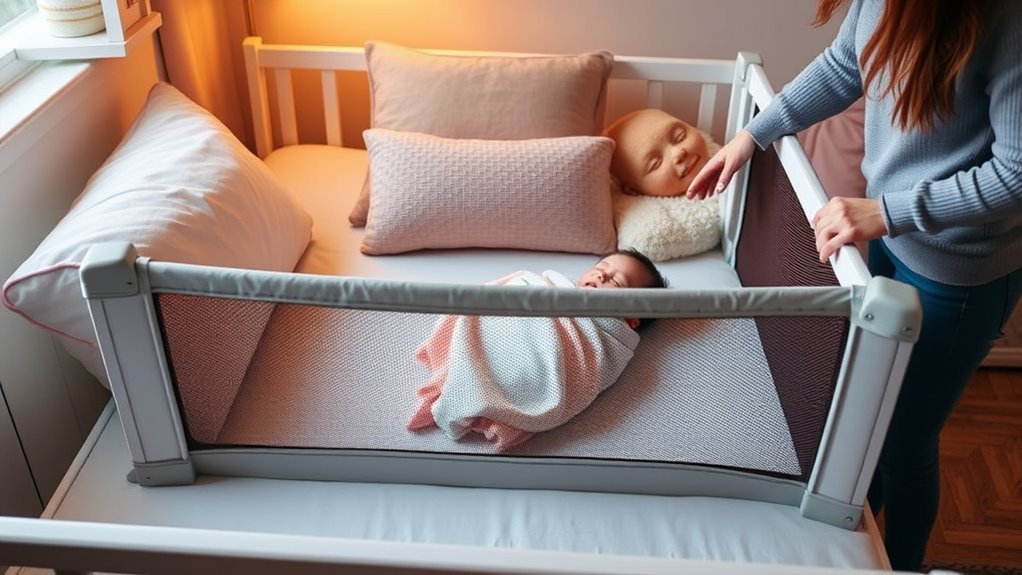
To keep your baby safe from falls, always keep at least one hand on them when they’re on the bed and stay close. This simple habit can prevent most accidents before they happen. Use secure bed rails with small openings to make sure your little one doesn’t slip through.
Also, remove pillows or soft items from the sleep area to create a safer space. Lower the crib mattress as your baby grows, so they can’t climb or fall out easily. It’s a small change that makes a big difference.
Create a clutter-free zone around the bed to avoid trips and bumps. Floor mats are great for cushioning falls once your baby starts rolling around.
Following these steps can make a big difference in your baby’s safety and comfort, giving you peace of mind while they sleep or play.
Key Takeaways
- Always keep at least one hand on the baby whenever they are on the bed. This helps prevent sudden falls or rolling off.
- Install secure bed rails with small openings and safety straps. These block gaps and edges around the mattress, keeping your baby safe.
- Remove pillows, blankets, and soft items from the bed. This reduces the risks of suffocation and entrapment.
- Lower the mattress to its lowest setting as the baby grows. Also, regularly check for gaps or loose fittings to avoid accidents.
- Use thick, soft mats around the bed. These will cushion any accidental falls when your baby begins to roll or crawl.
Why Preventing Baby Falls From Beds Matters
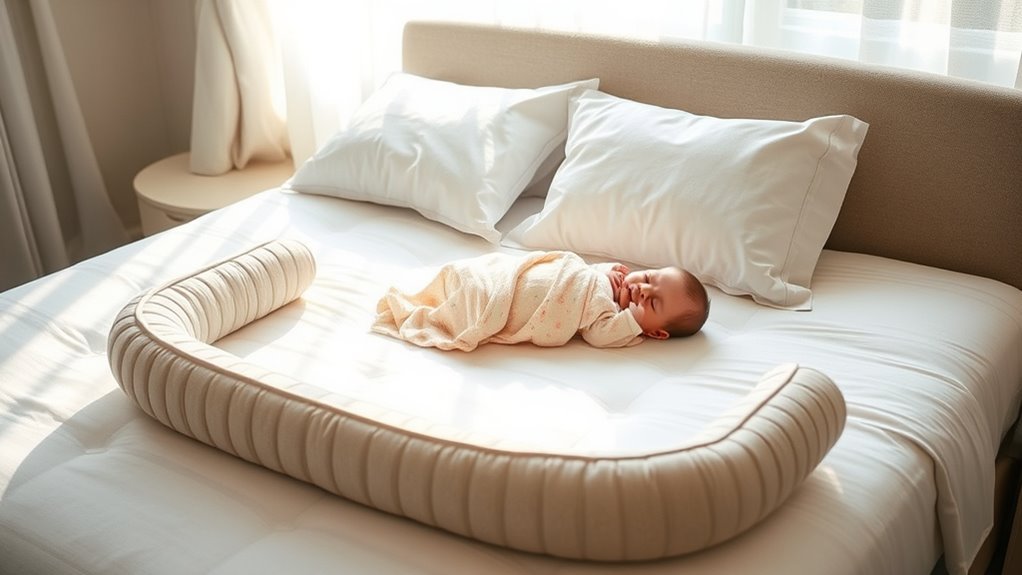
Because babies can roll or climb out of bed unexpectedly, preventing falls is vital to keep them safe. Falls from beds are a common cause of injuries in infants and young children, often leading to serious problems like head injuries or fractures.
You might think a quick glance is enough, but most falls happen when caregivers are momentarily inattentive or haven’t set up proper safety measures. When your baby falls, they risk concussions, skull fractures, or broken bones, making prevention a must.
You can’t always predict when your little one will move, so taking steps to reduce falls is essential. Simple safety measures like installing bed rails and keeping the sleeping area free of clutter can make a big difference.
Keep a Hand on Your Baby Whenever They Are on the Bed

Whenever your baby is on the bed, keep at least one hand on them to prevent sudden falls. This simple action acts as a physical barrier, giving you immediate control if your baby wiggles or tries to move.
Always stay close and attentive—never leave your baby unattended, even for a moment. Being hands-on especially matters when your baby is near the bed’s edge, where the risk of falling rises sharply.
To keep a hand on your baby effectively, consider these key moments:
| Situation | Action to Take | Reason |
|---|---|---|
| Baby is lying still | Keep a gentle touch | Prevent sudden movements |
| Baby starts wiggling | Firm hand hold | Stop unexpected rolling |
| Baby near bed edge | Increase grip strength | Avoid falls from edges |
| Baby tries to crawl | Guide movements | Keep them safe on bed |
| Baby being lifted off | Support fully | Ensure smooth transition |
Use Bed Rails or Guards to Block the Edges
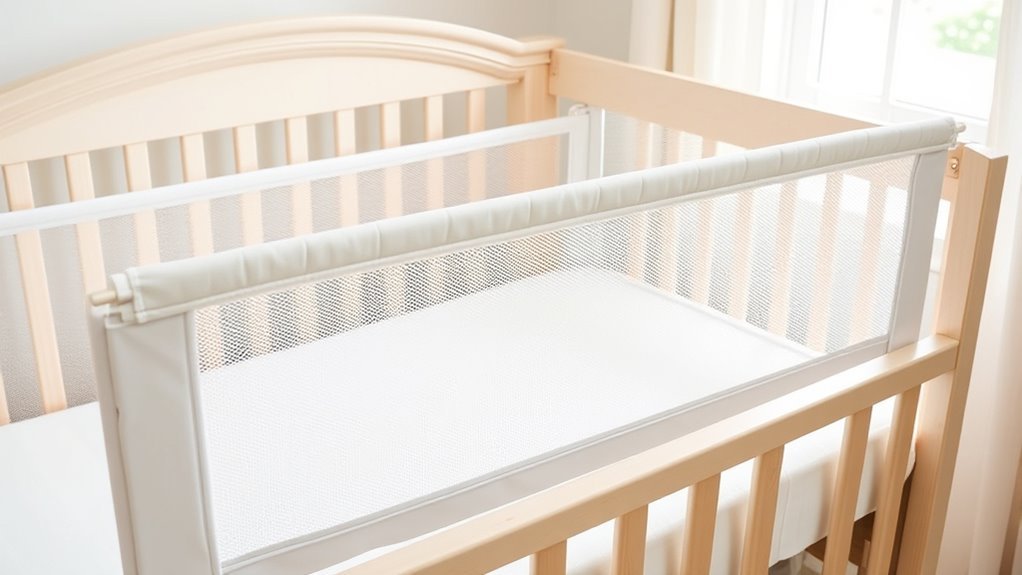
You’ll want to choose bed rails with small openings to keep your baby safe from slipping through. Make sure to install the guards securely on all open sides of the bed for full protection.
It’s a good idea to regularly check that the rails stay firmly attached as your baby grows. That way, you can be sure they’re always safe and sound.
Choosing Safe Bed Rails
When selecting bed rails or guards, focus on those designed specifically for infants and toddlers to guarantee reliable protection. Look for rails with small openings no larger than 2 inches to prevent your baby from slipping through.
Make sure the bed rails fit tightly against the mattress and include safety straps to secure them firmly in place. Avoid makeshift barriers or pillows, which don’t offer proper protection.
Regularly inspect the rails for any loose parts or damage to keep them safe and effective. Choosing approved bed rails with these features helps you block the edges properly and reduces the risk of your baby falling off the bed.
This way, you can have peace of mind during naps and bedtime.
Installing Bed Guards Properly
Although choosing the right bed rails is essential, installing them properly is just as important to keep your baby safe. Make sure the bed guards fit snugly and attach securely to the mattress. Use safety straps if provided to prevent gaps where your baby could slip through.
Opt for rails with small openings—no larger than 2 inches—to avoid entrapment or falls. If your baby can crawl or climb, install guards on all sides. This blocks every edge effectively.
Also, regularly check the guards’ stability, especially after moving or cleaning the bed. Don’t forget to remove pillows, blankets, and stuffed toys from the bed. This reduces suffocation risks and prevents your baby from getting trapped between the mattress and the guard.
Proper installation guarantees maximum protection. It’s worth taking the time to get it right!
Avoid Pillows, Blankets, and Stuffed Animals on the Bed
Since soft items like pillows, blankets, and stuffed animals can increase the risk of suffocation and falls, you should keep them out of your baby’s sleep area. Pillows, in particular, pose a danger because they can block your baby’s airway if they roll onto their face.
Loose bedding and stuffed toys can also cause your baby to slip or become trapped, increasing the risk of injury or suffocation. The American Academy of Pediatrics recommends using a firm, flat sleep surface without any pillows or soft items for infants under 12 months.
Place Your Baby on Their Back, Positioned Away From the Bed Edge
Removing pillows, blankets, and stuffed animals from your baby’s sleep area helps reduce risks, but positioning your baby correctly is just as important. Always place your baby on their back, ensuring they lie flat and comfortably.
Position your baby in the center of the mattress, well away from the edges, to minimize the chance of rolling off. Make sure the fitted sheet fits snugly, leaving no gaps between the mattress and bed frame where your baby could slip through.
For added protection, consider using safety straps or guardrails designed to keep your baby safely on the bed. These measures help prevent accidental falls while allowing your baby to rest securely.
Change Diapers on the Floor or Another Safe Surface
When your baby starts rolling over, changing their diaper on the floor or another stable surface becomes the safest choice to prevent falls. Elevated surfaces like beds or changing tables can increase the risk as your little one gets more mobile.
To keep diaper changes safe and stress-free, follow these tips:
Follow these simple tips to ensure safe, stress-free diaper changes for your active baby.
- Use a changing pad with raised sides and safety straps on a firm, level surface. This gives you extra security.
- Always keep one hand on your baby during changes, even on safe surfaces. This helps prevent sudden rolls or movements.
- Avoid high or unstable places. Instead, pick a dedicated changing station or a flat spot on the floor.
Lower the Crib Mattress as Baby Develops Mobility
Once your baby can sit or pull up, lower the crib mattress to its lowest setting to keep them safe.
Always follow the manufacturer’s instructions to adjust the height properly and make sure the mattress is securely in place.
This simple step helps prevent falls as your little one becomes more mobile.
Adjust Mattress Height Early
As your baby starts sitting up and exploring their mobility, you’ll want to lower the crib mattress to its lowest setting to reduce the risk of falls. It’s important to adjust mattress height early and regularly as your baby grows.
Here’s how to do it safely:
- Lower the mattress as soon as your baby can sit up independently, usually around six months.
- Gradually adjust mattress height downward as your baby starts crawling, standing, or pulling up.
- Always keep the mattress at its lowest setting once your baby can stand to minimize fall risk.
Follow Manufacturer Guidelines
Because your baby’s mobility develops quickly, you should follow the manufacturer’s guidelines to lower the crib mattress safely and at the right time. Typically, this means lowering it to the lowest position once your baby can sit or pull up, usually between 6 to 9 months.
By following manufacturer guidelines, you’ll reduce the risk of falls from the crib as your baby becomes more active. Always verify the mattress is securely locked in place after adjusting its height to prevent accidental elevation.
Additionally, check for any gaps between the mattress and crib sides to avoid your baby getting trapped or falling out. Sticking to these steps helps create a safer sleeping environment as your baby grows and gains mobility.
Ensure Mattress Firmness
Lowering the crib mattress as your baby starts moving around more keeps them safe from falls and injuries. When your little one begins to sit up or pull to standing, usually around six months, it’s super important to adjust the mattress height to the lowest setting.
This helps stop them from climbing or accidentally falling.
To guarantee mattress firmness and safety:
- Follow the manufacturer’s instructions to securely fit the mattress at the lowered level.
- Regularly check that the mattress stays firmly in place with no gaps between it and the crib sides.
- Keep the mattress at the lowest setting as your baby grows and becomes more mobile.
Doing these simple things really helps reduce risks and makes the sleeping environment safer for your baby.
Install Safety Gates to Prevent Access to Elevated Surfaces
When you install safety gates at the top and bottom of stairs, you create a crucial barrier that keeps your baby from wandering onto elevated surfaces unsupervised. Choose safety gates with openings no larger than 2 inches to prevent your baby from squeezing through.
For stairways, opt for hardware-mounted gates—they offer the most stability and must be securely installed to guarantee they don’t come loose. You can also place safety gates across doorways or room entrances to restrict access to unsafe areas like bedrooms or playrooms.
To maintain safety, remove or firmly secure any objects near the gates that your baby might use to climb or dislodge the gate. By thoughtfully installing and maintaining these safety gates, you greatly reduce the risk of your baby accessing elevated surfaces where falls could happen, helping to keep your little one safe around the clock.
Create a Clutter-Free Zone Around the Bed to Prevent Falls
Keep the floor around your baby’s bed clear of toys, clothes, and cords to prevent trips and falls.
It’s a good idea to remove any unnecessary furniture or items that your baby could use to climb or pull.
Also, organize bedside essentials so you can keep the space safe and clutter-free at all times.
This way, you’re creating a secure environment where your little one can rest without any risks.
Clear Floor Space
Although it might seem simple, maintaining a clear floor space around your baby’s bed plays a crucial role in preventing falls. A clutter-free zone reduces risks and creates a safer environment.
To guarantee clear floor space, start by removing toys, blankets, and other items from around the bed. This keeps the area tidy and accessible.
Also, regularly check for loose objects or cords your baby could grab or trip over during bedtime.
And don’t forget to keep the floor clean and dry. Avoid slippery spills that might cause your baby to slip.
Remove Tripping Hazards
Since a cluttered area increases the risk of falls, you should remove toys, shoes, and other items from around your baby’s bed. Creating a clutter-free zone helps eliminate common tripping hazards that could cause your baby to stumble or fall.
Regularly check for loose rugs or carpets near the bed and secure them with double-sided tape or non-slip pads to keep them firmly in place. Also, remove any electrical cords or wires that cross the floor around the bed, as these can easily trip both you and your baby.
Make sure the path to and from the bed is wide and free of unnecessary furniture or objects. Keeping this area tidy reduces tripping hazards and greatly lowers the risk of accidental falls.
Organize Bedside Items
To prevent your baby from pulling items off the bedside and risking a fall, you should organize all lamps, phones, books, and other objects well away from the edge. Creating a clutter-free zone helps reduce the chance of accidents.
Here’s how to organize effectively:
- Use baskets or drawers under or beside the bed to store items neatly and out of your baby’s reach.
- Regularly check for small objects, toys, or loose cords and keep them away to avoid choking hazards and prevent pulls that could cause falls.
- Clear the area around the bed of any sharp or hard objects that might injure your baby if they fall or try to grab something.
Use Floor Play Mats to Prevent Falls When Baby Starts Rolling
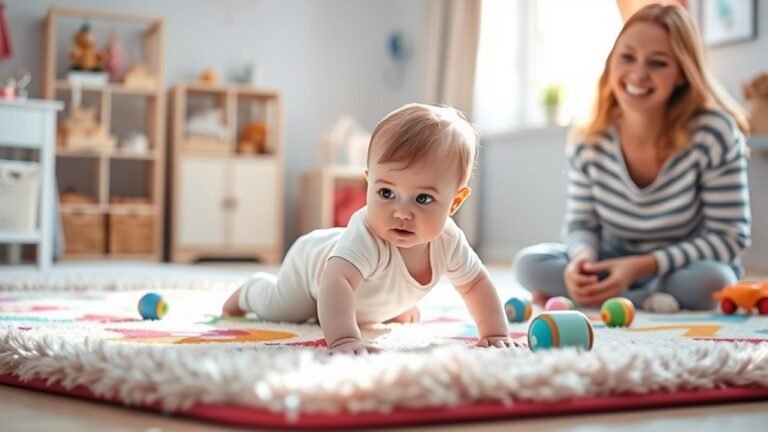
When your baby starts rolling, placing a thick, soft floor play mat around the bed creates a cushioned area that helps prevent injuries from falls. Floor play mats provide a safe, padded space that absorbs impact if your little one accidentally rolls off the bed.
Moving your baby to the floor for playtime when they begin rolling reduces the risk of falls from elevated surfaces. Make sure the play mat covers a large area around the bed to minimize the chance of your baby hitting a hard floor.
This setup not only protects your baby but also gives them a secure place to practice moving and exploring freely. Always supervise your baby during floor play and rest times to respond quickly if they move dangerously.
Frequently Asked Questions
What Can I Use to Prevent My Baby From Falling off the Bed?
You can use a safety bed rail with small openings that securely attaches to the mattress. This helps create a barrier so your baby doesn’t roll off easily.
Also, place a non-slip mat beside the bed. It adds an extra layer of protection just in case. Don’t forget to remove pillows or heavy blankets to keep your baby safe while supervised.
How Do I Make Sure My Baby Is Okay After Falling off Bed?
Think of your baby like a delicate flower after a storm—watch closely for 24 hours.
If they’re unusually sleepy, vomiting, or irritable, don’t hesitate to call your doctor.
Trust your gut; it knows best.
What Is the 5-3-3 Rule for Babies?
The 5-3-3 rule means you keep your baby in a safe sleep space under 12 months. You should avoid elevated surfaces once they roll.
Make sure to secure the sleep area by 3 months. And keep supervising them until they’re 3 years old. It’s all about keeping your little one safe and sound!
How to Avoid a Baby Falling Out of Bed?
You can avoid your baby falling out of bed by placing them in the middle and using a secure bed rail.
Also, never leave them unattended. It’s super important to keep an eye on them.
Make sure to clear the area around the bed to create a safe sleeping space without any hazards. That way, you can relax knowing your baby is safe.
Conclusion
Preventing your baby from falling off the bed is essential since nearly 50,000 children end up in emergency rooms each year from falls at home. By keeping a hand on your baby, using bed rails, and creating a safe, clutter-free space, you’re making a big difference.
Remember, simple steps like placing your baby on their back and lowering the mattress as they grow can keep them safe and give you peace of mind.
Stay vigilant and protect your little one! Taking these precautions not only helps prevent your baby from falling off the bed but also creates a safer sleeping environment overall. With a few easy adjustments, you can reduce risks and ensure your baby sleeps soundly and securely. Prioritizing these safety tips means fewer worries for you and a safer space for your baby to grow and explore.