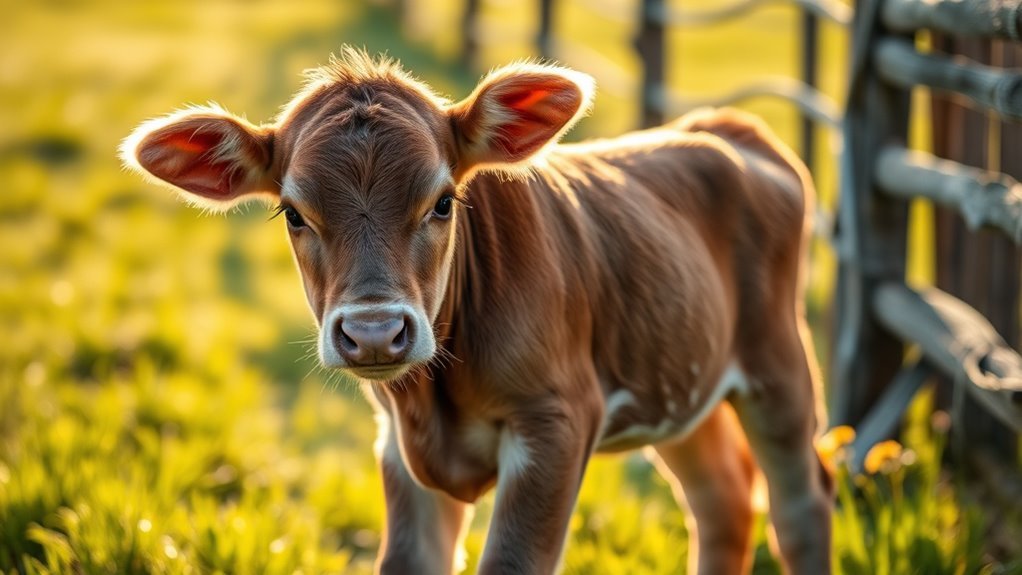
5 Prices to Know for Buying a Baby Cow
When buying a baby cow, it’s good to know what prices to expect. Holstein calves usually go for around $420-$440, while Jerseys tend to be closer to $235. These prices can give you a solid starting point when looking for the right calf.
Auctions often list calves between $375-$600, but don’t be surprised if private sales push that number up to $1,400-$1,500. The higher price usually comes with added health benefits, which might be worth it.
Health is important—a sick calf might cost less upfront, but it can lead to bigger care expenses down the road.
Also, don’t forget about extra fees like $100-$300 for transport and handling. Prices can change depending on where you live, with northern areas often seeing higher costs.
Keep these figures in mind as you explore the best way to invest in your next calf.
Key Takeaways
– Holstein calves cost around $420-$440, Jersey calves about $235, and beef calves range from $600-$650 depending on age and breed.
Prices can vary quite a bit based on the calf’s background. So, it’s good to know what to expect before you buy.
– Auction prices typically range from $375 to $600 but offer less health information compared to private treaty sales.
Auctions might be cheaper, but you don’t get as much info about the calf’s health. That can be a bit risky.
– Private treaty sales are higher priced ($1,400-$1,500) but include vaccinations and pregnancy checks for better health transparency.
It costs more, but you’re paying for peace of mind with those extra health checks and vaccinations.
– Healthy calves fetch $500-$600, while sick or weak calves sell for $375-$590 due to lower marketability and higher care costs.
Obviously, healthy calves are worth more. Sick or weak ones might save you money upfront but could cost more in care later on.
– Additional expenses like transportation ($100-$300+), veterinary fees ($50-$200), and handling ($100-$300) must be budgeted when buying calves.
Don’t forget, buying the calf is just part of the cost. You’ll want to plan for these extra expenses too.
Baby Calf Prices By Breed And Age
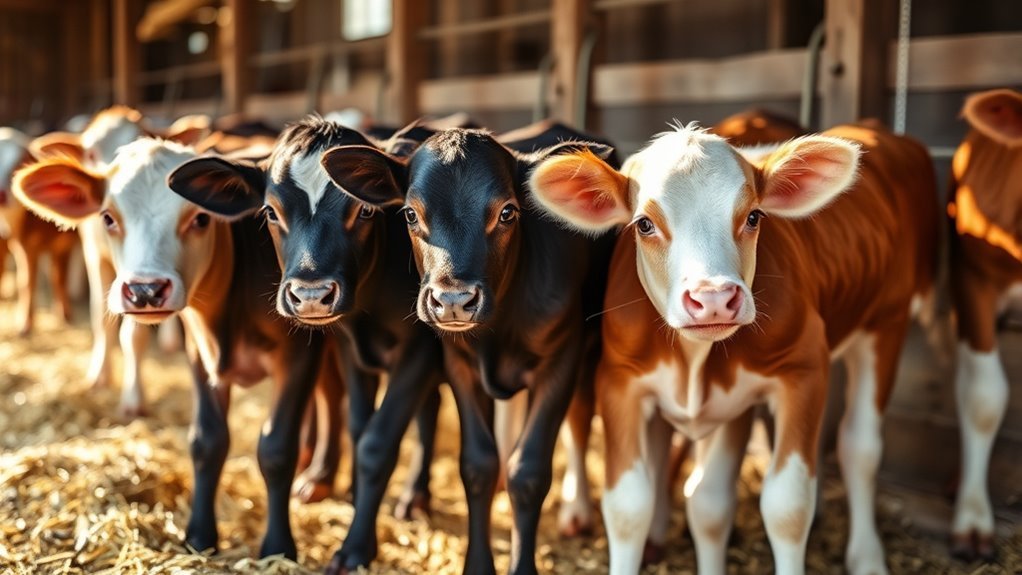
While prices vary widely, you can expect to pay around $420 to $440 for Holstein calves aged 1 to 3 days. Jersey calves of the same age typically cost about $235.
Baby calf prices depend heavily on breed and age, with dairy calves like Holsteins and Jerseys priced differently due to their market demand. Beef calves, usually aged 2 to 5 weeks, tend to cost more, generally between $600 and $650. This is influenced by their size and condition.
The calf cost also varies by health; weak or sick calves aged 1 to 5 days may sell for $375 to $590, depending on the sale location. And don’t forget, regional differences play a role too.
In northern areas, calves sometimes price at over $750, while southern markets might price similar calves closer to $350. Knowing these factors helps you make informed decisions when buying a baby calf by breed and age.
Auction Vs. Private Treaty Prices For Baby Cows
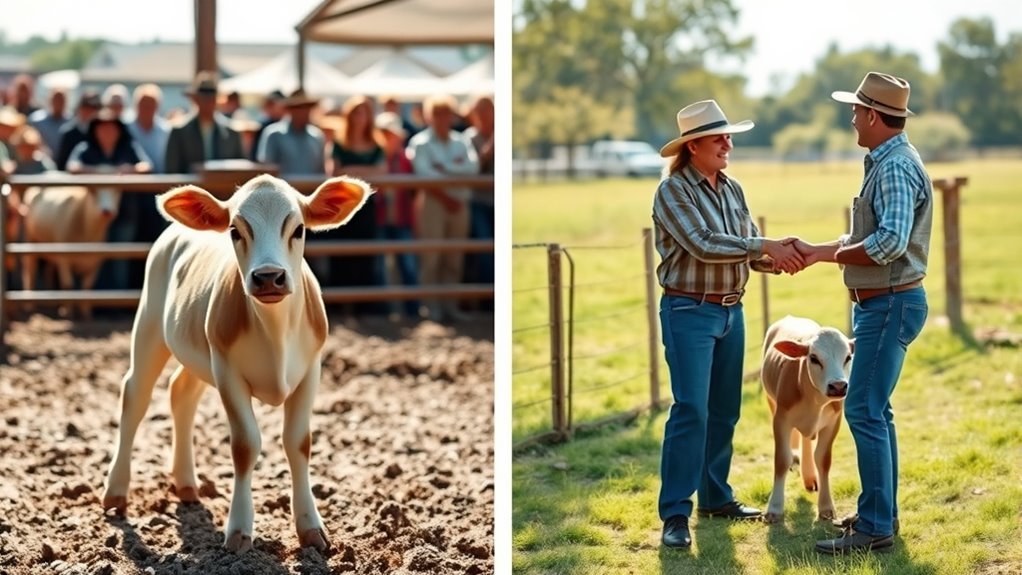
Understanding the price differences between auctions and private treaty sales can help you decide the best way to purchase a baby calf. Auctions often offer calves at lower prices, typically ranging from $375 to $600 depending on calf health.
Private treaty sales usually cost more, around $1,400 to $1,500, but they often include added benefits like vaccination and pregnancy checks. Market fluctuations and regional demand affect prices in both methods, so it’s essential to think about these factors.
| Sale Method | Typical Price Range | Additional Costs |
|---|---|---|
| Auction | $375 – $600 | Minimal, less health info |
| Private Treaty | $1,400 – $1,500 | Vaccination, handling fees |
| Market Impact | Varies | Influences price volatility |
Choosing between auction and private treaty depends on your budget and preference for health transparency. Both methods have pros and cons linked to price and calf condition.
Health And Condition Impact On Baby Cow Prices
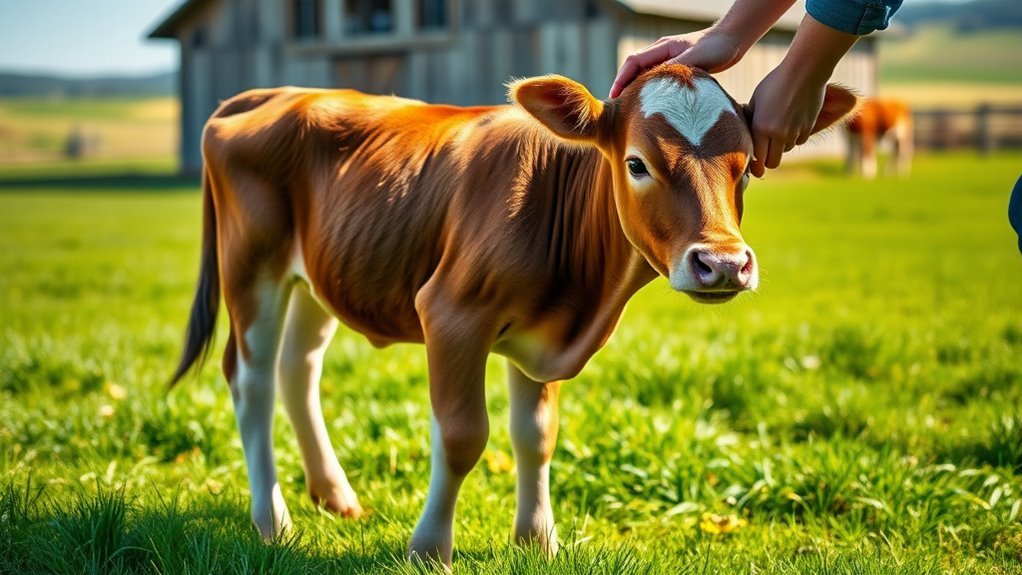
Several factors tied to health and condition can dramatically affect the price you pay for a baby cow. When you’re buying, healthy calves generally command higher calf prices, often ranging from $500 to $600. Their strong calf condition and vigorous start boost their calf market value because they promise better growth and profitability.
On the other hand, sick calves or those showing signs of weakness or respiratory issues tend to sell for much less, sometimes between $375 and $590. These health challenges lower their calf health status and future marketability, which directly impacts their price.
Paying attention to livestock health is vital since calves in poor condition might require extra care, raising your costs indirectly. By focusing on calf health and condition, you guarantee you invest in animals with the best growth potential, making your purchase more worthwhile.
Additional Costs When Buying Baby Cows
When you buy baby cows, the initial price is just one part of what you’ll pay. Additional costs such as transportation, veterinary expenses, and handling fees can considerably increase your total investment.
For example, transportation might add hundreds of dollars depending on the distance. Veterinary expenses cover health checks, vaccinations, and treatments, ranging from $50 to $200 per calf. Handling fees, including vaccination and inspections, also add up.
Beyond these, ongoing costs for feeding, housing, and healthcare must be considered to ensure your calves thrive.
| Cost Type | Typical Range | Notes |
|---|---|---|
| Transportation | $100 – $300+ | Depends on distance and method |
| Veterinary Expenses | $50 – $200 | Health checks and vaccinations |
| Handling Fees | $100 – $300 | Vaccination, inspection |
| Feeding & Housing | Variable | Ongoing expenses |
Planning for these additional costs helps you budget effectively when buying baby cows.
Where To Find Affordable Baby Cows Near Arnprior
If you’re looking for affordable baby cows near Arnprior, local livestock auctions are a great place to start. They usually offer 1-5 day old calves priced between $500 and $600.
These auctions have a variety of baby calves, so you can compare prices and pick the best fit for your farm management needs.
Private sales in Arnprior might cost a bit more, but they often come with detailed health and vaccination records. That info can be really valuable when you’re making a choice.
It’s also smart to check online marketplaces and community groups. They often list affordable baby calves nearby, and you can connect directly with sellers.
Buying from local farms or breeders helps cut down on transportation costs. Plus, you get to inspect the calves in person, which is a big plus for ensuring quality.
Keep in mind, calf prices vary by region. In northern areas, prices can sometimes go over $750 for similar calves.
Using these strategies will help you find healthy baby cows that fit your budget and support your farm management goals.
Frequently Asked Questions
How Much Do Baby Cows Usually Cost?
You’ll usually pay between $420 and $650 for baby cows, depending on their age, breed, and health. Prices can vary widely, so you’ll want to check local markets to find the best deal for your needs.
It’s a good idea to shop around a bit and ask questions. That way, you can be sure you’re getting a healthy calf at a fair price.
How Many Cows Do You Need to Make $100,000 a Year?
You’ll need about 250 cows to make $100,000 a year, since each calf nets around $400.
Managing costs smartly lets you hit that income by selling one calf per cow annually.
It’s all about keeping things efficient and making sure each cow produces consistently.
What Are 600 Lb Calves Worth?
A 600 lb calf typically costs you between $600 and $750, depending on breed, age, and market. Prices can fluctuate, so you’ll want to check local demand and calf condition before buying.
It’s always a good idea to shop around and compare prices. That way, you can make sure you’re getting the best deal possible.
What’s the Average Price to Buy a Cow?
You’ll usually pay around $375 to $590 to buy a cow, depending on breed and health. Prices can spike during calving season, so it’s smart to factor in timing and location when budgeting for your purchase.
It really helps to keep an eye on the season. Buying outside of peak times might save you some money. Plus, where you buy from can make a big difference too.
Conclusion
When buying a baby cow, knowing prices by breed and age helps you spot a good deal. Did you know auction prices can be up to 15% lower than private treaty sales? That’s a big difference that could save you money.
Don’t forget to factor in health checks and extra costs like transport. These hidden expenses can add up quickly if you’re not prepared.
With this info, you’ll be ready to find the best baby calf near Arnprior without breaking the bank. Understanding price variations and additional costs ensures you make a smart purchase and get the most value for your money. So, whether you’re shopping at auctions or private sales, being informed puts you ahead in finding the perfect baby cow.