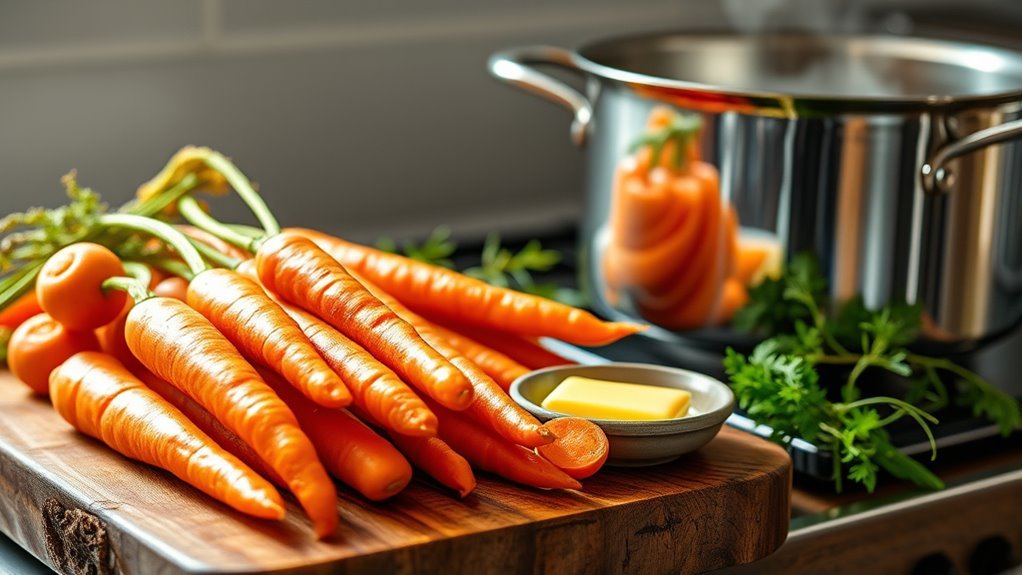
How to Cook Baby Carrots in 7 Simple Steps
To cook baby carrots in 7 simple steps, start by rinsing them well and removing any blemishes. This ensures your carrots are clean and ready to cook.
Boil the baby carrots in salted water until they become tender, which usually takes about 15-20 minutes.
Once they’re soft, drain them thoroughly to remove all the water.
Then, toss the carrots with melted butter or olive oil for a delicious, rich flavor.
You can season them with salt, pepper, your favorite herbs, or even add a touch of sweetness like honey.
Serve the baby carrots warm as a tasty side dish or a healthy snack.
If you have leftovers, make sure to store them properly to keep them fresh.
Follow these easy steps, and you’ll enjoy perfectly cooked, flavorful baby carrots every time!
Key Takeaways
- Rinse and inspect baby carrots. If they’re fresh or garden-grown, you might want to peel them first. Then, pat them dry before cooking.
- Place the carrots in a pot and cover them with salted cold water. Bring it all to a boil.
- Once boiling, simmer the carrots for about 15-20 minutes. You can check if they’re tender by poking them with a fork or knife.
- Drain the water thoroughly. Then toss the carrots in melted butter or olive oil, adding any seasonings you like.
- Serve them warm! If you have leftovers, store them in an airtight container for 3-5 days. Or, freeze them if you want to keep them longer.
Ingredients and Tools Needed for Baby Carrots
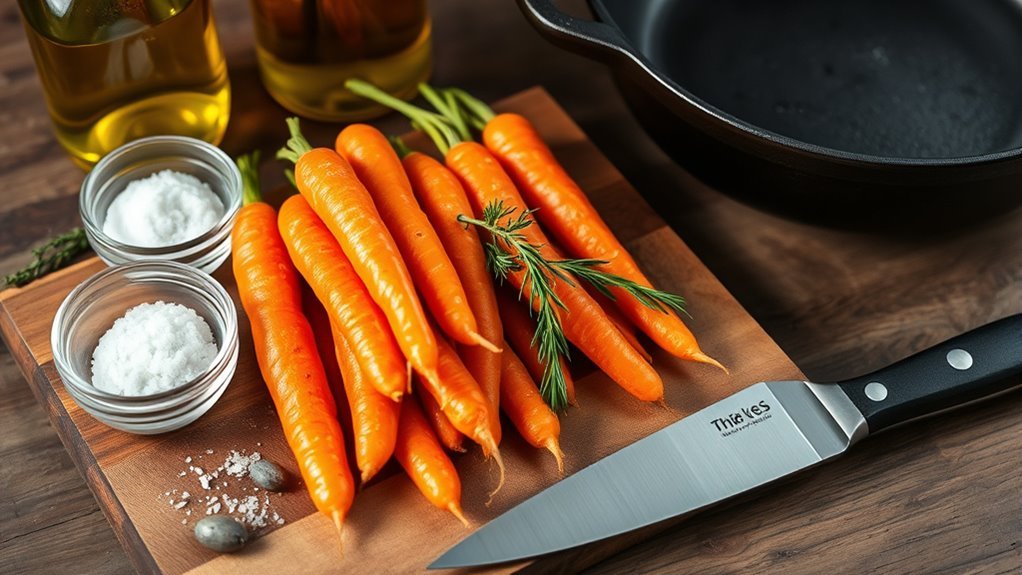
Before you start cooking baby carrots, make sure you have a 16-ounce package of carrots—either fresh or pre-bagged—and the right tools on hand. You’ll need a large pot to boil the baby carrots and a strainer or colander to drain them afterward.
Gather a 16-ounce package of baby carrots and essential tools like a pot and strainer before cooking.
A stove is essential for heating, and utensils like a spoon or spatula will help you stir the carrots as they cook. For measuring ingredients like butter, sugar, or honey, use measuring cups to keep your flavors balanced.
Fresh parsley, salt, and black pepper are great for seasoning, so have those ready if you want to add extra taste. Optional ingredients such as honey or brown sugar can enhance the sweetness.
Also, having a lid can speed up cooking and assist with draining. By gathering these tools and ingredients beforehand, you’ll guarantee a smooth, efficient process when cooking your baby carrots.
Washing and Preparing Baby Carrots
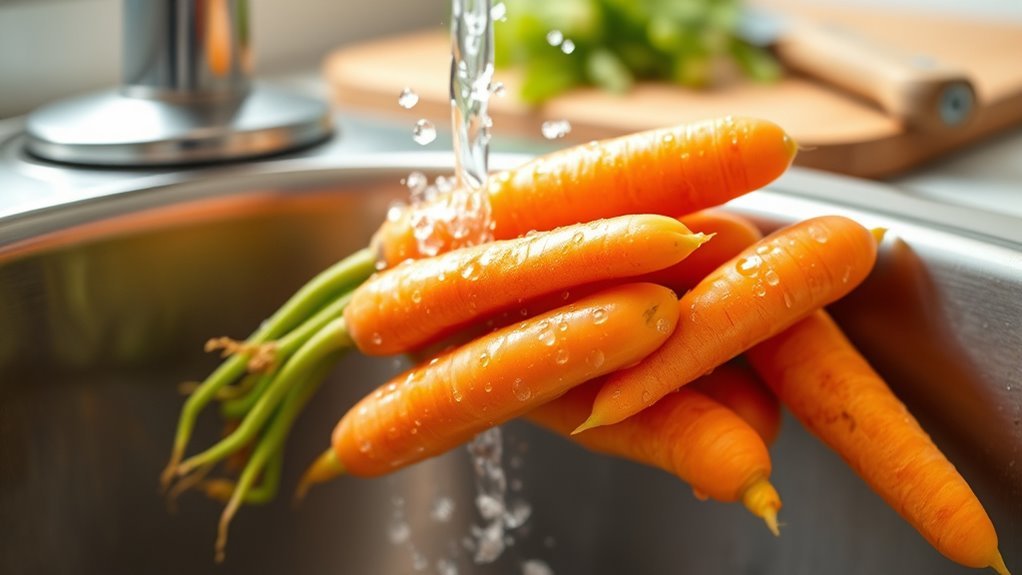
How exactly should you wash and prepare baby carrots to guarantee they’re clean and ready to cook? Proper washing and prepping assure your baby carrots are free from dirt and any unwanted residue.
Here’s a simple way to do it:
- Rinse the baby carrots thoroughly under cold running water. If they aren’t pre-washed or bagged, use a vegetable brush to scrub their surface gently to remove dirt and debris.
- Inspect each carrot and remove any damaged or discolored spots with a sharp knife or vegetable peeler. If you’re using fresh carrots from the garden, peel the outer layer to eliminate soil residues for extra cleanliness.
- Once cleaned and trimmed, pat your baby carrots dry with a clean towel or paper towel. This step helps remove excess moisture, making them ready for cooking or serving.
Following these steps guarantees your baby carrots are perfectly clean and prepped for the next cooking stage.
Boiling Baby Carrots for Tenderness
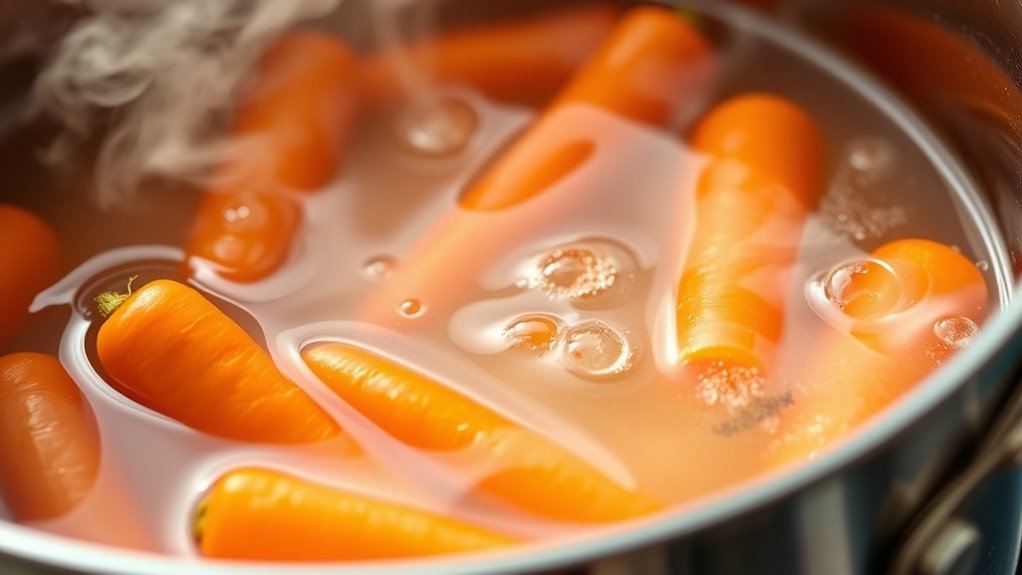
Once you’ve cleaned and prepped your baby carrots, you’ll want to boil them to achieve the perfect tenderness. Start by placing the carrots in a large pot and covering them with cold, salted water.
Bring the water to a rolling boil over high heat, then reduce the heat to medium to maintain a gentle simmer. Boiling the carrots this way assures even cooking without overcooking the outside.
Simmer the carrots for about 15 to 20 minutes, checking their tenderness by piercing them with a fork or knife. You want them tender but still firm enough to hold their shape—not mushy.
Once they reach this ideal tenderness, it’s time to remove them from the heat. You can then drain the carrots using a strainer or carefully tilt the pot with a cloth to pour out the excess water.
This simple boiling method guarantees tender baby carrots ready for your next cooking step. It’s easy and effective, so you’ll have great results every time.
Draining and Seasoning Baby Carrots
Once your baby carrots are tender, drain them thoroughly in a strainer to remove any excess water. Make sure to shake the strainer gently so the carrots don’t stay soggy.
Then, season them right away with butter, salt, pepper, or herbs to lock in the flavor. It really brings out the best in those little carrots!
Proper Carrot Draining
Although cooking baby carrots properly is important, draining them correctly is just as crucial to maintain their texture and flavor. When you drain cooked baby carrots, you want to avoid excess water that can make them soggy.
Here’s how to do it right:
- Immediately pour the carrots into a colander or strainer to stop cooking and drain excess water.
- Carefully tilt the lid using a cloth to release hot water safely without burning yourself.
- Gently shake the strainer or pat the carrots dry with a paper towel to remove any lingering water.
Removing excess water ensures your carrots won’t be watery and helps any seasoning stick better. Plus, proper draining sets the stage for tasty, perfectly textured baby carrots every time.
Seasoning Techniques
After draining your baby carrots properly, you’ll want to season them while they’re still warm to help the flavors absorb better. Make certain to remove excess water without over-draining, so the carrots retain some moisture—this helps seasonings cling and keeps them from drying out.
Start by tossing the warm carrots in a light coating of butter or olive oil; this not only adds richness but also helps your seasonings stick evenly. Then, sprinkle your choice of seasonings like salt, pepper, herbs, or even a touch of brown sugar or honey for a subtle sweetness.
Toss everything together thoroughly to ensure each carrot is well coated. This simple seasoning technique will enhance the natural sweetness and texture of your baby carrots perfectly.
Tossing Baby Carrots With Butter and Flavorings
When you melt butter over medium-low heat in a large skillet, you create the perfect base for tossing your drained, cooked baby carrots. This step ensures the carrots get a rich, smooth coating that enhances their natural sweetness.
To toss your carrots with butter and flavorings effectively, follow these steps:
- Gently add the cooked baby carrots to the melted butter and toss them to coat evenly.
- Sprinkle in flavorings like chopped parsley, salt, and black pepper to boost their taste.
- For extra sweetness or depth, stir in honey, brown sugar, or maple syrup while tossing.
Cook and stir the carrots with the butter and flavorings for 2-3 minutes until they’re heated through and well-coated.
This simple process intensifies the carrots’ flavor and gives them a glossy finish, making them deliciously ready for serving.
Serving Suggestions for Baby Carrots
If you want a healthy snack, baby carrots work perfectly on their own or paired with dips like hummus, ranch, or yogurt to add a burst of flavor. You can also enjoy roasted baby carrots as a warm side dish—just toss them with melted butter, herbs, and a sprinkle of salt before serving.
For a fresh twist, slice or chop baby carrots to add crunch and sweetness to salads, grain bowls, or stir-fries. When serving kids, make sure to cook baby carrots until tender and cut them into small, manageable pieces to keep them safe and easy to eat.
To elevate your presentation, garnish cooked or roasted baby carrots with fresh herbs like parsley or dill. These simple touches enhance both the look and flavor, making baby carrots a versatile and delicious addition to any meal.
Storing and Reheating Leftover Baby Carrots
Though baby carrots are best enjoyed fresh, you can easily store leftovers to keep them tasty and convenient for later. Proper storage and reheating will help maintain their flavor and texture.
Fresh baby carrots are ideal, but proper storage keeps leftovers flavorful and convenient for later enjoyment.
Here’s how to handle leftover carrots:
- Store leftover carrots in an airtight container in the refrigerator for up to 3-5 days. If you want to keep them longer, freeze them by spreading on a baking sheet to flash freeze. Then transfer to a freezer-safe container for up to 3 months.
- When you’re ready to reheat, thaw frozen carrots overnight in the fridge. This helps preserve their texture and flavor.
- Reheat refrigerated carrots in the microwave for 30-60 seconds with a splash of water or butter. Or, for the best results, warm them on the stovetop in a skillet over medium heat until heated through.
Following these simple steps ensures your leftover carrots stay delicious and ready to enjoy anytime.
Frequently Asked Questions
What Is the Best Way to Cook Baby Carrots?
The best way to cook baby carrots depends on your taste. You’ll love roasting for sweetness, steaming to keep nutrients, or sautéing for caramelized flavor.
Just pick what fits your time and flavor preference best. It’s all about what you enjoy the most!
What Is the Best Cooking Method for Carrots?
You’ll definitely want to boil your carrots—because who doesn’t love flavor leached into water?
But if you crave sweetness, roasting’s your friend.
Just remember, sometimes the “best” method depends on what you’re craving most.
How Long Do I Boil Raw Baby Carrots?
You should boil raw baby carrots for 10 to 15 minutes. Start timing once the water boils, and check doneness by piercing them with a fork.
They’re ready when tender but not mushy. Just keep an eye on them so they don’t get too soft.
How Do You Make Mini Carrots?
You make mini carrots by gently coaxing young, tender carrots from the earth, then shaping or selecting naturally small ones.
They’re harvested early, before they grow tall, letting you enjoy their sweet, delicate crunch right away.
Conclusion
Now that you’ve mastered these simple steps, you’ll have perfectly tender, flavorful baby carrots every time—just like a chef from the Renaissance crafting a masterpiece. Remember, washing and seasoning are key to revealing their natural sweetness.
Don’t forget to store any leftovers properly so you can enjoy them later without losing taste or texture. With a bit of practice, cooking baby carrots will become as easy and timeless as a well-loved recipe passed down through generations.
Cooking baby carrots is all about bringing out their natural flavor and tenderness. By following these easy steps, you’ll make a delicious side dish that’s quick and simple. Whether you’re cooking for a family dinner or just a healthy snack, these baby carrots will impress every time. Keep practicing, and soon cooking baby carrots will feel like second nature!