
When Should I Stop Swaddling My Baby?
You should stop swaddling your baby once they start showing signs of rolling over or pushing up during tummy time. These early movements are important milestones that mean your little one needs more freedom to move safely while sleeping.
Continuing to swaddle after this point can increase the risk of suffocation, so it’s crucial to pay attention. Watch for any resistance to swaddling or if your baby frequently breaks free from it—these are clear signals it’s time to stop.
If you want to learn how to make the shift safely and comfortably, keep exploring helpful tips. Transitioning away from swaddling doesn’t have to be stressful, and with the right approach, your baby can stay cozy and secure.
Key Takeaways
- Stop swaddling when your baby shows signs of attempting to roll over or pushing up during tummy time.
- Discontinue swaddling once your baby frequently breaks free or resists the swaddle.
- Prioritize developmental cues over age as indicators for when to stop swaddling.
- Begin a gradual transition by loosening the swaddle and using sleep sacks with unzippable wings.
- Ensure a safe sleep environment with a firm mattress and no loose bedding during and after swaddle transition.
When to Stop Swaddling: Signs Your Baby Is Ready to Transition

While every baby develops at their own pace, you should start thinking about stopping swaddling once your little one shows signs of rolling over or frequently breaks free from the swaddle. These signs of rolling, such as your baby attempting to roll or pushing up during tummy time, indicate the shift from swaddling is necessary.
Begin transitioning away from swaddling when your baby starts rolling or pushing up during tummy time.
The American Academy of Pediatrics highlights that continuing to swaddle when your baby can roll over poses a safety hazard, increasing the risk of suffocation or Sudden Infant Death Syndrome. So, instead of focusing solely on the age to stop swaddling, watch for these clear developmental cues.
If your baby wiggles or resists the swaddle, it’s another sign they’re ready for more freedom. Prioritizing sleep safety means recognizing these indicators and stopping swaddling promptly.
This way, you can ensure your baby sleeps safely and comfortably as they grow and develop their motor skills.
How to Safely Transition Away From Swaddling
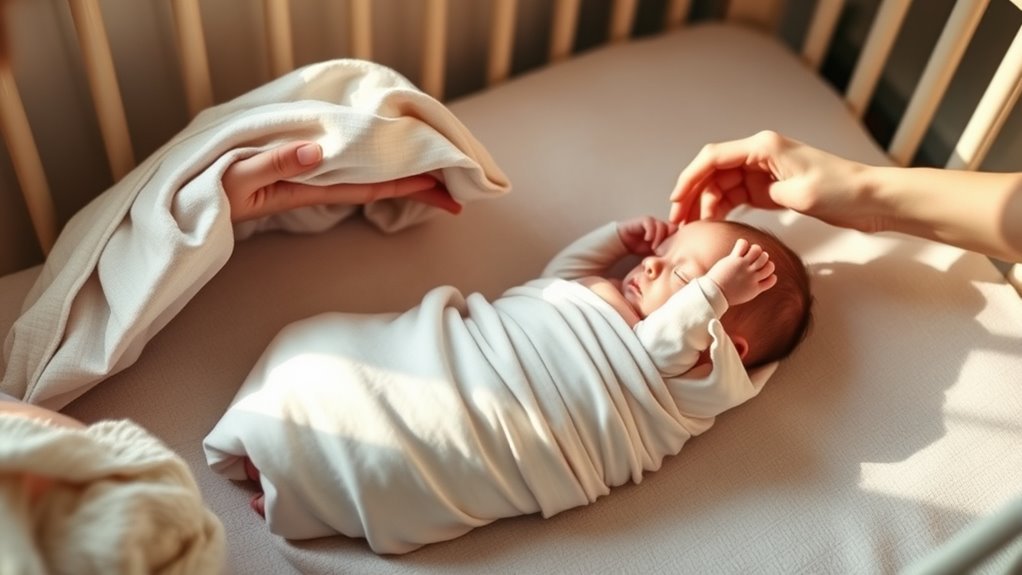
As your baby shows signs of readiness, you can ease the changeaway from swaddling by gradually loosening the swaddle and introducing safer, more flexible sleepwear options. Start by removing one arm over 2-3 nights, allowing your baby to adjust to having one arm free before completely stopping swaddling.
Use a sleep sack or swaddle transition bag with unzippable wings to provide comfort during this phase. Watch for signs of rolling and fussiness as cues to transition baby safely.
Maintain a calming sleep routine with dim lights and white noise to help your baby adapt. Make sure the sleep environment supports safe sleep with a firm mattress and no loose bedding.
Frequently Asked Questions
At What Age Can Babies Sleep Unswaddled?
You can usually let your baby sleep unswaddled around 3 to 4 months, once they start rolling over.
What Is the 5-3-3 Rule for Babies?
The 5-3-3 rule means your baby should get about 5 hours of daytime sleep, 3 hours of naps, and 3 hours of nighttime sleep.
It helps you create a balanced sleep schedule for healthy growth and development.
Following this rule can make it easier to understand your baby’s needs and keep their sleep on track.
What Can I Do Instead of Swaddling?
Like a gentle breeze easing a leaf to rest, you can switch to sleep sacks or wearable blankets with armholes.
Pair these with soothing routines like reading or white noise to help your baby sleep soundly without swaddling.
Do Babies Sleep Longer if Swaddled?
Yes, swaddling can help your baby sleep longer by providing comfort similar to the womb.
But every baby’s different—some sleep longer swaddled, while others don’t show much change in sleep duration.
Conclusion
You’ll know it’s time to stop swaddling when your baby starts rolling over or showing signs of wanting more freedom to move. For example, imagine your little one suddenly pushing up on their arms during tummy time—this is a clear sign they need space to explore.
Shift gradually by leaving one arm out or switching to a sleep sack. Trust your instincts, and your baby will adjust just fine!
When considering when to stop swaddling your baby, watch for these important milestones like rolling over or increased movement. Gradually transitioning helps your little one feel comfortable while ensuring their safety during sleep. Remember, stopping swaddling at the right time supports healthy development and helps your baby enjoy freedom of movement without compromising comfort. So, keep an eye on those cues and adjust your approach accordingly—your baby’s well-being and happiness come first!