How to Use How Children Develop 5th Edition for Effective Learning
You can use *How Children Develop* 5th Edition to create learning experiences that fit each child’s unique developmental stage. Understanding key milestones and individual differences helps you tailor activities to boost their cognitive, social, and emotional growth.
This book is a great resource for anyone looking to support children’s learning effectively.
It guides you in applying research-based theories like Piaget’s and Vygotsky’s. These theories help you build engaging, inclusive environments that encourage autonomy and motivation.
Keep exploring these concepts to discover even more strategies for supporting every child in meaningful ways.
Key Takeaways
– Use developmental milestones to tailor curriculum and activities to children’s current physical, cognitive, social, and emotional abilities.
This way, you’re meeting them right where they are in their growth journey.
– Observe individual differences to personalize learning experiences and adapt teaching strategies for diverse developmental progress.
Every child is unique, so it makes sense to tweak your approach based on their needs.
– Apply Piaget’s and Vygotsky’s theories to design age-appropriate, motivating, and self-regulating learning activities.
These theories give great insights into how kids think and learn at different ages.
– Connect developmental stages to learning outcomes, fostering confidence, social belonging, and independence in children.
When kids see their progress, it really boosts their motivation and sense of self.
– Create inclusive, engaging environments that support growth at each child’s pace using research-based developmental insights.
An environment that’s welcoming and flexible helps every child thrive.
Understanding Developmental Stages to Inform Curriculum Design

When you understand children’s developmental stages, you can design curricula that truly match their needs.
“How Children Develop 5th Edition” outlines key milestones across physical, cognitive, social, and emotional domains from birth through early childhood.
Key milestones in physical, cognitive, social, and emotional growth from birth through early childhood are highlighted.
You’ll learn to recognize stages like sensorimotor, preoperational, and concrete operational, which shape how children think and interact.
This knowledge helps you tailor activities that fit their current abilities.
The book also stresses observing individual differences, so you can accurately assess each child’s development and adjust your teaching strategies accordingly.
Applying Research-Based Theories to Enhance Learning Environments
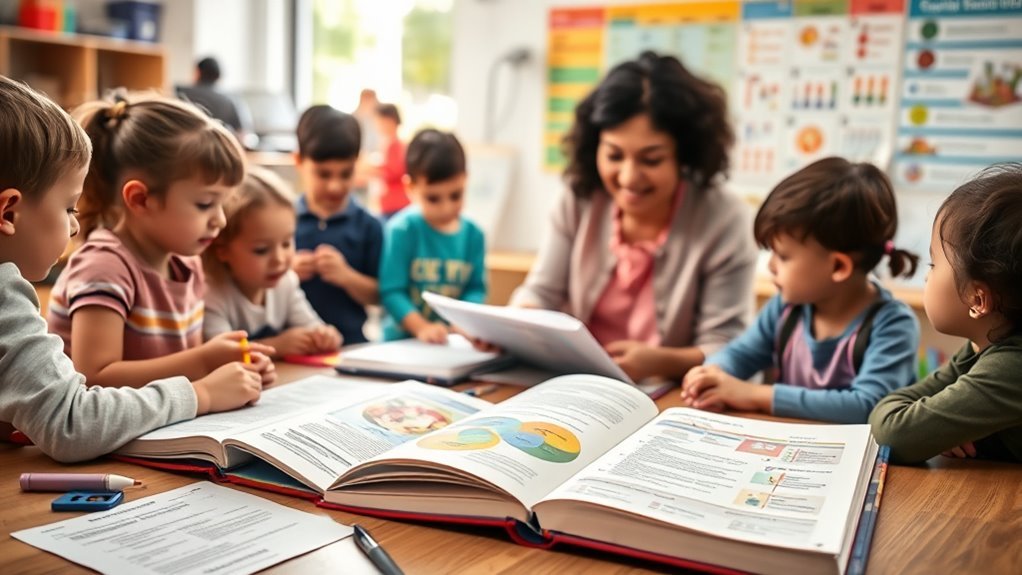
Because effective learning environments grow from solid developmental understanding, you’ll benefit by applying research-based theories like Piaget’s and Vygotsky’s to your teaching. These theories guide you in creating age-appropriate activities that boost motivation, self-regulation, and autonomy.
By integrating developmental milestones, you can tailor lessons to each child’s unique progress, making learning inclusive and engaging. It’s all about meeting kids where they are and helping them grow at their own pace.
| Emotion | Theory Focus | Impact on Learning |
|---|---|---|
| Confidence | Piaget’s stages | Supports cognitive growth |
| Belonging | Vygotsky’s zone | Encourages social learning |
| Independence | Self-regulation | Fosters motivation |
| Achievement | Developmental data | Tailors support effectively |
Frequently Asked Questions
How Do You Help Children Develop Characteristics for Effective Learning?
You help children develop effective learning traits by encouraging curiosity, resilience, and problem-solving. It’s also important to model empathy and cooperation.
Providing goal-setting opportunities and celebrating their achievements makes a big difference. Plus, fostering creativity and critical thinking sets them up for lifelong growth and confidence.
What Is the 3 3 3 Rule for Kids?
You give kids three hours of outdoor play, three balanced meals and snacks, and three hours of sleep daily.
You create a routine that boosts their growth, energy, mood, and learning by balancing activity, nutrition, and rest.
What Are the 5 C’s of Effective Teaching?
The 5 C’s of effective teaching are Clarity, Credibility, Connection, Care, and Consistency. You’ll want to clearly communicate, build trust, and connect personally.
Showing genuine concern is key, too. And don’t forget to maintain fair, predictable routines for successful learning.
What Is the 70 30 Rule in Teaching?
The 70/30 rule means you spend 70% of class time on active learning, like discussions or projects, and 30% on direct instruction.
This balance keeps students engaged and boosts their understanding and retention effectively. It’s a simple way to make sure learning is hands-on and not just about listening.
Conclusion
Now that you’ve explored how to use *How Children Develop* 5th edition, you might think you’ve revealed all its secrets. But here’s the twist—there’s always more beneath the surface.
As you apply these insights, you’ll discover unexpected ways to transform your teaching and truly connect with your students. So, are you ready to dive deeper and see just how powerful understanding development can be for effective learning?
The next breakthrough might be closer than you think. By engaging deeply with this edition, you unlock strategies that enhance your approach to child development. This not only boosts your teaching effectiveness but also creates meaningful learning experiences for your students. Embracing the book’s insights helps you adapt to diverse developmental needs, making your classroom a dynamic environment where every child can thrive. So keep exploring, because mastering *How Children Develop* 5th edition is your key to effective learning and impactful education.