7 Tips to Stop Baby Hiccups After Feeding
You can stop your baby’s hiccups after feeding by burping them gently while holding them upright, which helps release trapped air.
Offering a pacifier soothes the diaphragm through sucking, calming spasms. These simple steps are great ways to ease those annoying baby hiccups quickly.
Keep your baby upright during and after feeding to reduce reflux.
Try massaging their back softly to relax the diaphragm. These gentle techniques often help your little one feel more comfortable and get rid of hiccups.
Sometimes, it’s okay to just let hiccups run their course if they’re short and harmless.
But if they last longer or cause distress, it’s best to check for underlying issues.
There are more helpful tips you can try to keep your baby happy and hiccup-free!
Key Takeaways
- Burp your baby gently during and after feeding to release trapped air and reduce diaphragm spasms causing hiccups. This little step can make a big difference.
- Offer a pacifier to soothe the diaphragm by stimulating relaxed breathing through sucking. It’s a simple trick that often works wonders.
- Keep your baby upright for 20-30 minutes after feeding to aid digestion and minimize reflux-related hiccups. Staying upright really helps with settling things down.
- Massage your baby’s back in gentle circular motions to relax the diaphragm and help stop hiccups. A soothing touch can calm your little one right away.
- Pause feeding if hiccups persist, then resume slowly to prevent overfeeding and stomach distention. Taking it slow is key to keeping hiccups at bay.
Why Do Babies Get Hiccups After Feeding?
Although hiccups in babies can seem puzzling, they often happen after feeding because their diaphragms spasm due to stomach expansion or irritation. When your baby feeds, their stomach expands, which can trigger diaphragm spasms, causing those familiar hiccups in babies.
Hiccups in babies often follow feeding because stomach expansion can cause diaphragm spasms.
Swallowing air during feeding adds to stomach distention, further irritating the diaphragm. If your baby experiences reflux, the acid can irritate the esophagus and stimulate the diaphragm, leading to hiccups post-feeding.
Feeding too quickly or overfeeding increases stomach fullness, making hiccups more likely. These diaphragm spasms are your baby’s natural reflex to regulate their breathing muscles and relax after a meal.
Understanding why hiccups in babies happen post-feeding helps you stay calm and better support your little one during these moments.
Burp Your Baby to Stop Hiccups Quickly

When you burp your baby promptly after feeding, you help release trapped air that can irritate their diaphragm and trigger hiccups. To burp your baby effectively and soothe hiccups quickly, follow these steps:
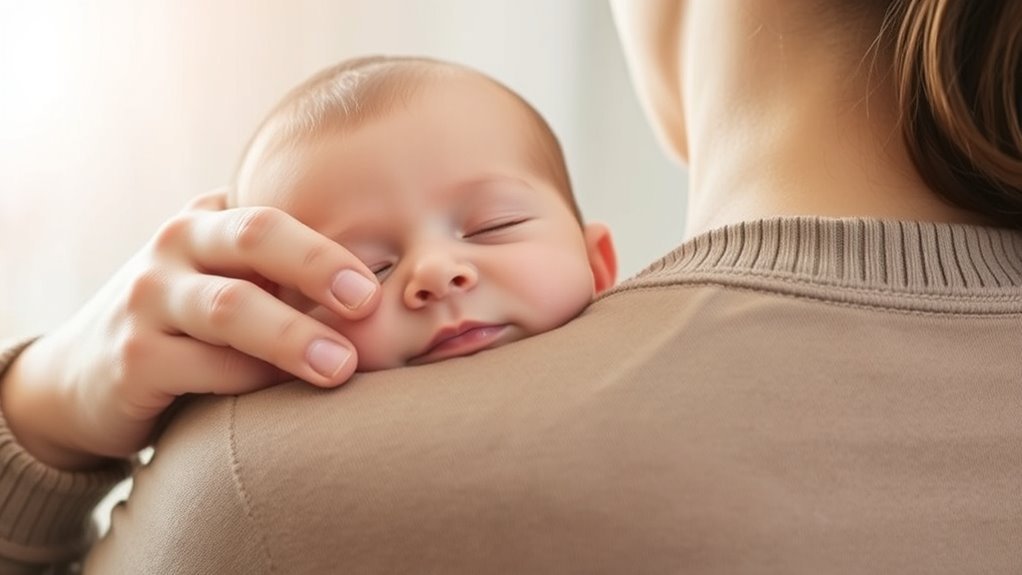
- Hold your baby upright against your shoulder or sit them on your lap, supporting their chest and head. This position helps the trapped air rise.
- Gently pat or rub your baby’s back, focusing on the area between the shoulder blades, to encourage the release of air bubbles.
- If needed, change your baby’s position during burping—try laying them on their tummy across your lap to dislodge stubborn air.
Try to burp your baby consistently during and immediately after feeding, especially if they feed quickly or swallow air. If no burp happens after a few minutes, just pause feeding and try again later.
Being patient like this really helps release trapped air and soothe hiccups efficiently.
Use a Pacifier to Calm Baby Hiccups
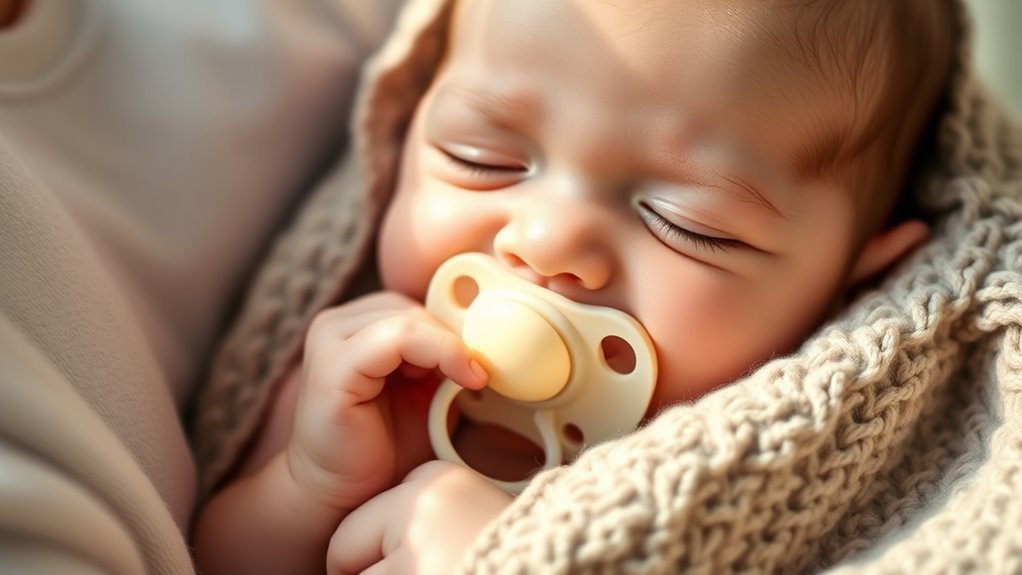
When your baby starts hiccupping, offering a pacifier can help soothe their diaphragm and encourage relaxed breathing. Sucking on the pacifier stimulates nerves that calm hiccups naturally.
It’s an easy, gentle way to help your baby feel more comfortable. Give it a try next time those hiccups start!
Pacifier Soothes Diaphragm
If your baby starts hiccupping, offering a pacifier can quickly soothe their diaphragm by encouraging gentle, sustained sucking. This action stimulates the vagus nerve, helping to regulate diaphragm spasms that cause hiccups.
Using a pacifier is a safe, non-invasive way to calm your baby without medication. Here’s why it works:
- Sucking gently relaxes the diaphragm, reducing hiccup frequency and intensity.
- The pacifier provides comfort, promoting relaxation during episodes.
- Offering a clean pacifier when your baby shows signs of calm can sustain relief.
Encourages Relaxed Breathing
Offering a pacifier not only soothes your baby’s diaphragm but also encourages relaxed breathing, which can help stop hiccups more quickly. When your baby sucks on a pacifier, it stimulates the vagus nerve, calming the spasms that cause hiccups.
The steady, gentle sucking promotes relaxed breathing by easing diaphragm contractions, allowing your baby to settle faster. Using a pacifier during or after feeding prevents hiccups from becoming prolonged or uncomfortable.
It’s a simple, safe way to soothe your baby without invasive methods. By encouraging relaxed breathing through rhythmic sucking, a pacifier helps your baby recover from hiccups more comfortably and quickly.
Keep Your Baby Upright to Prevent Hiccups
To help prevent hiccups, keep your baby upright during and for at least 20-30 minutes after feeding. Holding your baby in a semi-vertical or sitting position reduces pressure on their diaphragm and aids digestion.
Try gently supporting their head and torso to encourage comfort. This can also help minimize hiccup episodes.
Benefits of Upright Position
Why does keeping your baby upright after feeding make such a difference? The upright position plays a key role in reducing hiccups and promoting comfort.
Here’s why you should keep your baby upright after feeding: Gravity helps move milk and gas down, aiding baby digestion and reducing reflux that can trigger hiccups.
Also, an upright posture minimizes air swallowing during feeding, which means less trapped air that causes hiccups. It really helps with that.
Plus, it supports reflux prevention by stopping stomach acid from irritating the diaphragm and causing those annoying spasms. Keeping baby upright is definitely worth it!
Duration to Keep Upright
After feeding, keeping your baby upright isn’t just about positioning—it’s about timing. To prevent hiccups caused by stomach fullness or trapped air, hold your baby upright for at least 20 to 30 minutes after feeding.
This duration lets gravity help settle the stomach, reducing acid reflux that can irritate the diaphragm and trigger hiccups. By keeping upright during this essential period, you promote healthy digestion and lower the chances of hiccup episodes disrupting your baby’s comfort or sleep.
Consistently maintaining this position after feeding supports your baby’s wellbeing and keeps hiccups at bay. Remember, it’s not just how you hold your baby, but how long you keep upright that makes a real difference in preventing hiccups.
Techniques for Upright Holding
Although keeping your baby upright is essential, knowing the right techniques makes all the difference in comfort and effectiveness.
Holding your baby upright properly supports their head and neck, promoting proper digestion and reducing hiccups.
To keep baby upright effectively, try these three techniques:
- Hold your baby in an upright, supportive position against your chest, ensuring their head rests on your shoulder.
- Sit your baby on your lap, supporting their chest and head with one hand while gently patting their back to burp your baby.
- Use a baby carrier that maintains an upright posture, allowing you to burp your baby while keeping your hands free.
Mastering these methods helps prevent hiccups by minimizing swallowed air and stomach pressure.
It’s really about finding what feels right for both of you!
Massage Your Baby’s Back to Ease Hiccups
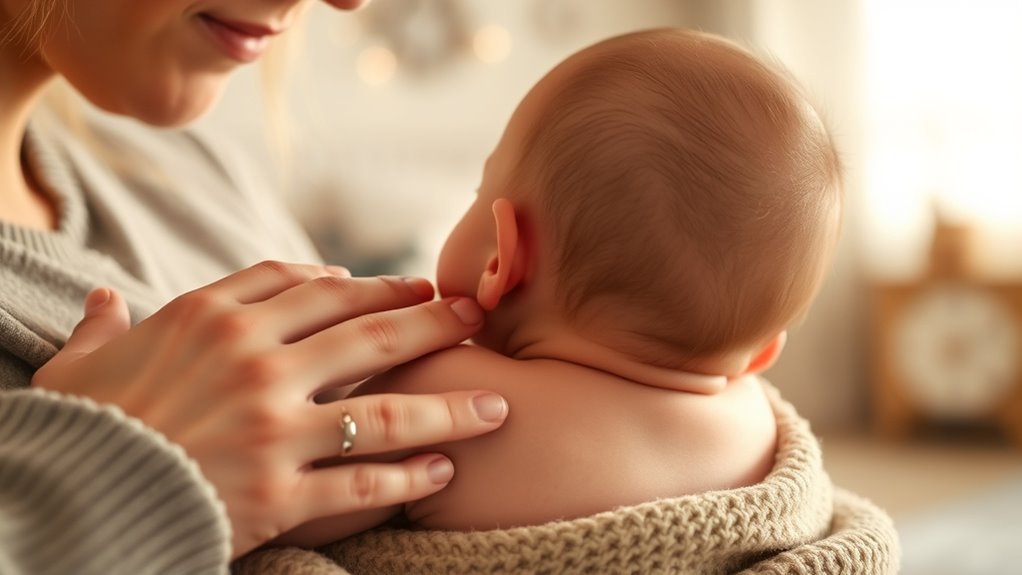
When your baby gets hiccups, gently massaging their back in circular motions from the shoulder blades downward can help relax the diaphragm and ease the spasms. This gentle massage encourages muscle relaxation and can soothe your baby by promoting the release of trapped air causing discomfort.
Use light pressure with your fingertips along the back to stimulate circulation and further relax the diaphragm. Consistency is key—applying a calm, steady touch helps your baby feel comforted during hiccup episodes.
You can also massage your baby’s back before or after feeding to prevent hiccups by releasing any trapped gas early. Always guarantee your touch is soft and gentle to avoid causing any distress.
This simple, natural technique not only reduces hiccups but also strengthens your bond with your little one by providing a soothing and calming experience. Incorporate back massage into your routine to help your baby feel relaxed and hiccup-free.
When to Let Hiccups Run Their Course
Gently massaging your baby’s back can provide relief from hiccups, but sometimes the best approach is simply to let them run their course. Most baby hiccups resolve naturally within 5-10 minutes without causing any discomfort or fussiness.
You should consider letting hiccups run their course especially when the hiccups don’t interfere with feeding or sleep. That means your baby isn’t in any distress.
Also, if the duration stays under 10 minutes, which is typical for natural resolution, there’s usually no need to worry. And of course, if your baby remains calm and shows no signs of discomfort or irritability, it’s perfectly fine to just wait it out.
If hiccups persist beyond 10 minutes or cause fussiness, gentle calming techniques may help, but intervention is often unnecessary.
Signs Your Baby’s Hiccups Need a Doctor
If your baby’s hiccups last longer than 10-15 minutes or come with unusual symptoms, you should contact a doctor. Persistent hiccups may signal an underlying issue that needs medical evaluation.
Pay close attention to any signs of concern such as difficulty breathing, bluish lips, or abnormal symptoms like vomiting or signs of reflux. These symptoms require prompt medical attention.
Watch for difficulty breathing, bluish lips, vomiting, or reflux—these symptoms need immediate medical care.
Also, if your baby’s hiccups frequently disrupt feeding or sleeping, or cause significant distress, don’t hesitate to seek advice from a healthcare professional. Hiccups that last beyond the typical 5-10 minutes combined with any of these concerns shouldn’t be ignored.
Early consultation helps rule out serious conditions and ensures your baby stays comfortable and healthy. Always trust your instincts—when hiccups seem abnormal or persistent, a doctor’s evaluation is the safest choice.
Frequently Asked Questions
Is It OK to Lay Baby Down With Hiccups?
Yes, you can lay your baby down with hiccups if they’re calm. Just avoid flat positions that might worsen reflux, and keep an eye on them.
If they seem distressed, hold them upright until the hiccups ease. It usually doesn’t last long, so no worries!
Do Hiccups Mean Baby Needs to Be Burped?
Yes, hiccups often mean your baby needs to be burped. Trapped air can irritate their diaphragm, causing hiccups.
Try gently burping your baby during or after feeding to help release air and ease the hiccups quickly. It usually does the trick!
How Long Do Baby Hiccups Last After Feeding?
Baby hiccups usually last about 5 to 10 minutes, like a brief hiccup symphony.
If they stick around longer, you’ll want to check with a healthcare pro to make sure everything’s alright.
Should I Stop Feeding if Baby Gets Hiccups?
You don’t need to stop feeding if your baby gets hiccups. They usually go away on their own.
Only pause if your baby seems uncomfortable. Then try soothing them before continuing the feeding session.
Conclusion
Hiccups after feeding are common and usually harmless, so don’t panic like it’s the Stone Age. You can quickly ease your baby’s hiccups by burping them, using a pacifier, or keeping them upright. Gently massaging their back can also help.
Sometimes, hiccups just need to run their course. However, if you notice unusual signs or prolonged discomfort, don’t hesitate to reach out to your pediatrician. Remember, stopping baby hiccups after feeding is often simple and manageable.
You’ve got this—your baby’s comfort is always worth the effort! Using these tips can make feeding time more pleasant for both of you and help reduce those pesky baby hiccups after feeding quickly and gently.