What Do Baby Roaches Look Like and How to Identify Them
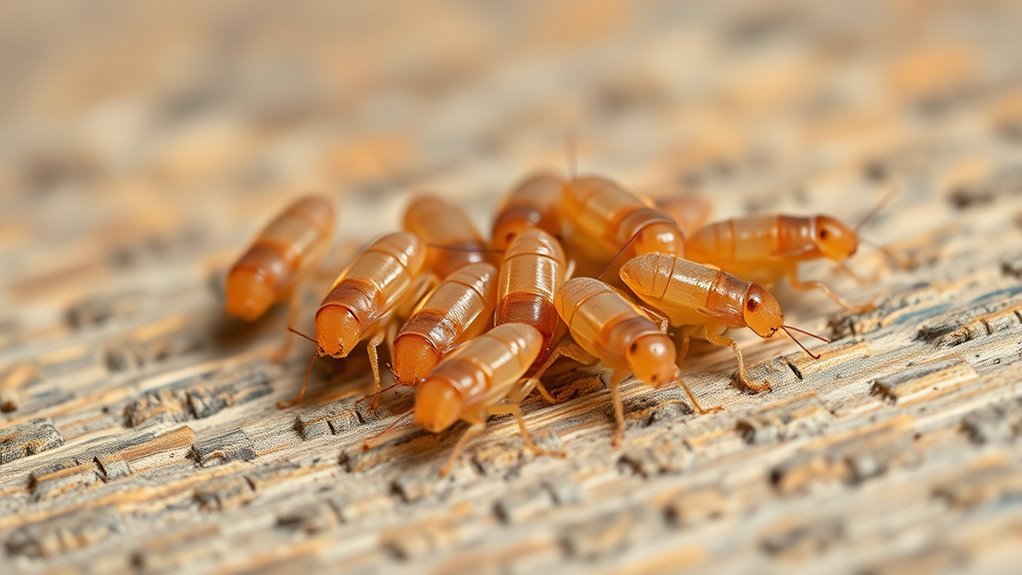
You can spot baby roaches by their tiny size, usually between 1/8 and 1/4 inch long. They have a cylindrical shape, six spiny legs, and long antennae but don’t yet have fully developed wings.
Baby roaches change color as they grow, from pale right after molting to darker shades like tan or reddish-brown.
Different species show unique markings, like lines or bands, that help you tell them apart. These little details are super helpful when trying to identify baby roaches around your home.
Keep following for how to identify them more precisely.
Key Takeaways
- Baby roaches are small, about 1/8 to 1/4 inch long, with a cylindrical shape and long antennae but no fully developed wings.
- Their color changes from pale or white right after molting to tan, reddish-brown, or dark brown as they grow.
- Key features include six spiny legs, a miniature adult shape, and distinctive markings depending on the species.
- For example, German nymphs have two dark parallel lines, American nymphs show a halo mark, and brown-banded nymphs display broad light bands.
- To identify baby roaches, look closely at their size, color changes, and unique species markings.
- Doing this helps with early detection before they become a bigger problem.
Spotting Baby Roaches: Key Size, Color, and Shape Features
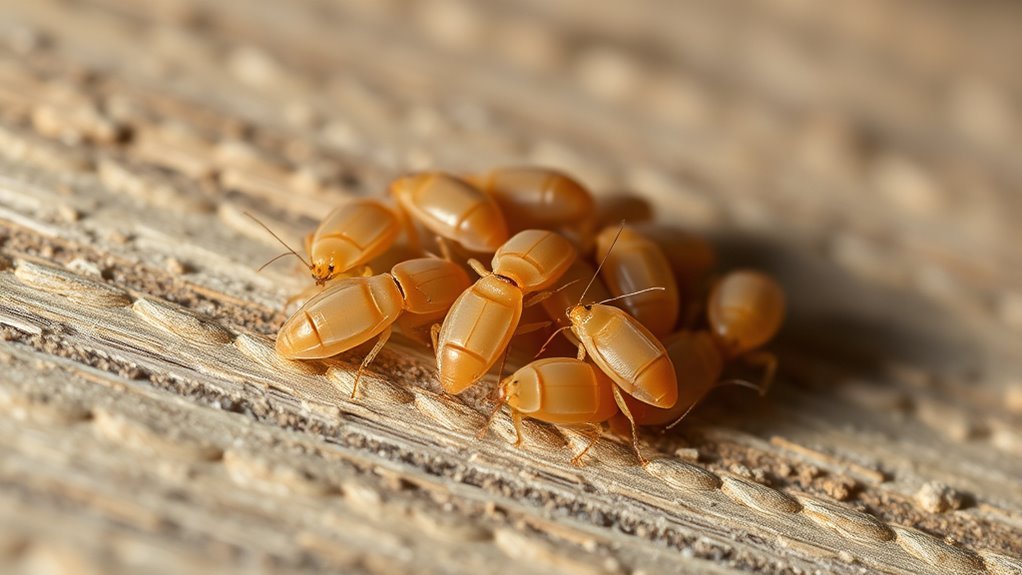
Although baby roaches are tiny, spotting them is easier when you know what to look for. Baby roaches, also called nymphs, usually range from 1/8 to 1/4 inch in size, making them quite small but visible if you pay attention.
Their shape is cylindrical and resembles miniature adults, but they lack fully developed wings. You’ll notice their color changes markedly during identification. Right after molting, nymphs appear pale or almost white, but as they mature, they darken to shades like tan, reddish-brown, or dark brown.
This color shift helps you track their development. Besides their size and color, keep an eye on their long antennae and six spiny legs, which are key shape features. Understanding these details about baby roaches’ size, color, and shape simplifies identification, allowing you to spot these tiny pests early before they grow into adults.
Identifying Common Baby Cockroach Species by Their Unique Markings
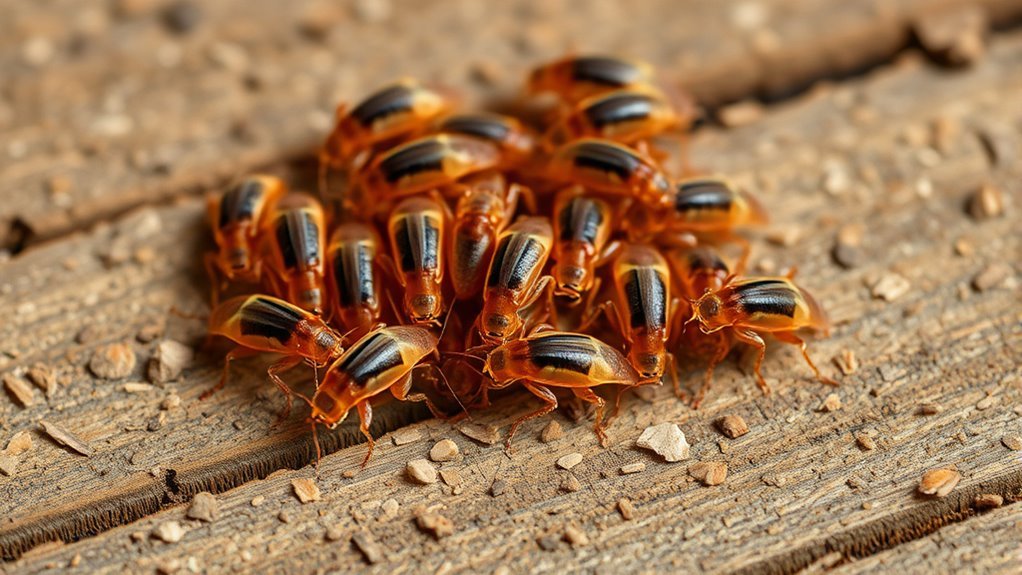
When you start identifying baby cockroaches, their unique markings offer the quickest clues. Different cockroach species nymphs show distinctive features in color, size, and markings that help in early identification.
German cockroach nymphs, for instance, are about 1/8 inch long, tan with two dark parallel lines on their pronotum. American nymphs are larger, around 1/4 inch, reddish-brown, and often have a halo-shaped marking behind their head.
Brown-banded nymphs, small at 1/8 inch, show two broad light bands across their thorax. Oriental nymphs develop faint light bands as they grow, with shiny black or reddish-black bodies at about 1/4 inch.
Smoky brown nymphs are the largest at 3/8 inch, dark brown or black, and display white markings before molting. By noting these markings, color, and size during development, you can confidently identify common baby cockroach species in their early stages.
Frequently Asked Questions
Should I Be Worried if I See Baby Roaches?
Yes, you should be worried if you see baby roaches. It means there’s an active infestation nearby.
If you don’t act quickly, they’ll multiply fast and create a bigger, more difficult problem to manage. So, it’s best to tackle the issue as soon as you spot them.
What Can Be Mistaken for a Baby Cockroach?
You might think baby roaches are tiny aliens, but nope—bed bugs often crash that party. They’re flatter, oval, and sneak near your bed.
Roaches lurk in damp, dark food zones. Watch those antennae!
Is It Hard to Get Rid of Baby Roaches?
Yes, it’s hard to get rid of baby roaches because they hide well and multiply quickly.
You’ll need repeated treatments and professional help with targeted methods to fully eliminate them and prevent new infestations.
What Kills Baby Cockroaches Instantly?
You can swiftly handle those uninvited tiny guests with instant knockdown sprays containing pyrethroids. They’ll vanish on contact, giving you quick peace of mind without fuss.
At the same time, you can start preparing a longer-term strategy to keep them away for good. It’s all about quick action now and smart planning later.
Conclusion
Now that you know what baby roaches look like, spotting them is like finding tiny shadows lurking in the corners. Their small size, pale colors, and subtle markings are clues you can’t ignore.
By staying alert to these little invaders, you’ll catch them before they multiply like wildfire. Keep your eyes sharp and your home clean—because once you spot those baby roaches, you hold the power to stop an infestation in its tracks.
Remember, identifying baby roaches early is key to preventing a full-blown problem. These pests reproduce quickly, so quick action can save you a lot of trouble. Stay vigilant, keep your living space tidy, and don’t let baby roaches settle in. Taking these steps will help you protect your home and maintain a roach-free environment.