What Is a Baby Horse Called?
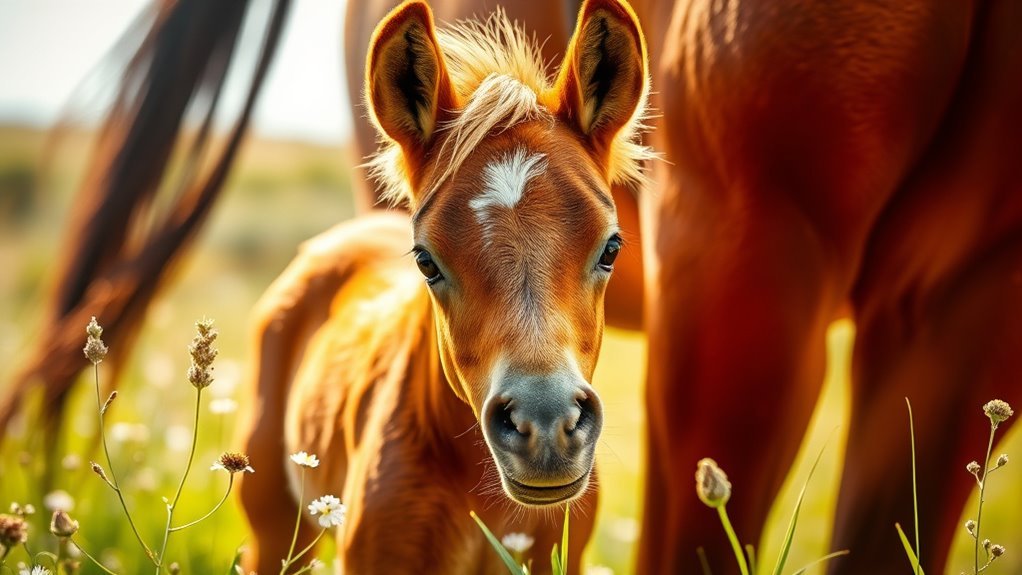
You call a baby horse a foal, whether it’s a colt (male) or a filly (female). Foals are born after about 11 months of pregnancy.
Right after birth, they can stand and walk within hours, which is pretty amazing!
These little ones grow fast, gaining up to 3 pounds daily.
They start teething within days, which helps them begin eating solid food.
Their coat and body change quickly as they develop strength and coordination.
It’s fascinating to watch how a baby horse grows and hits new milestones so quickly.
Keep exploring to discover more about their development and all the cool things they do as they grow up!
Key Takeaways
- A baby horse is called a foal regardless of its gender. Male foals are specifically referred to as colts.
- Female foals are called fillies. Foals are termed “foaled” until they reach one year old.
- After one year, a young horse is called a yearling. That’s when they start to grow out of the foal stage.
What Is a Foal? Baby Horse Names Explained
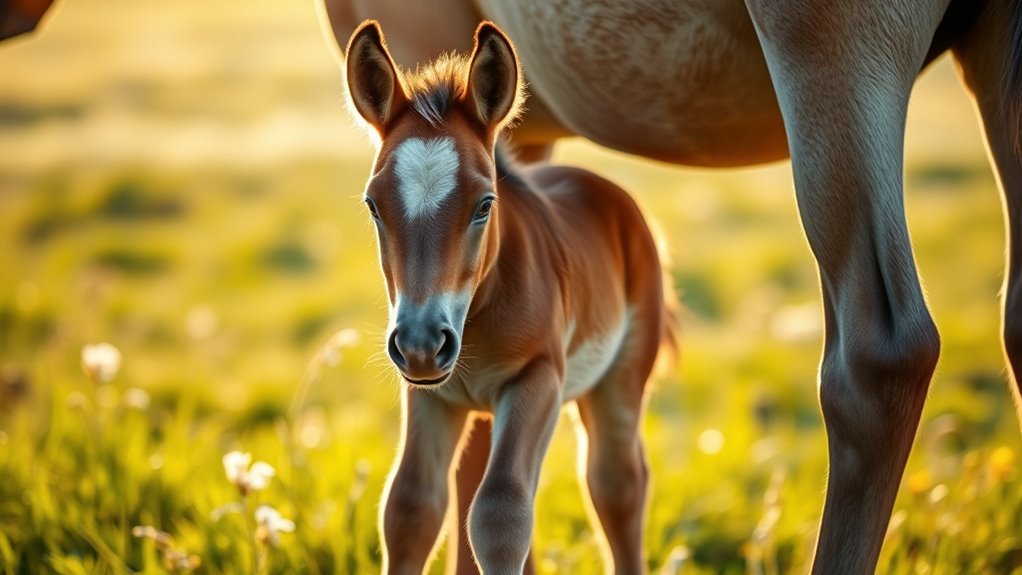
Although you might hear different names, a baby horse is called a foal regardless of its gender. When a baby horse is born—which happens after about 11 months of gestation—you’ll notice that young foals can stand and walk within hours.
Both male and female young foals are simply called foals at this stage. However, if you want to be more specific, a male foal is called a colt, while a female foal goes by the name filly.
The term foaled is used to describe a baby horse until it reaches one year old. Once a foal passes this age, it is no longer called a foal but is referred to as a yearling.
Understanding these names helps you clearly identify and talk about baby horses throughout their first year of life.
How Do Foals Grow and Develop?
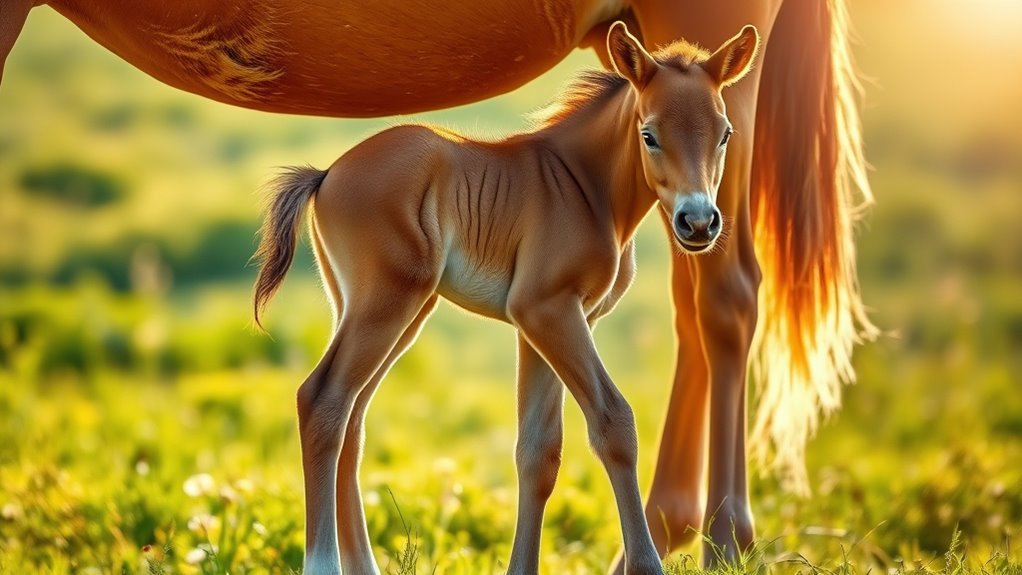
How quickly do foals grow after birth? Foals experience rapid growth right from the start, gaining up to 3 pounds daily. They’re born with nearly fully developed legs at 80-90% of adult length.
They stand and try to walk within 15 minutes, showing just how fast their bodies develop. Within a few days, foals grow their first set of teeth, which is super important for moving on to solid food. This early dental progress supports their nutritional needs as they begin nibbling alongside nursing.
As foals grow over the first few months, their coat color often changes, which is a sign of ongoing development. They slowly get closer to adult size, with big changes in muscle and bone structure. You’ll see their coordination and strength improve as they explore and interact with their surroundings.
Knowing these stages helps you appreciate how quickly foals go from helpless newborns to active, growing young horses. It’s pretty amazing how fast they adapt!
Frequently Asked Questions
What Is the Difference Between a Foal and a Pony?
The difference between a foal and a pony is that a foal is a young horse under one year old, while a pony is a small, fully grown horse.
What Is the Difference Between a Pony and a Colt?
You’ll notice a pony is a small horse breed or size, while a colt is a young male horse under four years old.
Ponies stay small; colts can grow into full-sized horses or ponies, depending on breed.
What Is a 2 Year Old Horse Called?
A two-year-old horse is usually called a “two-year-old” or sometimes still a “yearling” if it has just turned two.
You’ll see them growing fast. They often start training or early racing careers at this stage.
Why Is a Pony Not a Baby Horse?
Think of a pony like a compact car—not a new model but smaller by design.
You’ll see ponies at any age, so they’re not baby horses; their size, not youth, defines them.
Conclusion
So, now you know a baby horse is called a foal—simple, right? It’s ironic that such a tiny creature has so many names depending on age and gender. Yet people often just call them “cute.”
As you watch a foal grow, it’s almost funny how quickly they go from wobbly legs to full gallop. Just when you think you’ve got it all figured out, nature reminds you that with horses, there’s always more to learn.
Understanding what a baby horse is called is just the beginning. Whether it’s a colt, filly, or foal, each name tells a story about the horse’s age and gender. So next time you see one, you’ll know exactly what to say—and appreciate how fascinating these baby horses really are.