When Is a Baby No Longer a Newborn?
You stop calling your baby a newborn once they pass 28 days old. That first month is special, but after that, your little one starts moving into a new stage.
Around 2 to 3 months, you’ll notice clearer signs that they’re growing and changing every day. For example, you might see social smiling, better head control, and longer, more predictable sleep patterns.
These are big milestones that show your baby is shifting from the newborn phase to early infancy. It’s exciting to watch them become more alert and interactive.
As your baby hits these important milestones, you’ll realize there’s so much more to learn about what comes next. This early infancy stage is full of growth and discovery — and plenty of opportunities for you both to connect and explore together.
Key Takeaways
- A baby is no longer a newborn after 28 days from birth, marking the end of the neonatal period.
- Transitional signs start showing up around 2 to 3 months. This includes things like social smiling and more predictable sleep patterns.
- When a baby regains their birth weight and shows better head control, it means they’re growing physically beyond the newborn stage.
- You’ll also notice more social interaction and consistent eye contact, which reflect behavioral development past the newborn phase.
- Overall, the shift from newborn to early infancy involves changes in physical growth, emotions, and sleep patterns.
When Does the Newborn Stage Really End?
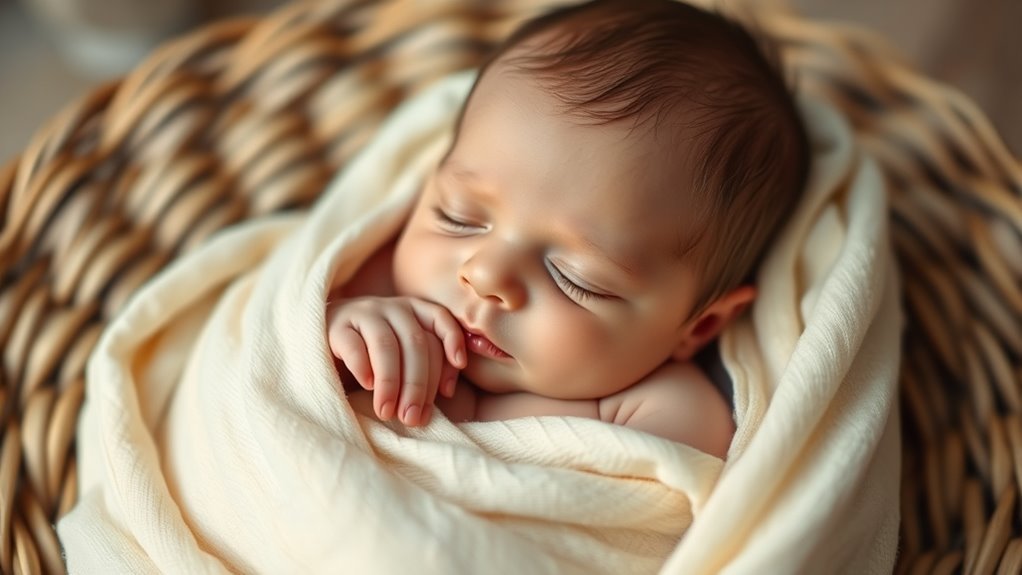
Although the newborn stage officially ends at 28 days after birth, you’ll notice many signs that your baby is moving beyond this phase around 2 to 3 months. By this time, your little one typically reaches key developmental milestones like social smiling and more predictable sleep patterns.
Your baby begins leaving the newborn phase by 2 to 3 months with social smiles and better sleep patterns
Physical growth also stabilizes; babies usually regain their birth weight and develop better head control, showing clear progress beyond the newborn stage. These behavioral changes and physical improvements mark a natural shift out of the newborn phase and into early infancy.
Healthcare professionals consider babies over 28 days old no longer in the neonatal period, which shifts the focus of care to support this early infancy stage. As your baby begins to respond more socially and stay awake longer, you’ll see that this period is distinct from the initial newborn stage.
Recognizing these signs helps you understand your baby’s growth and what to expect next. It’s pretty amazing to watch how quickly they change!
Key Growth and Behavior Changes After the Newborn Stage
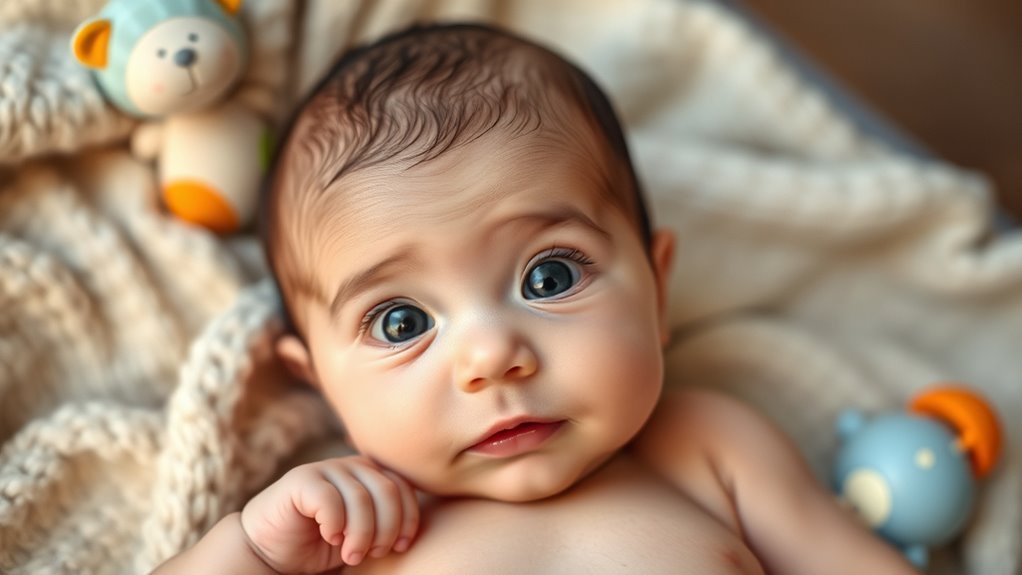
As your baby moves beyond the newborn stage, you’ll notice clear changes in their growth and behavior that signal this important shift. Growth spurts become more apparent, accompanied by developmental changes like improved motor skills and stronger head control.
You’ll see your baby engaging in social smiling and making better eye contact, showing increasing alertness. Their sleep patterns grow more predictable, allowing for more restful nights. Intentional movements replace reflexive actions, marking key milestones such as reaching and holding objects.
| Milestone | What You’ll See | How It Feels |
|---|---|---|
| Social Smiling | Smiling at familiar faces | Joy and connection |
| Head Control | Holding head steady | Pride and relief |
| Sleep Patterns | Longer, predictable naps | Restful nights, less fatigue |
| Intentional Movements | Reaching, grasping objects | Excitement and wonder |
These changes show your baby’s remarkable journey out of the newborn phase. It’s pretty amazing to watch, isn’t it?
Frequently Asked Questions
How Long Is the Newborn Phase?
The newborn phase lasts about 28 days, but many families consider it up to 6-8 weeks.
During this time, you’ll see rapid growth and important milestones as your baby adjusts to life outside the womb.
It’s a whirlwind of change, but also a special time to bond and get to know your little one.
How Many Months Is a Newborn Baby?
You might think a newborn lasts months, but it’s actually just about one month—or 28 days.
After that, your baby’s no longer a newborn and steps into the infant stage, growing and changing every day.
Conclusion
You might think a baby’s newborn stage ends overnight, but it’s more like a gentle sunrise—gradual and full of subtle changes. As your little one grows, their behaviors and physical milestones shift, signaling they’re ready to leave “newborn” behind.
Embrace this exciting evolution; every smile and new skill is a sign your baby is blossoming into a unique, curious explorer. Before you know it, the newborn days will be a sweet memory.
Understanding when a baby is no longer a newborn helps you appreciate these precious moments. It’s usually around two to three months when you start to see these changes clearly. So, cherish this phase—it’s a beautiful part of your baby’s growth and development journey.