How Long Do You Swaddle a Baby Step by Step
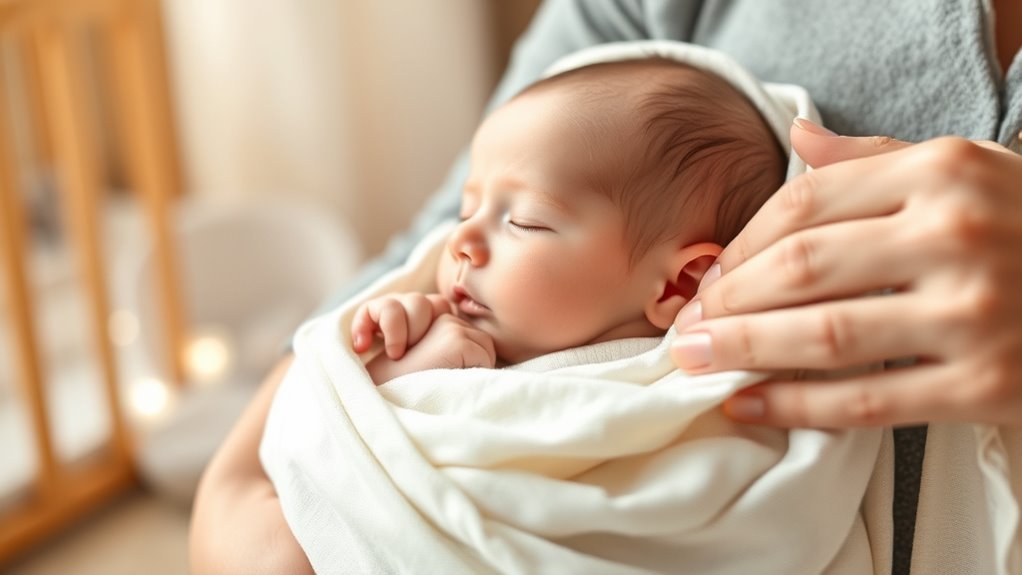
You should swaddle your baby from birth until they start showing signs of rolling over, which usually happens between 2 to 6 months. Swaddling helps your little one feel secure and sleep better, but it’s important to know when to stop.
Watch for cues like your baby pushing up during tummy time, resisting the swaddle, or turning onto their stomach while sleeping. These signs mean it’s time to transition out of the swaddle.
When you notice these changes, begin by unzipping one arm of the swaddle for a few nights. This helps your baby get used to having one arm free.
Then, gradually shift to a sleep sack for a safer, comfy sleep.
Keep your baby’s sleep routines consistent during this transition to help them adjust smoothly. Following these steps will make the change easier for both you and your baby.
Key Takeaways
- Swaddle babies typically between 2 to 6 months, stopping when they show signs of rolling or increased mobility.
- Gradually transition by unzipping one arm of the swaddle for 2-3 nights to observe baby’s comfort.
- Fully remove the swaddle once the baby resists or breaks free, indicating readiness for more movement.
- Replace swaddling with a safe sleep sack or wearable blanket to maintain warmth and security.
- Always place baby on their back to sleep and maintain consistent calming routines during the transition.
When Should You Stop Swaddling? Signs and Age Guidelines
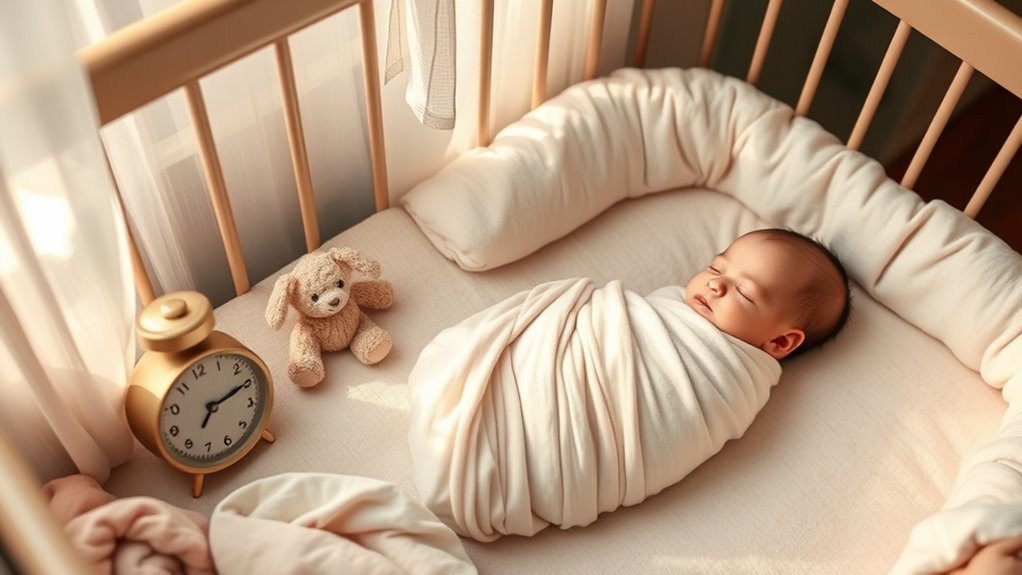
Although swaddling soothes many newborns, you should stop once your baby starts showing signs of rolling over, usually between 2 to 6 months old. These signs of rolling include your baby turning onto their stomach during sleep, pushing up with their hands during tummy time, or resisting being swaddled.
These cues align with important developmental milestones like increased mobility and the ability to move their arms freely. Swaddling past this point can increase the risk of suffocation if your baby rolls onto their stomach while still swaddled.
The American Academy of Pediatrics highlights that stopping swaddling when these signs appear is vital for safe sleep. By paying attention to these developmental milestones and signs of rolling, you guarantee your baby sleeps safely and comfortably as they grow.
Recognizing when to stop swaddling helps you protect your baby’s well-being during this essential stage. So, keep an eye out for those early signs, and you’ll know when it’s time to make the switch.
How to Help Your Baby Transition From Swaddling Safely
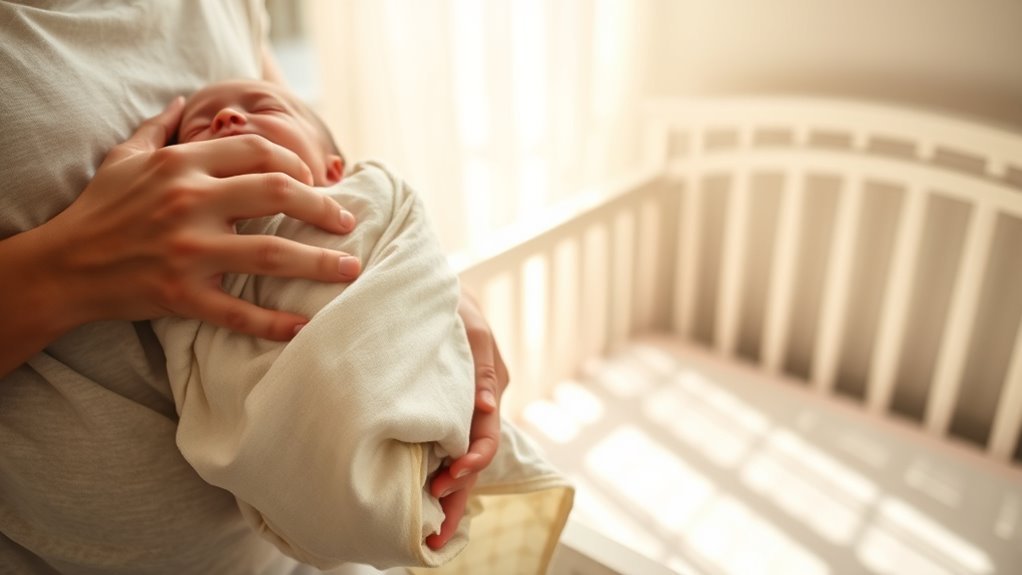
As your baby shows signs of readiness to stop swaddling, you can start easing the shift by unzipping one arm of the swaddle for a few nights. This gradual adaptation helps your baby adjust to less restriction while maintaining comfort.
To guarantee a safe sleep environment, follow these steps:
- Observe your baby’s cues, like rolling over or resisting swaddling, signaling it’s time to transition.
- Unzip one arm of the swaddle for 2-3 nights, then fully remove the swaddle gradually.
- Replace the swaddle with a safe sleep sack or wearable blanket to keep your baby warm without restricting movement.
- Maintain calming routines such as white noise and dim lighting to soothe your baby during the adaptation.
Always place your baby on their back to sleep during and after the transition to support safe sleep. This approach ensures a smooth, safe transition from swaddling to independent sleep.
Frequently Asked Questions
When Should a Newborn Stop Being Swaddled?
You should stop swaddling your newborn once they start showing signs of rolling over, usually between 2 to 6 months.
This helps prevent risks like suffocation and allows your baby to move safely during sleep.
What Is the 5-3-3 Rule for Babies?
The 5-3-3 rule means you swaddle your baby up to 5 months, only for 3 hours during awake times, and mainly during sleep or calming moments.
It helps keep your baby safe and supports healthy development.
It’s a simple guideline that many parents find really helpful. Just remember, every baby is different, so always watch how your little one responds!
Can Newborns Sleep Unswaddled?
Yes, newborns can sleep unswaddled if you place them on a firm, flat surface and create a safe environment.
Just watch closely, especially before they start rolling over, to keep them safe and comfortable.
It’s totally okay to let them sleep without a swaddle as long as you’re mindful of their surroundings.
Keeping an eye on them helps ensure they stay cozy and secure.
How Can I Tell if My Baby Still Needs Swaddling?
About 90% of babies start rolling by 4 months. You’ll know your baby needs swaddling if they’re not rolling or pushing up yet.
And if they settle well when swaddled without trying to break free or fussing, that’s a good sign too.
Conclusion
Just like a caterpillar sheds its cocoon to become a butterfly, your baby will naturally outgrow swaddling. You’ll know it’s time to stop when they start rolling over or showing signs of wanting more freedom.
Helping your little one shift smoothly guarantees they feel safe while exploring new movements. Trust your instincts and take it step by step—you’re guiding them toward independence with every tiny wiggle and stretch.
Knowing how long to swaddle a baby is key to their comfort and safety. As they grow, transitioning out of swaddling gently helps them adapt to new motions without feeling insecure. Remember, every baby is different, so watch for cues like rolling or fussiness at night. Swaddling is a wonderful tool in your parenting journey, but stopping at the right time supports your baby’s development and promotes better sleep. So, take it slow, stay attentive, and enjoy each milestone as your baby learns to move freely and confidently.