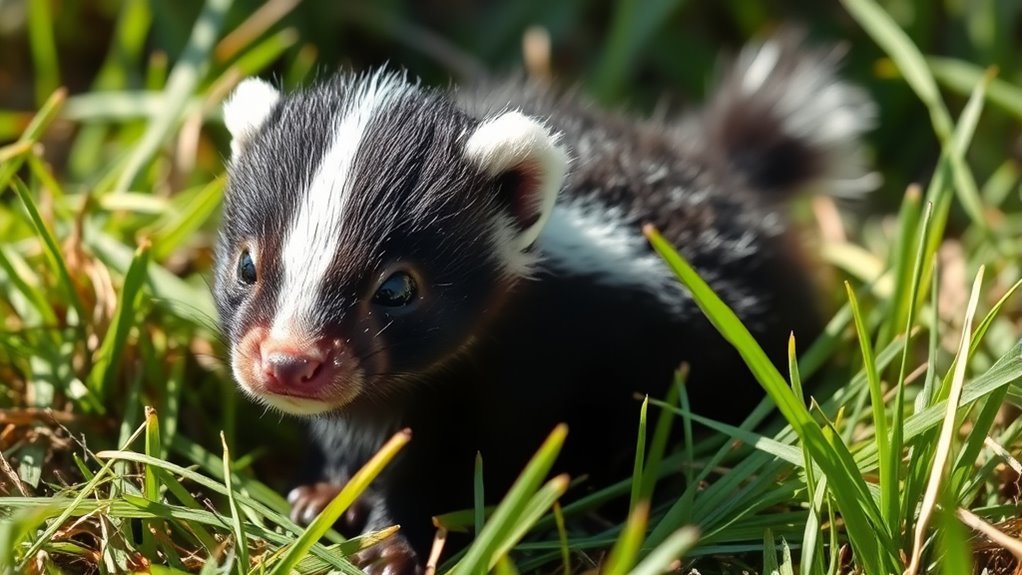
How to Know If Baby Skunks Can Spray
You can tell if baby skunks can spray once they reach about eight weeks old, as that’s when their scent glands and muscle control develop. This is a key sign that baby skunks are starting to use their natural defense mechanism.
Watching their behavior closely helps you understand when they’re ready to spray.
Look out for warning signs like a raised tail, foot-stamping, or short charges toward threats. They often glance over their shoulder, gearing up to spray if they feel cornered.
While their aim might not be perfect yet, their defense is real. Keep an eye out for these behaviors to stay safe and understand them better.
Key Takeaways
- Baby skunks develop scent glands and muscle control to spray around 8 weeks old. They raise their tail high as a warning before spraying.
- Foot-stamping is a common sign signaling potential spray readiness. It’s like their way of saying, “Hey, back off!”
- Baby skunks make short forward charges when feeling threatened. It’s their way of showing they mean business.
- Defensive postures, like turning back and glancing over the shoulder, indicate spray preparation. They’re basically giving you a heads-up before they spray.
When Do Baby Skunks Start Spraying?
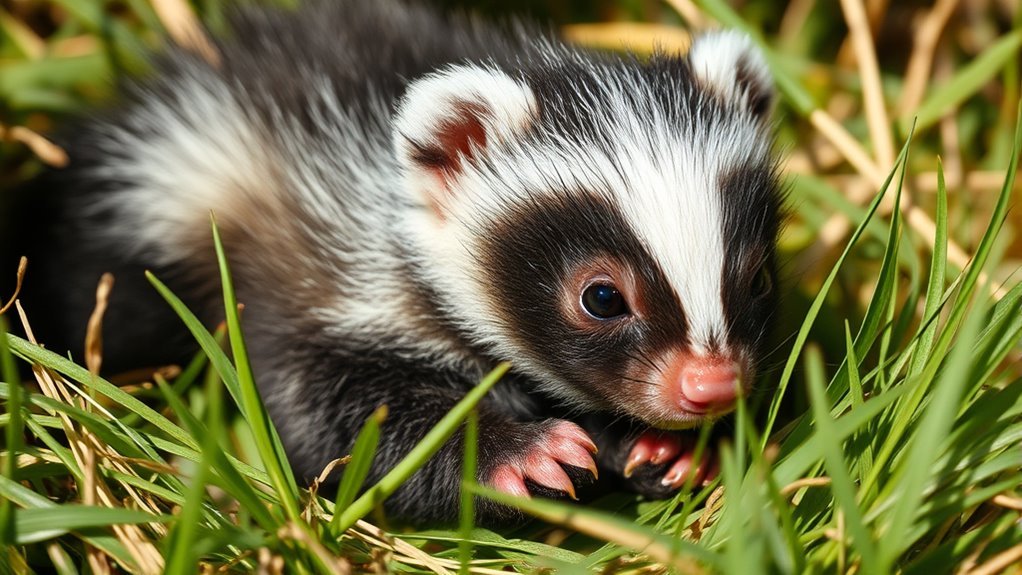
Although baby skunks are born without the ability to spray, they typically develop this defense mechanism around 8 weeks old. At this stage, their scent glands mature, giving them the spray capability necessary for protection.
Baby skunks gain their powerful spray defense around 8 weeks as their scent glands mature.
Young kits start developing muscle control to aim and release the spray effectively. You might be surprised how quickly this maturation happens—often before they’re fully grown.
Most baby skunks, born in late spring, begin to spray by mid-summer as their defense mechanism kicks in. Understanding this timeline is key if you encounter young kits.
While they lack the ability to spray in their first weeks, they rapidly develop this essential skill. So, by the time baby skunks reach about 8 weeks old, their scent glands and control have progressed enough to make spraying a reliable deterrent.
This natural progression guarantees they’re better equipped to defend themselves as they grow.
Warning Signs That a Baby Skunk Might Spray?
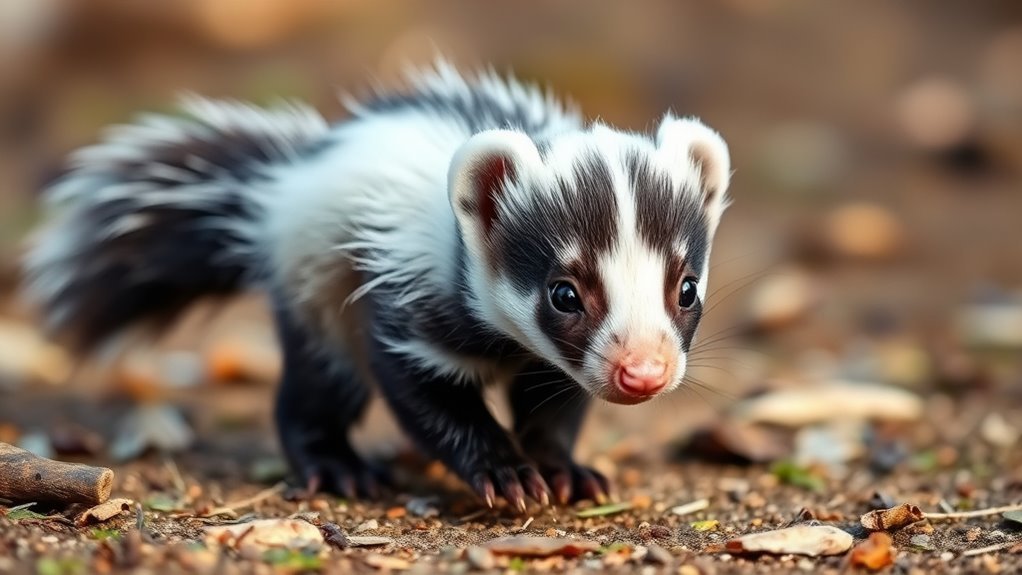
Once baby skunks reach about 8 weeks old and can spray, they start showing clear warning signs before releasing their musk. You’ll notice their body language shifts when they feel threatened or agitated.
One key warning sign is raising their tail high as a signal they’re ready to defend themselves. Along with raising their tail, they often stamp their feet on the ground to warn you to back off.
Sometimes, they make short forward charges toward the threat, testing how close you’ll get before they spray. If a baby skunk feels cornered or startled by sudden movements or loud noises, these signs intensify.
They may turn their back, glance over their shoulder, and prepare to release musk spray as a defensive response. Even though their aim isn’t as precise as adults, these warning signs tell you to give them space and avoid provoking a spray incident.
Frequently Asked Questions
How Long Until a Baby Skunk Can Spray?
You’ll notice baby skunks can spray when they’re around 8 to 10 weeks old. Their scent glands develop, and they gain muscle control.
That said, their aim and spray strength won’t be as accurate as adults at first. It takes a little time for them to get the hang of it.
How Do You Know When a Skunk Will Spray?
You’ll know a skunk will spray when it raises its tail, pulls its ears back, and stomps its front feet. These warning signs mean it feels threatened and is preparing to defend itself with its spray.
Basically, the skunk is giving you a heads-up to back off. If you see these signals, it’s best to give it some space to avoid getting sprayed.
Do Baby Skunks Know How to Spray?
Baby skunks barely begin to blast by eight weeks. You’ll notice they’re fumbling, figuring out how to flex their foul fragrance.
How Likely Is It for a Skunk to Spray You?
You’re unlikely to get sprayed by a skunk unless you threaten or startle it. Skunks spray defensively, so if you stay calm and move slowly, you can usually avoid being sprayed even if the skunk feels nervous.
Just take it easy around them. No sudden moves, and you’ll most likely be fine.
Conclusion
Now that you know when baby skunks start spraying, you might wonder—how close can you safely get before that warning spray flies? Keep a sharp eye out for those subtle signs they give off, because once they’re ready, there’s no turning back.
You might think they’re just cute and harmless, but don’t be fooled. The real question is: can you spot the moment before they let loose? Stay alert—you never know when it’ll happen!
Knowing how to tell if baby skunks can spray is key to staying safe around them. Watch for their warning behaviors like stamping their feet or raising their tails. These signs mean they’re ready to defend themselves with their spray. So, if you want to avoid getting sprayed, pay close attention and respect their space. Understanding these clues helps you appreciate baby skunks without risking a smelly surprise!