What Meat Are Baby Back Ribs: Pork or Beef?
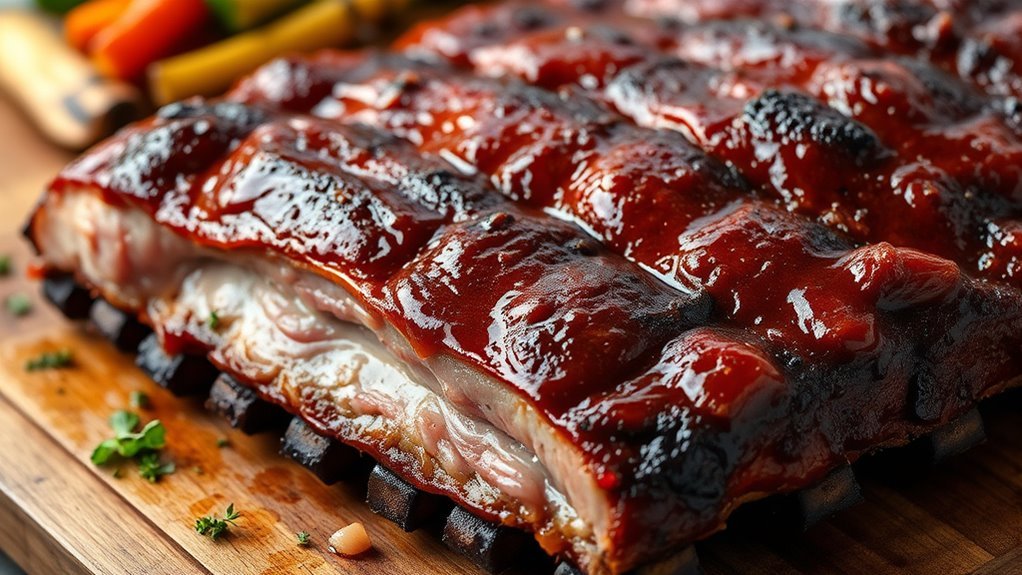
When you eat baby back ribs, you’re enjoying pork, not beef. These ribs come from the upper part of a pig’s back near the spine and are sometimes called pork loin ribs.
They’re smaller, leaner, and more tender than other pork rib cuts like spare ribs. That makes them great for quicker cooking and easy to handle.
Beef ribs, on the other hand, come from cows and are bigger and tougher, so they usually need longer cooking times.
If you’re curious about how baby back ribs stack up against other rib options, keep exploring—they each have their own unique flavors and textures!
Key Takeaways
- Baby back ribs come from the upper part of a pig’s back near the spine, making them pork ribs. They are often confused with beef ribs due to similar naming but are distinctly pork.
- Baby back ribs are smaller, leaner, and more tender compared to beef ribs. Beef ribs come from cows and have a different flavor, texture, and rib anatomy than pork ribs.
- Baby back ribs offer a subtle pork flavor and are suitable for quick cooking methods. So, if you’re thinking ribs, remember baby backs are all about pork goodness!
Are Baby Back Ribs Pork or Beef?
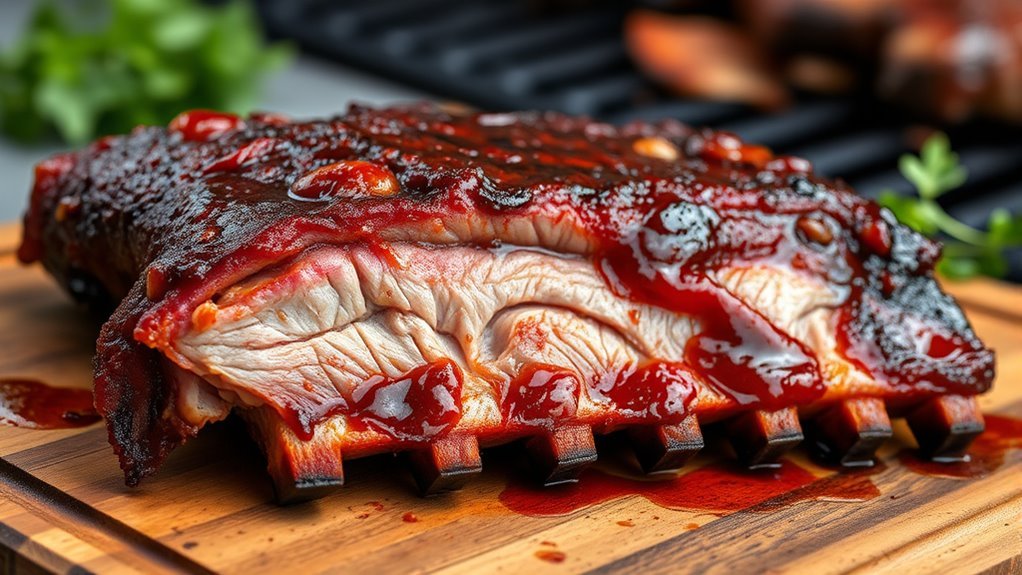
Although baby back ribs might sometimes be confused with beef ribs, they actually come from pork. When you look at rib anatomy, baby back ribs are pork back ribs taken from the upper part of the pig’s back near the spine, also known as pork loin ribs.
Baby back ribs are pork ribs from the upper back near the spine, often mistaken for beef ribs.
This rib classification sets them apart from beef ribs, which come from the ribeye area of the cow. Understanding the meat type is key in the pork vs beef debate.
Baby back ribs are smaller, more tender, and leaner compared to beef ribs, which tend to be larger and fattier. So, when you choose baby back ribs, you’re selecting a specific cut of pork, not beef.
This distinction in rib cuts helps you appreciate differences in flavor and texture. Next time you’re at the store or grilling, remember that baby back ribs are unmistakably pork, not beef ribs, despite their similar names.
How Do Baby Back Ribs Compare to Other Rib Cuts?
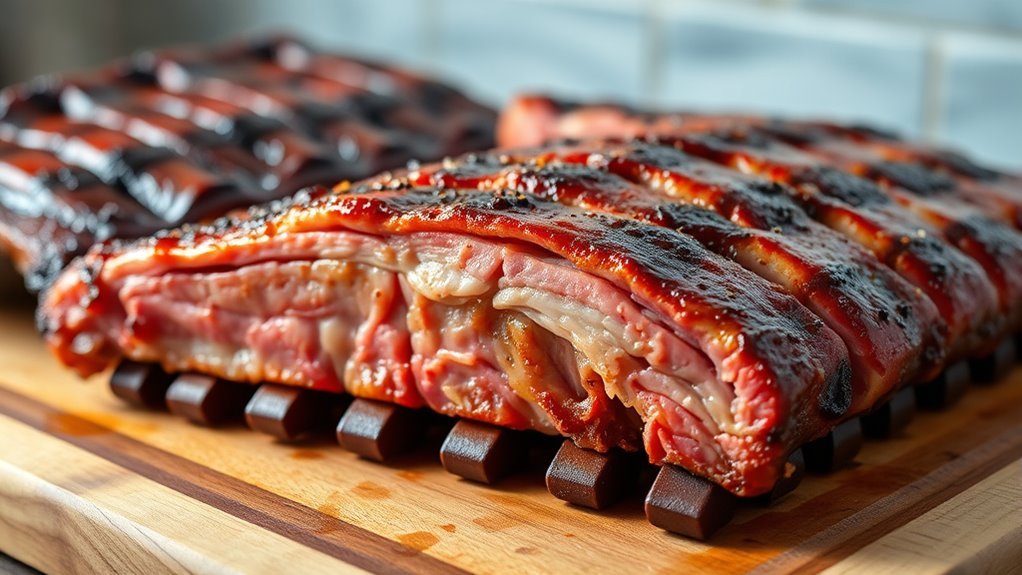
When you compare baby back ribs to other rib cuts, you’ll notice they come from the pig’s upper back near the spine. This makes them smaller, leaner, and more tender than spare ribs or the St. Louis cut.
Baby back ribs, a type of pork ribs, have a curved shape and less connective tissue. Because of this, they cook faster and offer a more refined eating experience.
In contrast, spare ribs are flatter and meatier. They contain more connective tissue, so they need longer cooking times to become tender ribs.
Beef ribs, like beef back ribs or short ribs, come from a different rib anatomy entirely since they originate from a cow. These ribs tend to be larger and tougher.
When doing a meat comparison, baby back ribs stand out for their tenderness and lean quality among rib types. So, if you want tender ribs with quicker cooking and a subtle pork flavor, baby back ribs are an excellent choice compared to other pork and beef rib cuts.
Frequently Asked Questions
Why Aren’t Beef Ribs Popular?
Beef ribs aren’t popular because they take longer to cook and have a stronger flavor you might not enjoy.
They’re also tougher, pricier, and less convenient than pork ribs.
Which Ribs Taste Better, Pork or Beef?
You’ll find 68% of rib lovers prefer pork ribs because they’re tender and mildly sweet.
If you like rich, intense flavors, beef ribs might suit you better. It all depends on your personal taste.
What Are Baby Back Ribs Called in the Grocery Store?
You’ll find baby back ribs labeled as “pork back ribs,” “pork loin ribs,” or simply “pork ribs” in the grocery store. Sometimes, they’re also called “Canadian back ribs,” highlighting their origin from the pig’s back.
It can be a bit confusing since the names vary, but don’t worry. Just look for those terms, and you’ll find the right ribs for your meal!
Which Is Better, Baby Back Ribs or Beef Ribs?
You’ll think baby back ribs are heaven on a plate because they’re tender and quick to cook.
But beef ribs pack a meaty punch that feels like a flavor explosion.
Choose based on your craving’s mood!
Conclusion
If you thought baby back ribs could be anything but pork, think again! These tender, juicy ribs are the crown jewel of pork cuts, not beef. Knowing this will transform your grilling game forever—no more confusing menus or disappointing bites.
Once you savor the true flavor of pork baby back ribs, you’ll wonder how you ever lived without that mouthwatering, fall-off-the-bone goodness. Trust me, nothing beats the rich, smoky taste of perfectly cooked pork ribs.
Get ready to become the ultimate rib master! Understanding that baby back ribs come from pork, not beef, helps you pick the best meat every time. Whether you’re grilling, smoking, or slow-cooking, pork baby back ribs deliver unbeatable flavor and tenderness that beef just can’t match. So next time you’re craving ribs, go for pork baby back ribs and enjoy that classic, juicy rib experience you’ve been missing!