10 Steps to Put Baby to Sleep in 40 Seconds
You can put your baby to sleep in 40 seconds by first recognizing early sleep cues like yawning or eye rubbing. Timing sleep with age-appropriate wake windows helps you catch when sleep pressure is building. This way, you know exactly when your little one is ready to drift off.
Create a dark, quiet, and comfy environment using dim red lights and gentle white noise. These calming surroundings make it easier for your baby to settle down quickly.
Try soothing methods like a soft forehead massage, rhythmic rocking, or the shush-pat technique. These gentle actions help your baby relax and feel secure.
And don’t forget to keep sleep safe! Use a firm surface and avoid loose bedding to protect your baby while they snooze. Follow these simple steps to make bedtime smoother and faster every night.
Key Takeaways
– Recognize early sleep cues like yawning and eye rubbing to start soothing promptly.
This way, you can get ahead of fussiness before it starts.
– Follow age-appropriate wake windows to prevent overtiredness and ease sleep onset.
Keeping track helps your baby feel ready for sleep when you put them down.
– Create a dark, quiet, and comfortable sleep environment with dim red lights and white noise.
These little touches make a big difference in helping your baby settle.
– Use gentle forehead massage or the shush-pat method to activate relaxation quickly.
It’s a simple way to calm your baby and get them ready for rest.
– Employ slow, rhythmic rocking combined with calm surroundings to promote fast sleep within 40 seconds.
The gentle motion paired with peace around helps them drift off super fast.
Recognize Your Baby’s Early Sleep Cues

When you spot early sleep cues like yawning, eye rubbing, or a drop in activity, you know your baby is ready to sleep. These subtle signs also include decreased alertness and a softening of facial expressions.
Recognizing these early sleep cues promptly allows you to shift your baby into sleep before they get overtired, which can make falling asleep more difficult. By paying close attention to your baby’s individual drowsiness signals, you can respond consistently and gently, helping them settle faster.
Timing your actions right when these cues appear can reduce the time it takes for your baby to drift off—often within 40 seconds. Observing and understanding these early sleep cues gives you a reliable way to support peaceful sleep, making bedtime smoother for both you and your baby.
Time Baby’s Sleep Using Wake Windows and Sleep Pressure

You’ll want to track your baby’s wake windows to know the perfect time for sleep, avoiding overtiredness or under-tiredness.
As your baby grows, adjusting these windows helps build the right sleep pressure for quick naps and bedtime.
Timing sleep just right makes falling asleep in 40 seconds much easier.
Understanding Wake Windows
Because babies have varying wake windows depending on their age, timing their sleep according to these ideal awake periods is essential. Wake windows are the best times your baby can stay awake before becoming overtired.
If you stretch these windows too long, your baby might get cranky and struggle to fall asleep quickly. By respecting wake windows, you help line up your baby’s internal sleep signals, making it easier for them to settle down.
Pay close attention to your baby’s age and cues to adjust these windows accordingly. Doing so supports consistent sleep routines and reduces fussiness at bedtime.
Mastering wake windows is a key step toward putting your baby to sleep efficiently and calmly every time. It really makes a difference!
Building Sleep Pressure
Although understanding wake windows is essential, building sleep pressure is what truly helps your baby fall asleep quickly. Sleep pressure builds gradually from the moment your baby wakes, increasing with each minute of wakefulness.
By timing wake windows properly, you guarantee your baby is tired enough to fall asleep swiftly without becoming overtired. And trust me, overtired babies can make settling down way harder.
Adjust wake windows based on your baby’s age and individual needs to optimize sleep pressure and improve sleep onset.
| Wake Window Duration | Baby’s Age |
|---|---|
| 30-45 minutes | Newborn (0-2 months) |
| 45-60 minutes | 2-4 months |
| 60-90 minutes | 4-6 months |
| 90-120 minutes | 6-9 months |
| 120+ minutes | 9-12 months |
This table helps you match wake windows that build sleep pressure effectively.
Timing Bedtime Right
When you time bedtime to align with your baby’s wake windows and sleep pressure, you set the stage for a smooth and speedy shift to sleep. Proper timing sleep depends on recognizing when your baby is ready—neither under- nor overtired.
If you stretch wake windows too long, overtiredness builds, making it harder for your baby to settle. Instead, observe your baby’s age and behavior to adjust wake windows appropriately.
Tailor your bedtime routine to fit these windows, ending with a calming cue that signals it’s time to sleep. By timing sleep to coincide with peak sleep pressure after a well-structured wake period, you help your baby fall asleep quickly—sometimes in as little as 40 seconds.
This precise timing sleep strategy makes bedtime easier for both of you.
Set Up a Dark, Quiet, Comfortable Sleep Environment
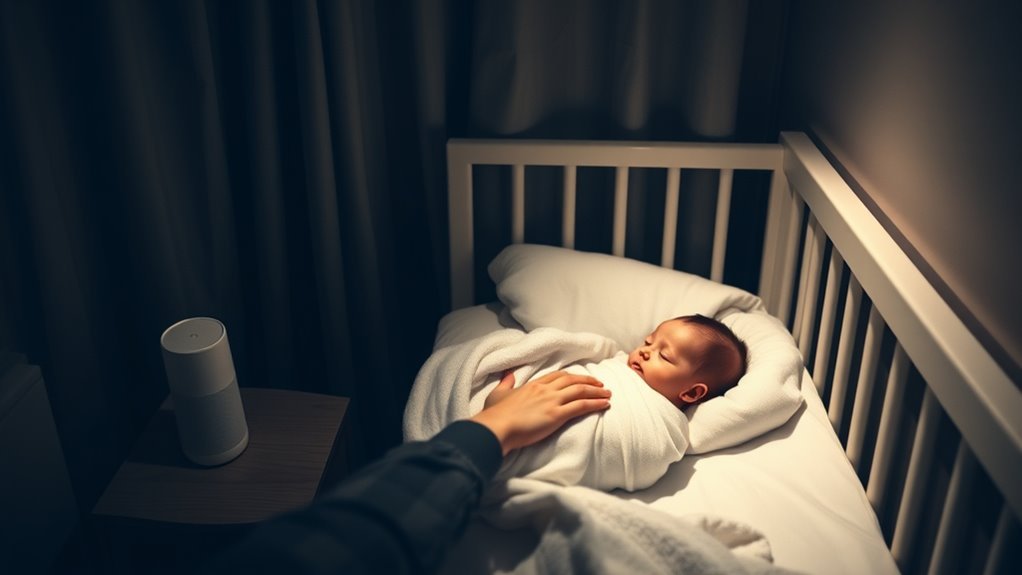
You’ll want to keep the room temperature between 68-70°F to make sure your baby stays cozy but not overheated. Use blackout curtains and dim, red-toned lights to reduce distractions and help signal bedtime.
Finally, manage noise by eliminating sudden sounds or adding gentle white noise to maintain a calm, peaceful space. This way, your little one can drift off without any interruptions.
Optimal Room Temperature
Creating the right sleep environment starts with setting the ideal room temperature between 68-70°F (20-21°C). This temperature helps regulate your baby’s core body heat. It makes it easier for them to fall asleep quickly.
Keeping the room neither too hot nor too cold supports their natural sleep cycles. Plus, it prevents discomfort.
To maintain the best temperature, consider these tips:
Use a reliable thermostat or room thermometer to monitor the temperature consistently. Dress your baby in light, breathable sleepwear suitable for the room’s climate.
Also, make sure there’s proper ventilation to keep the air fresh without creating drafts.
Light Control Techniques
After setting the perfect room temperature, focus on controlling the light to help your baby fall asleep faster. Dimming the lights or using blackout curtains reduces blue light exposure, which can delay melatonin production and slow sleep onset.
Create a consistently dark environment to signal your baby’s internal clock that it’s time to rest, activating their natural sleep switch. Avoid bright screens and minimize ambient lighting in the hour before bedtime to protect their circadian rhythm.
During bedtime routines, use red-toned or dimmed lighting to support melatonin secretion and promote quicker sleep. Maintaining a dark, comfortable sleep environment helps your baby’s body relax and shift into sleep more rapidly, making it easier for you to put your baby to sleep in just 40 seconds.
Noise Management Strategies
Although controlling light is essential, managing noise plays an equally important role in helping your baby fall asleep quickly. A dark, quiet, and comfortable environment sets the stage for restful sleep.
Use a white noise machine to mask sudden sounds between your baby and main noise sources, ensuring steady, soothing background noise. Keep the room temperature between 68-70°F to maintain comfort.
Here are key noise management strategies:
- Position a white noise machine near the crib to block disruptive sounds without startling your baby.
- Avoid sudden loud noises and maintain a quiet atmosphere during bedtime routines.
- Use blackout curtains and eliminate screens 60 minutes before sleep to reinforce a calm environment.
These steps help your baby relax and drift off faster, making bedtime smoother for both of you.
Put Baby to Sleep Fast With the Tissue Technique
When you gently drag a soft, dry tissue over your baby’s face with light, rhythmic strokes, you can often see their eyes close within just 30 to 40 seconds. This Tissue Technique helps your baby fall asleep fast by stimulating calming nerve endings.
Use only a clean, dry tissue—not wet wipes or rough materials—to keep the touch gentle and soothing. Always lay your baby on their back in a safe crib or bassinet; don’t hold them during this method to guarantee safety.
Stop immediately if your baby shows any discomfort.
| Step | Details |
|---|---|
| Tissue type | Soft, dry, clean tissue only |
| Stroke direction | Forehead → cheeks → nose |
| Pressure | Light, rhythmic |
| Baby positioning | On back, in crib or bassinet |
| Safety | Stop if distress occurs |
This technique’s gentle touch often triggers a hypnotic response, helping your baby fall asleep quickly and peacefully.
Put Baby to Sleep With Forehead Massage
Alongside the Tissue Technique, gently massaging your baby’s forehead can quickly ease them into sleep. This forehead massage activates the parasympathetic nervous system, helping your little one relax and get ready for rest.
Use your fingertips to make small, circular motions, keeping the touch light and smooth to avoid overstimulation or discomfort. It’s all about being gentle and soothing here.
Try these tips for an effective forehead massage:
- Perform the massage during early sleep cues like yawning or eye rubbing.
- Keep consistent timing to build a soothing bedtime routine.
- Avoid pressing too hard; gentle pressure is key.
These little steps can really help your baby settle down peacefully. Give it a try and watch your little one drift off with ease!
Calm Baby Quickly Using the Shush-Pat Method
You can calm your baby quickly by gently patting their chest or tummy while making a soft shush sound. This rhythmic motion soothes their nervous system and helps them relax into sleep within about 40 seconds.
Just make sure to support your baby comfortably and follow the right timing for the best results. It really makes a difference when you get it just right!
Shush-Pat Method Steps
Although soothing a restless baby can feel challenging, the Shush-Pat method offers a quick and effective way to calm them. You’ll gently pat your baby’s chest or tummy while softly shushing to create a soothing, rhythmic sensation.
This combination helps activate their relaxation response and encourages sleep. To get started, focus on early sleep cues like yawning or eye-rubbing.
Keep a steady rhythm and use slow, gentle pressure until their eyes start to close—usually within 30-40 seconds. Remember to stay calm and patient throughout the process.
Here’s how to use the shush-pat method effectively:
- Pat gently and rhythmically on chest or tummy
- Shush softly and consistently to mimic womb sounds
- Watch for early signs of sleepiness and maintain steady rhythm
Calming Benefits Explained
Mastering the Shush-Pat method lets you tap into your baby’s natural calming reflexes quickly and effectively. By combining gentle patting with a soft shush sound, you stimulate your baby’s parasympathetic nervous system, promoting relaxation and readiness for sleep.
The calming benefits come from mimicking the womb’s soothing environment through rhythmic patting and consistent shushing. This technique creates a secure, comforting space that helps your baby settle down fast.
When you use the right timing, gentle pressure, and stay calm and confident, you maximize these calming benefits. In fact, many babies can fall asleep within just 40 seconds using this method.
Understanding these calming benefits empowers you to soothe your baby efficiently and build positive sleep associations. It’s a simple trick that really makes a difference!
Safety And Timing
How quickly you apply the Shush-Pat method can make all the difference in calming your baby safely. Timing is essential; start as soon as your baby shows signs of fussiness to help them settle faster.
Always prioritize safety by placing your baby on their back on a flat, secure sleep surface—never hold them during the technique. Use gentle, rhythmic pats combined with a soft shush to soothe effectively.
Keep in mind these safety and timing tips:
- Begin the method promptly at the first sign of distress
- Use only gentle pressure and stop if your baby seems uncomfortable
- Always supervise your baby and ensure a safe sleep environment
Following these steps guarantees you calm your baby quickly while maintaining their safety.
Encourage Sleepiness With Gentle Rhythmic Rocking
When you gently rock your baby with a steady, rhythmic motion, you mimic the soothing feeling of the womb, helping them relax quickly. Gentle rocking activates their parasympathetic nervous system, which naturally promotes calmness and prepares them for sleep.
Keep your movements slow, smooth, and consistent—avoid sudden jolts to maintain comfort. Rocking for just one to two minutes at a steady pace can cut down how long it takes your baby to fall asleep considerably.
To boost the calming effect, pair gentle rocking with a quiet room and dim lighting. This combination creates the perfect sleep-friendly environment that encourages your little one to drift off swiftly.
Keep Sleep Safe: Tips for Using Sleep Techniques
Although using sleep techniques can help your baby fall asleep quickly, you need to prioritize safety at all times. Sleep safety is vital to guarantee your baby’s well-being as they drift off.
Always supervise your baby closely during any sleep technique and never leave objects like toys or tissues in the crib once they’re asleep.
Always watch your baby during sleep techniques and remove toys or tissues before they fall asleep.
To keep sleep safe, focus on these key tips:
- Use gentle, light touch methods such as the Tissue Technique or shush-pat to avoid distress.
- Ensure the crib has a firm, flat surface with no loose bedding or soft items that could cause suffocation.
- Stop immediately if your baby shows discomfort, distress, or tries to turn away.
Keeping an eye on these details helps create a safe sleep environment. That way, your baby can rest peacefully, and you can feel confident using these techniques.
Manage Light and Sound to Support Baby’s Sleep
Since your baby’s sleep depends on their environment, managing light and sound plays a crucial role in helping them fall asleep quickly. About 60 minutes before bedtime, dim the lights or switch to red-toned bulbs to boost melatonin production, which signals their body it’s time for sleep.
Try to avoid screens and bright lighting during this hour to prevent blue light from disrupting their internal clock. Creating a dark, quiet environment by minimizing light and controlling noise levels really helps.
You can use a white noise machine or fan set at 50-60 decibels to mask sudden sounds that might wake your baby. Position the noise source between your baby and other noises to maintain a steady sound environment.
These environmental cues—darkness and consistent sound—help your baby’s brain recognize it’s time to sleep, reducing the time it takes to drift off. So, by carefully managing light and sound, you set the perfect stage for your baby to settle quickly and sleep soundly.
Adjust and Combine Methods If Quick Sleep Isn’t Working
If your baby doesn’t fall asleep quickly despite managing light and sound, don’t be discouraged. Sometimes, adjusting and combining techniques can make all the difference.
Observe your baby’s cues closely and tweak your approach to fit their natural rhythm. For example, you might pair the Tissue Technique with a gentle forehead massage to boost relaxation. Creating the right environment also plays a big role.
Try these tips to refine your sleep routines:
- Adjust the timing or environment to better match your baby’s sleep signals.
- Combine soothing methods, like gentle touch with calming sounds.
- Keep the room dim, comfortably cool, and quiet to minimize distractions.
Frequently Asked Questions
What Is the 3-3-3 Rule for Baby Sleep?
The 3-3-3 rule means you watch for three sleepiness signs, put your baby down within three minutes, and aim for at least three hours of sleep.
It helps you catch sleep cues and prevent overtiredness effectively.
How to Sleep Fast in 40 Seconds as a Kid?
You can sleep fast by relaxing your body, taking slow deep breaths, and focusing on calming thoughts.
Dim the lights, stay still, and create a quiet environment to help your mind and body drift off quickly.
It’s all about making your room comfy and your mind peaceful. Just try to keep everything calm, and you’ll be asleep before you know it!
What’s the Fastest Way to Put a Baby to Sleep?
You tap into a timeless magic: gently stroke your baby’s face with a soft tissue while rocking rhythmically. You’ll calm their nerves fast—like an instant lullaby.
It sets the stage for peaceful sleep in under a minute. Pretty amazing, right?
How to Fix the 45 Minute Intruder?
To fix the 45-minute intruder, keep your baby’s wake windows consistent. Avoid overstimulation, and create a calm, dark sleep environment.
Try using white noise and a soothing routine. These can help your baby smoothly shift between sleep cycles.
Conclusion
By tuning into your baby’s early sleep cues and creating a cozy, quiet nest, you’ll make bedtime a breeze. Using techniques like the tissue method and gentle rocking can whisk your little one off to dreamland in no time.
Remember, every baby is unique—think of these steps as puzzle pieces you can mix and match until the perfect fit lulls your baby to sleep swiftly and safely. With these simple yet effective methods, you can turn those sleepless nights into peaceful ones.
Putting your baby to sleep quickly doesn’t have to be a struggle. By paying attention to their signals and using calming techniques, you can help your little one drift off in about 40 seconds. Sweet dreams and restful nights are just steps away!