
When Do You Stop Swaddling a Baby and How to Do It
You should stop swaddling your baby around 3 to 4 months old, especially once they start rolling over or pushing up during tummy time. Swaddling is great for newborns because it helps them feel secure and sleep better, but as your baby grows, their needs change.
If your baby resists being swaddled or shows increased arm movement, it’s time to shift. Start by swaddling with one arm out. This gradual change helps your little one get used to having more freedom while still feeling cozy.
Next, you can move on to sleep sacks or similar safe alternatives. These options support healthy development and keep your baby comfortable.
Keep going to discover how to make the switch smooth and secure for both you and your baby.
Key Takeaways
- Stop swaddling between 3 to 4 months or when the baby starts rolling over or pushing up during tummy time.
- Signs to stop include increased arm mobility, resistance to swaddling, and fading startle reflex.
- Continuing to swaddle after rolling begins increases risks of suffocation, SIDS, and restricts natural development.
- Transition by swaddling with one arm out for 1-2 weeks, then use sleep sacks or wearable blankets.
- Maintain a consistent sleep routine, allow free arm movement, and consult a pediatrician if unsure about timing.
When to Stop Swaddling: Signs Your Baby Is Ready
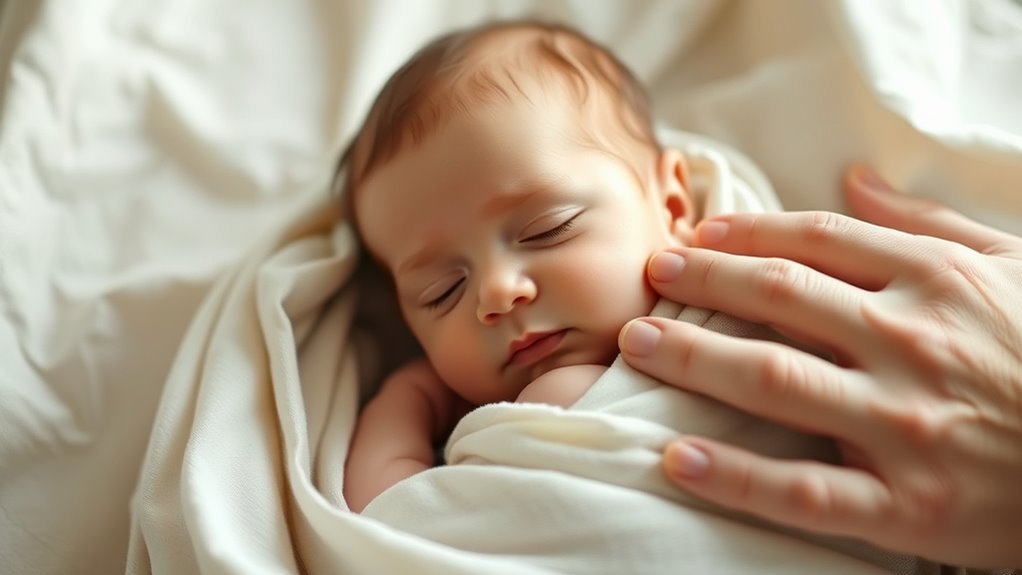
Although swaddling soothes many newborns, you should stop once your baby shows signs of readiness, usually between 3 to 4 months. This age range is important because your baby may start trying to roll over, push up during tummy time, or resist being swaddled.
Swaddling comforts newborns but should end around 3 to 4 months as babies begin rolling and resisting it.
These signs, especially rolling, show that your baby’s developmental milestones are moving forward. Their arms are getting more mobile, and the startle reflex begins to fade.
When your baby can roll onto their side or stomach, it’s no longer safe to keep swaddling. That’s when you need to stop and let their arms be free.
Watching for these cues helps you know the right time to make the switch without messing up their sleep routine. If your baby can sleep comfortably without the swaddle, it’s a good sign they’re ready.
And if you’re ever unsure, don’t hesitate to check in with your pediatrician. They can help make sure the change fits your baby’s unique development.
How to Help Your Baby Transition Out of the Swaddle Safely
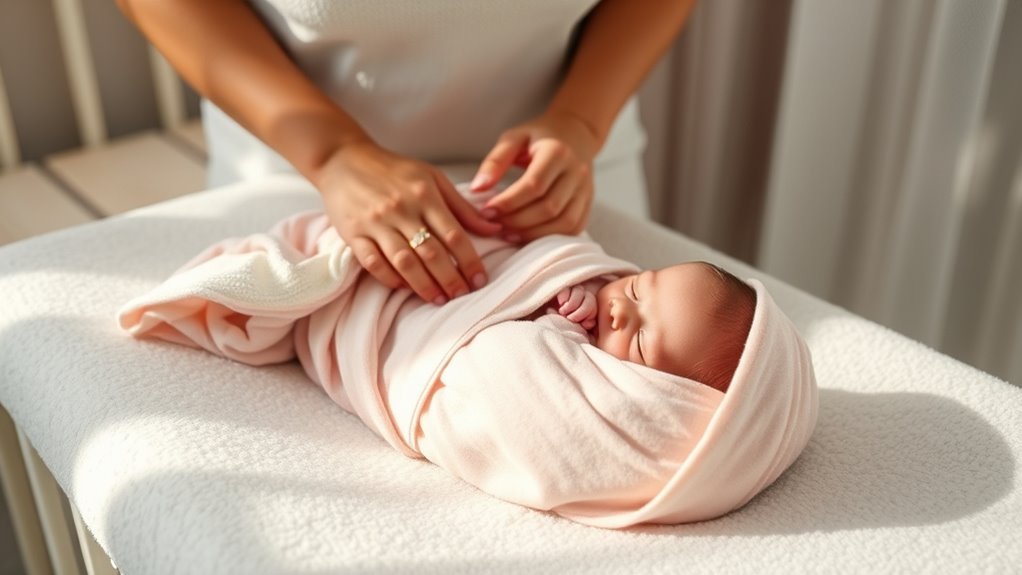
Once your baby starts showing signs like rolling or resisting the swaddle, it’s time to gently adjust their sleep setup.
Begin the changeover by swaddling with one arm out for 1-2 weeks. This gives your baby a chance to get used to more freedom while still feeling secure.
Sleep sacks or products like the Butterfly Cardi offer a snug, safe sleep alternative to full swaddling. They help keep baby safe as they adapt.
Keep a consistent sleep routine and calming environment to make the sleep transition easier for your little one.
Watch closely for signs of rolling and avoid re-swaddling once your baby’s arms are out. This keeps sleep safe and supports healthy development.
This gradual approach respects your baby’s growing mobility and independence while keeping them comfortable.
Frequently Asked Questions
At What Age Should You Quit Swaddling a Baby?
You should quit swaddling your baby around 3 to 4 months, or once they start rolling.
Gradually shift by leaving one arm out, then both, ensuring they stay safe and comfortable during sleep.
When Should I Let My Baby Sleep Unswaddled?
You should let your baby sleep unswaddled around 3 to 4 months, especially when they start rolling or pushing up.
Watch for reduced startle reflex and increased movement. Then, gradually shift for safer, more comfortable sleep.
How Can I Tell if My Baby Still Needs Swaddling?
Around 90% of babies’ startle reflex fades by 3-4 months. You’ll know your baby still needs swaddling if they struggle to settle, wake frequently, or can’t roll over yet.
Watch for signs like resistance or rolling to know when to stop. It’s all about keeping your little one safe and comfortable.
Why Is Swaddling Unsafe After 8 Weeks?
Swaddling becomes unsafe after 8 weeks because your baby might start rolling over, increasing suffocation risk. It also restricts their arm movement, which they need to protect themselves, so you should stop swaddling by then.
You see, once babies begin to roll, being tightly swaddled can make it hard for them to move or get into a safe position. That’s why it’s important to give them more freedom to move their arms around after this age.
Conclusion
You’ll know when it’s time to stop swaddling by watching your baby’s movements, noticing their attempts to roll, and sensing their growing need for freedom. It’s all about paying attention to those little cues.
When you see these signs, help your baby shift by loosening the swaddle. You can also offer a sleep sack to keep them cozy without restricting their movements. Comfort is key, but so is giving them space to move.
Supporting their independence, encouraging safety, and honoring their development are all part of this transition. Even though swaddling ends, your care and love continue to guide them. Remember, keeping your baby’s sleep peaceful and secure is what matters most during this important stage.