What Do Baby Turtles Eat for a Healthy Start?
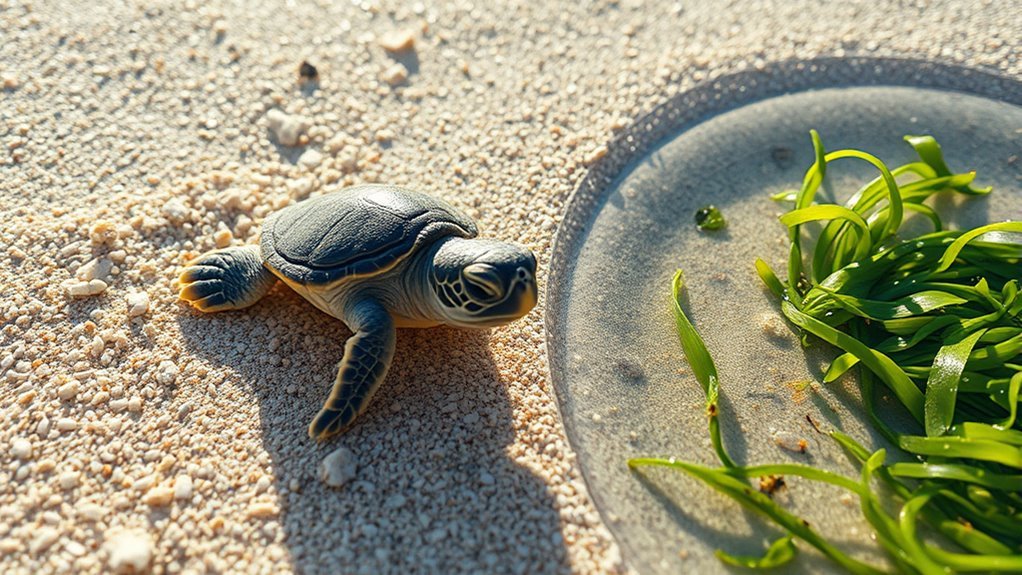
To give your baby turtle a healthy start, it’s important to feed it a balanced diet that supports its growth and well-being. Baby turtles need a mix of leafy greens like romaine and mustard greens, which provide essential vitamins and nutrients.
Along with these, high-quality hatchling pellets are great for ensuring they get the right balance of food.
Protein is also key for baby turtles, so offering small fish or insects will help them grow strong. Don’t forget to add calcium supplements a few times a week to support their shell development.
Make sure to remove any uneaten food to keep their tank clean and avoid any health issues.
Keeping feeding times consistent helps your turtle establish a routine, which is good for their overall care. Stick to this routine, and you’ll be setting your baby turtle up to thrive while mastering the essentials of proper care.
Key Takeaways
- Baby turtles need a diet rich in leafy greens like romaine lettuce and mustard greens for essential nutrients and immune support. These greens are super important to keep them healthy.
- Include high-quality turtle pellets formulated for hatchlings to ensure balanced nutrition. This helps cover all the vitamins and minerals they might miss from other foods.
- Provide protein sources such as small fish and insects to support muscle growth and strong shell development. Protein is key for their overall strength and health.
- Supplement their diet with calcium powder or natural calcium sources 2-3 times weekly for healthy shell formation. Calcium is what makes their shells tough and durable.
- Feed daily with varied foods, remove uneaten portions promptly, and maintain consistent feeding times for optimal health. Sticking to a routine really helps your baby turtle thrive.
Baby Turtle Diet: What to Feed for Healthy Growth
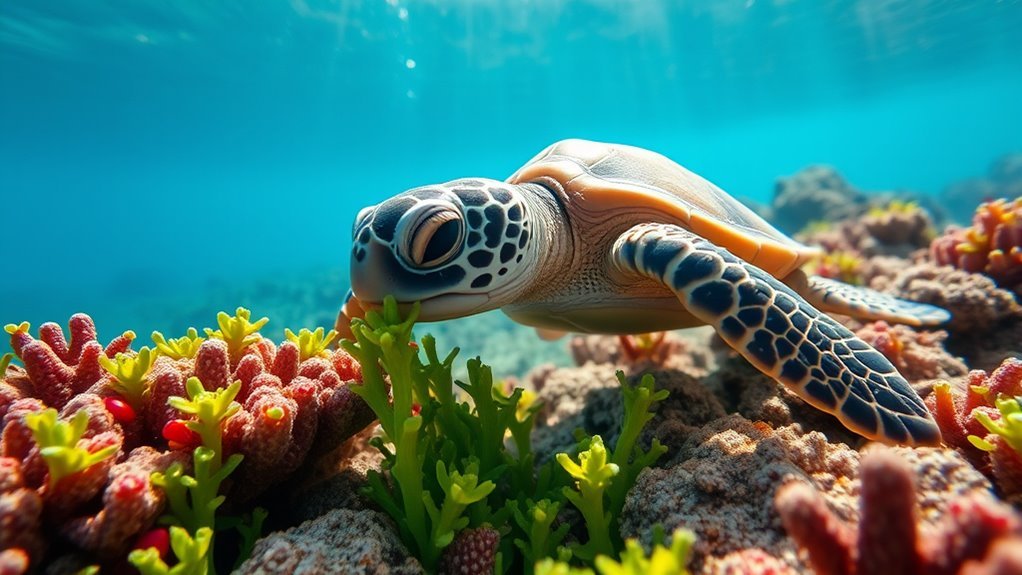
When you’re feeding your baby turtle, focus on leafy greens like romaine lettuce, mustard greens, and collards. These form the foundation of a healthy diet. They provide essential nutrients that support your hatchling’s immune system and overall healthy growth.
To create a balanced diet, include high-quality turtle pellets formulated specifically for hatchlings. They supply vital vitamins and minerals that greens alone may lack. Since aquatic turtles need natural calcium for strong shell development, supplement their diet with calcium powder 2-3 times a week.
Include hatchling-specific turtle pellets and calcium powder 2-3 times weekly for balanced nutrition and strong shells.
You can also offer natural calcium sources like small bones. Don’t forget to add protein-rich foods such as small fish and insects. These are indispensable for muscle development and energy.
Avoid processed human foods, as they can harm your baby turtle’s health. By combining leafy greens, turtle pellets, protein-rich foods, and natural calcium supplements, you guarantee your aquatic turtles get a balanced baby turtle diet. This promotes healthy growth from the start.
How to Build a Balanced Feeding Routine for Baby Turtles
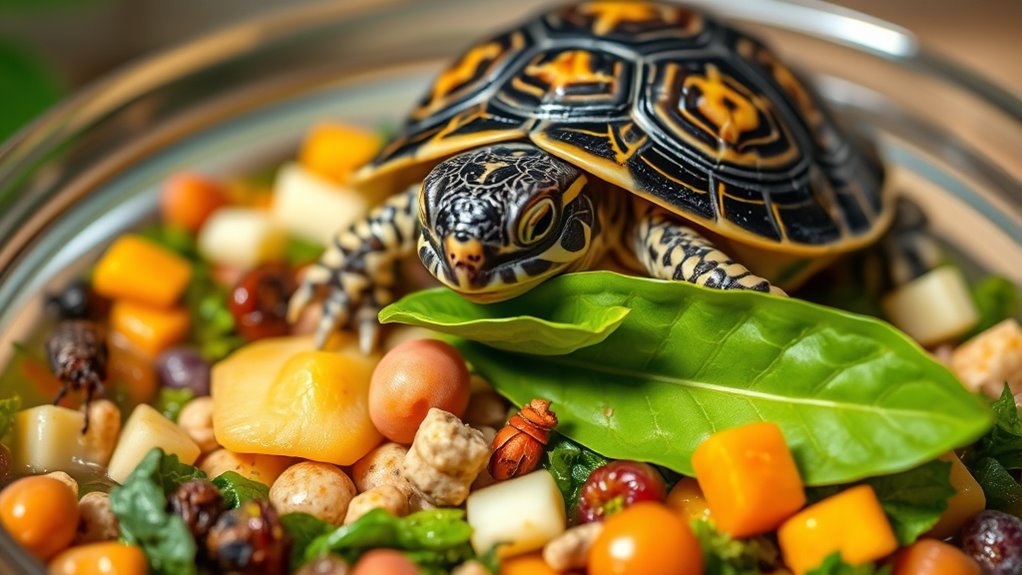
Although baby turtles need a variety of foods to thrive, establishing a consistent feeding routine will make it easier for you to meet their nutritional needs daily. Start by offering a balanced diet that includes leafy greens, protein sources, and calcium supplements.
This approach guarantees your baby turtles get the essential nutrients for growth and a healthy shell.
To build an effective feeding routine, keep these tips in mind:
- Feed baby turtles daily with fresh leafy greens like romaine and collards to provide vitamins and minerals.
- Incorporate protein sources such as high-quality turtle food pellets and occasional live foods for protein variety.
- Add calcium supplements 2-3 times weekly to support shell development.
Always remove uneaten food after 5 minutes to prevent water contamination.
Try to maintain consistent feeding times and keep an eye on your turtles’ responses. This way, you can adjust portion sizes and food variety as needed, helping you create a balanced feeding routine that promotes their health and well-being.
Frequently Asked Questions
What Can I Feed a Baby Turtle at Home?
You can feed your baby turtle leafy greens like romaine, mustard, and collards daily. Add calcium powder a few times weekly and provide a jibia bone for chewing to support shell growth and overall health.
It’s pretty simple, really. Just make sure those greens are fresh, and don’t forget the calcium—it’s super important for their shell! The jibia bone is a great natural way to keep their beak healthy too.
What to Feed Small Baby Turtles?
You should feed small baby turtles leafy greens like romaine and collards, high-quality turtle pellets, and calcium supplements a few times a week.
Avoid processed foods and dairy to keep them healthy and growing strong. It’s really important to stick to natural, nutritious options for your little turtle’s diet.
How Many Days Can a Baby Turtle Live Without Food?
You can expect a baby turtle to survive about 3 to 7 days without food. Younger hatchlings tolerate less time, around 2-3 days, so you should feed them promptly to avoid stress or health issues.
It’s really important to keep an eye on them and make sure they eat regularly. That way, you’ll help them stay healthy and happy!
How to Keep a Wild Baby Turtle Alive?
Like tending a fragile flame, you must create a safe, clean haven with proper warmth and moisture.
Feed natural foods, provide fresh water, and minimize stress—this way, you’ll help the wild baby turtle thrive and survive.
It’s all about keeping things gentle and steady. Just a little care goes a long way!
Conclusion
To give your baby turtle a healthy start, you need to feed it a balanced diet rich in protein and veggies. For example, imagine Sarah, who fed her hatchling a mix of small feeder fish and leafy greens daily.
Her turtle grew strong and active, showing vibrant shell colors. By sticking to a varied feeding routine, you’ll help your baby turtle thrive just like Sarah’s.
Feeding your baby turtle the right foods is key to its healthy development. Providing a mix of protein sources and fresh vegetables supports strong growth and bright shell colors. Remember, a balanced diet helps your baby turtle stay active and develop into a healthy adult. So, by offering a variety of nutritious foods regularly, you’re setting your little turtle up for a lifetime of health and happiness.