What Does a Baby Pigeon Look Like?
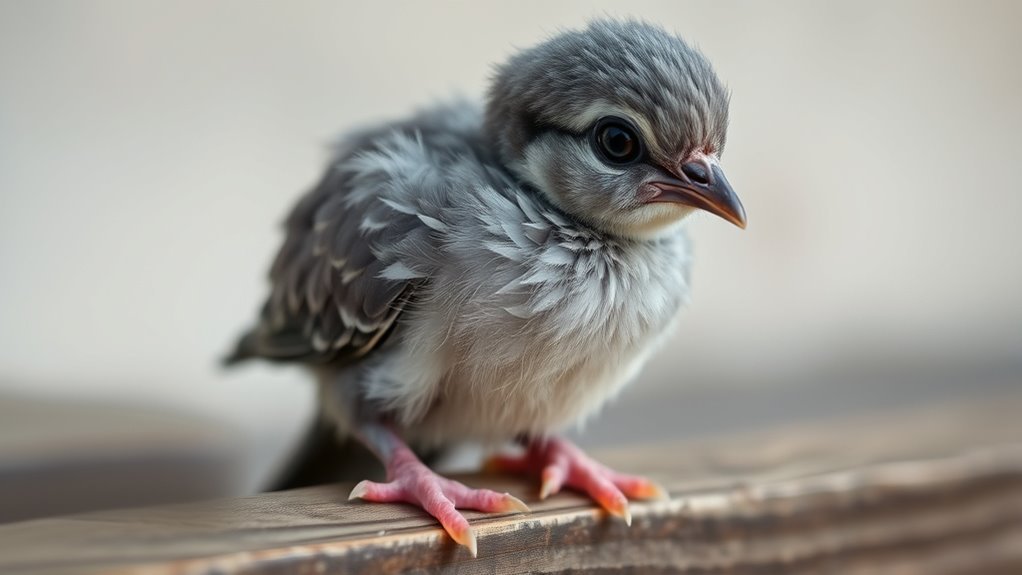
When you spot a baby pigeon, or squab, you’ll first notice a small, soft, yellowish fluff ball. These little birds look quite different from the sleek adults we usually see around.
Their fluffy down makes them look extra cuddly and fragile.
As they grow, they quickly develop their first feathers, swapping that soft fluff for adult-like plumage. You’ll even see shiny neck feathers start to appear.
Their beak, feet, and eyes get bigger too, making them look more mature around 4 to 5 weeks old.
Baby pigeons usually stay hidden in nests during this time, so it’s rare to see them outside.
But once they start to explore, you get to witness their fascinating growth up close.
Keep exploring to uncover more about their secretive early life and development!
Key Takeaways
- Baby pigeons, called squabs, are initially small with soft, yellowish down feathers covering their bodies. They look pretty fluffy at this stage.
- They quickly grow their first structured feathers inside the nest, replacing the soft down. It’s like they’re getting their first little coat of armor.
- Juvenile pigeons develop larger beaks, feet, and eyes, giving them a more mature appearance. You can really see them start to change.
- By 4 to 5 weeks, their feathers are fully developed, revealing iridescent neck plumage like adults. It’s a cool transformation.
- Young pigeons look very similar to adults by fledging, around 4 to 6 weeks of age. At this point, they’re almost ready to take on the world!
What Baby Pigeons Look Like as They Grow
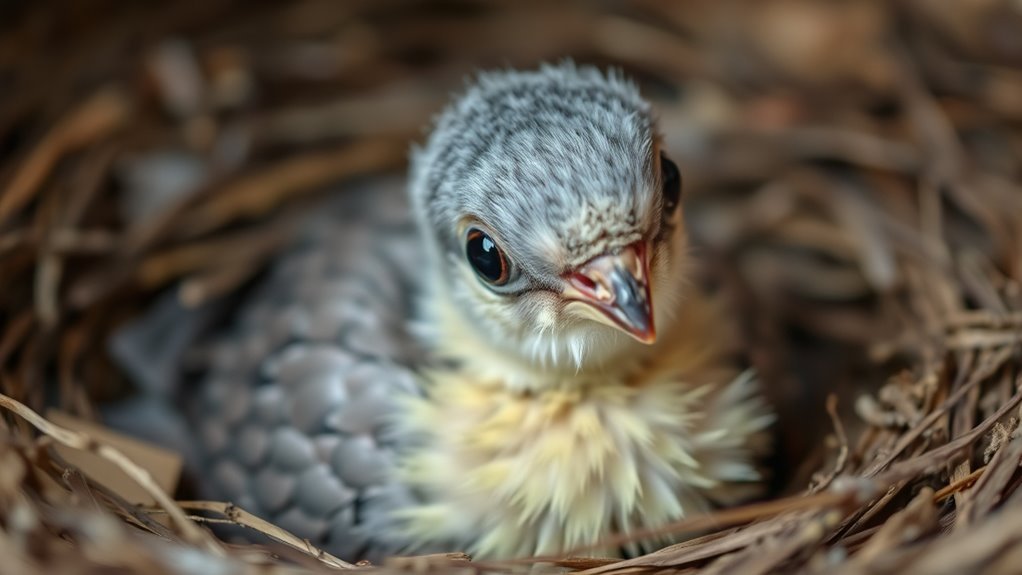
Although baby pigeons start off small and covered in soft, yellowish down feathers, you’ll notice them quickly growing and developing their first set of feathers. These squabs begin their feather development inside the nest, where they stay protected during their early days.
Baby pigeons start small, covered in soft down, and quickly develop their first feathers inside the safety of the nest.
As they progress through the juvenile stage, their soft down is replaced by more structured feathers. This gradually reveals the iridescent neck plumage typical of adult pigeons. You’ll see their beak and feet grow larger, and their eyes become more noticeable, giving juvenile pigeons a distinctly mature look.
By about 4 to 5 weeks, their feathers are fully developed, and their size increases markedly. When it’s time for fledging, roughly between 4 to 6 weeks, young pigeons resemble adults closely, both in feather coloration and body shape.
Observing this transformation highlights how rapid and remarkable the growth of baby pigeons truly is. It’s pretty amazing to see such a quick change right before your eyes!
Why You Almost Never See Baby Pigeons Outside Their Nests
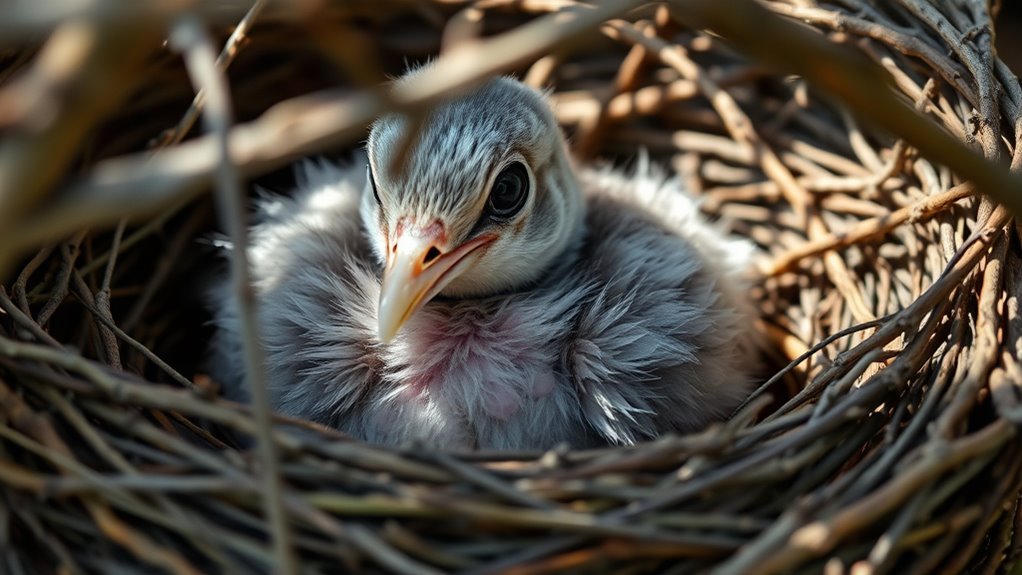
Because baby pigeons, known as squabs, stay tucked away in well-hidden nests for their first several weeks, you rarely get to see them out in the open. These young birds spend about 4-5 weeks inside nests that are carefully concealed to keep them safe.
Pigeons often choose secluded spots on rooftops or high buildings, making these nests tough for urban residents to find.
Here’s why baby pigeons remain out of sight:
- Their nests are hidden in elevated or hard-to-reach places like eaves and building ledges.
- Squabs stay inside during their early weeks to avoid predators and harsh weather.
- Because of this concealment, most people only spot adult pigeons, not the baby birds still growing inside.
Frequently Asked Questions
How Rare Is It to See a Baby Pigeon?
You’ll rarely see a baby pigeon because they stay hidden in nests for weeks. They’re tucked away in hard-to-reach spots, so unless you’re really lucky or searching, you probably won’t spot one in the wild.
Seriously, these little guys keep a low profile while they’re growing. So next time you see a flock of pigeons, remember the babies are probably close by—just out of sight!
What Bird Are Pigeons Most Afraid Of?
You’ll find pigeons most afraid of birds of prey like hawks, falcons, and owls. When they spot these predators, they’ll quickly fly away or hide.
They stay alert to avoid danger and protect themselves. It’s like they have a built-in warning system that helps them stay safe.
Why Do We Hardly Ever See Baby Pigeons?
You hardly ever see baby pigeons because they stay hidden in well-concealed nests on high surfaces. Their parents keep them protected until they’re nearly fully grown.
How Can You Tell if It’s a Baby Pigeon?
You’ll spot a baby pigeon by its soft, fuzzy cloak and oversized beak, like a fledgling knight in patchy armor.
Its eyes might be closed, and its colors won’t yet shine with adult pride.
They look kind of scruffy, but that’s just part of growing up. You can almost tell they’re still figuring things out.
Conclusion
Imagine baby pigeons as hidden treasures, tucked away like secret seeds waiting to sprout. You rarely glimpse these delicate beginnings because they’re shielded in cozy nests, much like a story quietly unfolding behind closed doors.
As they grow, their feathers bloom like petals reaching for sunlight. It’s a slow, gentle process, but one that transforms them from fragile hatchlings into the familiar city birds we see every day.
So next time you see a bustling city pigeon, remember the quiet, tender journey it took, sheltered and unseen. Baby pigeons, often called squabs, start off covered in soft down and are completely dependent on their parents. Their growth is a beautiful, patient process — a whispered promise of flight and freedom. Understanding what a baby pigeon looks like helps us appreciate these common birds in a whole new light.