
How to Tell Baby Position by Kicks With a Step-By-Step Guide
You can tell your baby’s position by tracking where you feel their kicks. Paying attention to these movements helps you get a clearer picture of your baby’s orientation inside your belly.
Kicks high in your belly usually mean the baby’s head is down.
If you feel kicks near your pelvis, they might be breech or sideways.
Consistent strong kicks on one side suggest the baby’s back faces outward.
Low hiccups often show the head is engaged in your pelvis.
Noticing these patterns helps you understand your baby’s orientation and what’s next.
Keep exploring to uncover more details about your baby’s movements. It’s a wonderful way to connect with your little one before they arrive!
Key Takeaways
- Track where you feel kicks: upper belly suggests head-down, lower belly indicates breech or transverse position.
- Notice if kicks are consistently on one side, revealing the baby’s back orientation facing outward.
- Identify repeated kicks in the same spot to find fetal limbs or back pressing against the belly.
- Observe low hiccups after 23 weeks as a sign the baby’s head is engaged in the pelvis.
- Monitor changes in kick patterns over time to detect if the baby is turning or settling for birth.
It’s pretty interesting how much you can learn just by paying attention to where and how your baby kicks! Keep tracking, and you’ll start noticing patterns that tell a story about your little one’s position.
How To Feel Your Baby’s Position By Noticing Their Kicks

Although every pregnancy is unique, you can learn a lot about your baby’s position by paying attention to where and how you feel their kicks. By practicing belly mapping—tracking your baby’s movements—you can start to determine your baby’s position.
Every pregnancy is unique, but tracking your baby’s kicks can reveal their position through belly mapping.
For instance, if you feel kicks in the upper part of your belly, it usually means your baby’s head is down. Kicks felt lower near your pelvis might signal the baby is breech or in a transverse lie.
You might notice consistent, strong kicks on one side; this often means the baby’s back faces outward. Repeated kicks in the same spot can show where the baby’s limbs or back press against your belly.
If you feel hiccups low in your belly after 23 weeks, it usually indicates the head is down. Paying attention to these patterns helps you feel the kicks and understand whether you’re feeling the baby’s head or butt.
This way, you can better determine your baby’s position.
What Your Baby’s Kick Locations And Patterns Reveal About Their Position
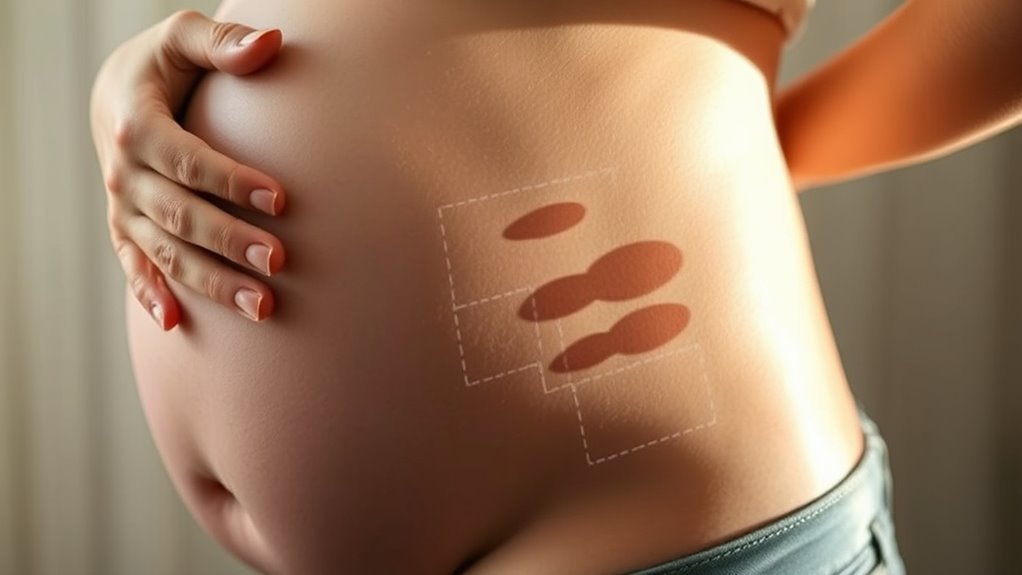
When you pay close attention to where and how your baby kicks, you’ll uncover valuable clues about their position inside your womb. Kicks felt in your upper abdomen or ribs usually signal a head-down baby with their back facing your front.
If you feel kicks near your lower abdomen or pelvis, it often means a breech baby, with their bottom down. Notice a kicks pattern mostly on one side? That suggests your baby’s back position is on that side, indicating a transverse lie or oblique position.
Hiccups low in your belly typically mean your baby’s head is engaged in the pelvis, while hiccups higher up hint at a breech or transverse lie. Tracking changes in fetal movement and kick location over time helps you spot if your baby is shifting—perhaps turning from breech to head-down.
Paying attention to these patterns gives you a clearer picture of your baby’s position and readiness for birth. It’s pretty amazing what those little kicks can tell you!
Frequently Asked Questions
How to Tell What Position Baby Is in Based on Kicks?
You can tell your baby’s position by where you feel kicks—upper belly means head-down, lower pelvis suggests breech, and kicks on one side show the back’s location.
Notice changes to track their movement as labor nears. It’s pretty neat how much you can learn just by paying attention!
Is 10 Kicks in 20 Minutes Good?
Think of 10 kicks in 20 minutes as your baby’s heartbeat whispering to you—it’s a good sign.
If you notice fewer kicks, don’t hesitate to check with your healthcare provider to keep your baby safe and sound.
Where Do You Feel Kicks if Baby Is Transverse?
If your baby’s transverse, you’ll feel kicks mostly on one side of your belly, often the sides or upper area.
Kicks might shift sides during the day and feel less frequent or uneven compared to other positions.
It’s kind of normal for the movement to be different when your baby is lying sideways. Just keep an eye on how it changes throughout the day.
Where Should I Feel Kicks if My Baby Is Engaged?
You’ll feel kicks like gentle drumbeats low in your pelvis, near your pubic bone. The baby’s head settles down, so movements shift lower.
There’s less fluttering in your upper belly now, and more pressure in your pelvic area. It’s a different kind of feeling, but totally normal.
Conclusion
It’s normal to feel unsure about interpreting your baby’s kicks, especially if it’s your first time. But paying close attention to where and how your baby moves can give you valuable clues about their position—and help you connect with them more deeply.
Remember, every baby’s pattern is unique, so don’t worry if it takes a few days to notice. Trust your instincts, and enjoy these special moments as you prepare to meet your little one.
Understanding your baby’s position by their kicks is a wonderful way to bond and stay aware of their movements. By following a step-by-step guide, you can learn to tell where your baby is lying inside your belly, which can be reassuring and exciting. Keep observing those kicks daily, and soon you’ll feel more confident recognizing your baby’s position and rhythms. Embrace this amazing journey, because each kick brings you closer to your little one!