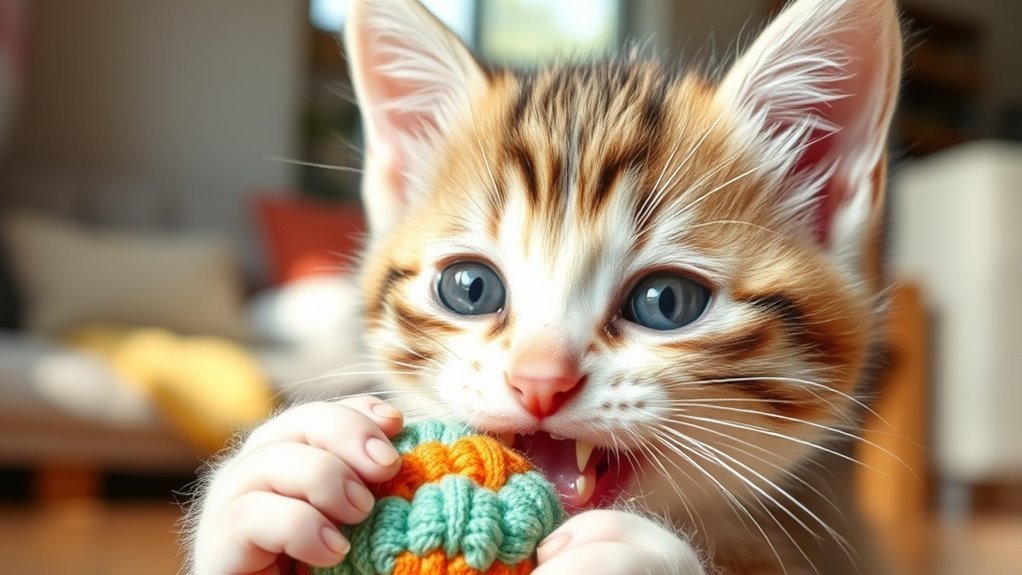
At What Age Do Cats Lose Their Baby Teeth?
You’ll notice your kitten starts losing baby teeth around 12 weeks old as adult teeth begin pushing through. This is a normal part of their growth, and it’s called the teething phase.
During this time, baby teeth gradually fall out to make room for stronger adult teeth.
This teething phase usually finishes by six months.
As your kitten’s adult teeth come in, they might chew more than usual and show mild gum irritation.
Offering soft foods and safe chew toys can really help ease their discomfort.
If you want to know how to support your kitten through this process and spot any issues early, keep exploring these tips.
It’s important to keep an eye on their teeth and gums to make sure everything is going smoothly.
Key Takeaways
- Cats typically start losing baby teeth around 12 weeks of age. The teething process usually finishes by about six months old.
- Baby teeth fall out to make room for stronger adult teeth. Shedding is a natural part of a kitten’s growth and development.
- Mild gum irritation and increased chewing are common during this stage. It’s all pretty normal, so no need to worry!
When Do Kittens Lose Their Baby Teeth?
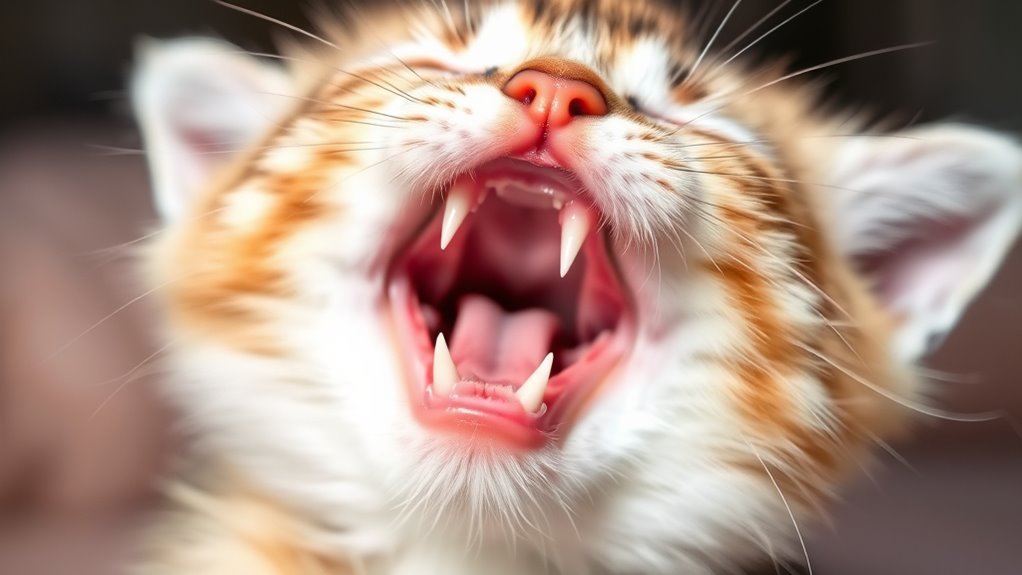
Although it may be surprising, kittens typically start losing their baby teeth around 12 weeks old. This marks the beginning of the teething process, where baby teeth fall out to make way for adult teeth to come in.
Kittens usually begin losing baby teeth around 12 weeks, starting their teething journey toward adult teeth.
You’ll notice kittens lose baby teeth naturally as the larger, stronger adult teeth push through their gums. This shift to adult teeth usually finishes by about six months of age.
During this baby teeth shedding stage, mild gum irritation is common, so you might see your kitten chewing more often to ease discomfort. Paying attention to dental care for kittens during this time is important to guarantee baby teeth fall out properly and no issues arise.
Knowing when kittens start losing teeth helps you understand their growth and development better. It also makes it easier to monitor their oral health as they complete the changeover to adult teeth.
How to Help Your Kitten Through Teething

When your kitten starts teething around three months old, you can ease their discomfort by offering soft foods and safe chew toys. Soft foods like canned or soaked kibble help soothe irritated gums and make eating easier as baby teeth fall out and adult teeth emerge.
Provide chew toys designed for kittens to relieve gum discomfort and encourage healthy chewing habits. Watch for teething signs such as excessive drooling, pawing at the mouth, or reluctance to eat.
Regular dental care is essential—inspect your kitten’s mouth frequently to make sure baby teeth fall out properly and no abnormalities cause pain. If you notice bleeding, persistent discomfort, or your kitten refuses food, don’t wait—seek veterinary help promptly.
Addressing these issues early prevents complications and supports healthy adult teeth emergence. By staying attentive during kitten teething, you’ll help your pet transition smoothly through this important developmental stage.
Frequently Asked Questions
How Do Kittens Act When Losing Teeth?
When your kitten loses teeth, they might get cranky, chew more on toys, or paw at their mouth. They could also drool a bit or have mild bleeding.
You’ll notice they prefer soft food and seem less interested in hard kibble. It’s just their way of coping with the discomfort.
Can My Cat Be Teething at 2 Years Old?
You can’t teach an old dog new tricks, and cats rarely teethe at 2 years.
If your cat shows teething signs now, you should see a vet. It might be dental disease or another issue.
Do Cats Lose Teeth at 1 Year Old?
Cats don’t usually lose teeth at 1 year old since they’ve replaced baby teeth with adult ones by then.
If you notice tooth loss or issues, it’s best to have your vet check for dental problems. Better safe than sorry!
At What Age Are Kittens the Naughtiest?
Curiosity killed the cat, but you’ll find your kitten’s naughtiest phase is between 8 and 12 weeks old.
You’ll notice them testing limits, scratching, and chewing as they explore and learn about their new world.
It’s all part of how they figure things out. And honestly, it can be pretty entertaining — even if it’s a little frustrating sometimes!
Conclusion
Don’t worry if your kitten’s baby teeth seem like they’re trying to escape your furniture—losing those tiny teeth is totally normal! It might feel like your kitten is on a wild chewing spree, but that’s just teething madness.
With a bit of patience and some trusty chew toys, you’ll survive this toothy tornado. Before you know it, those sharp baby teeth will be gone, and your kitten will have a brand-new, purr-fect smile!
Most kittens lose their baby teeth between 3 to 6 months of age, which is when their adult teeth start coming in. This teething phase can be a bit messy but is an important part of their growth. So, if you’re wondering at what age cats lose their baby teeth, keep an eye out during those early months. It’s all part of helping your furry friend develop a strong and healthy set of adult teeth!