Where Do Children Play Safely?
You can help your child play safely in areas designed with impact-absorbing surfaces like rubber mulch or sand to cushion falls. These surfaces are key to preventing injuries when kids tumble or trip.
Look for playgrounds with secure, stable equipment that’s age-appropriate and free of sharp edges.
Guardrails and separate zones for younger kids are also important because they help prevent falls and overcrowding. It’s a good idea to always supervise closely while your child plays.
Plus, make sure that playgrounds get regular maintenance to keep everything hazard-free.
If you keep exploring, you’ll discover even more ways to safeguard your child while they enjoy playtime. Safety and fun can definitely go hand in hand!
Key Takeaways
- Children play safely on impact-absorbing surfaces like rubber mulch or sand that cushion falls and reduce injury severity. These materials really help soften the landing, which is super important.
- Secure and stable playground equipment without loose parts or sharp edges ensures a hazard-free play environment. It’s all about making sure nothing can hurt the kids while they have fun.
- Play areas designed with appropriate guardrails and separate zones for children under five prevent falls and overcrowding. This way, little ones get their own safe space to explore.
- Regular safety inspections identify and fix hazards such as sharp edges, unstable equipment, or worn surfacing. Keeping an eye on things means problems get solved before accidents happen.
- Continuous adult supervision and enforcing age-appropriate rules promote safe play and quick response to emergencies. When grown-ups are watching closely, kids can enjoy themselves without unnecessary risks.
Features of Safe Play Areas
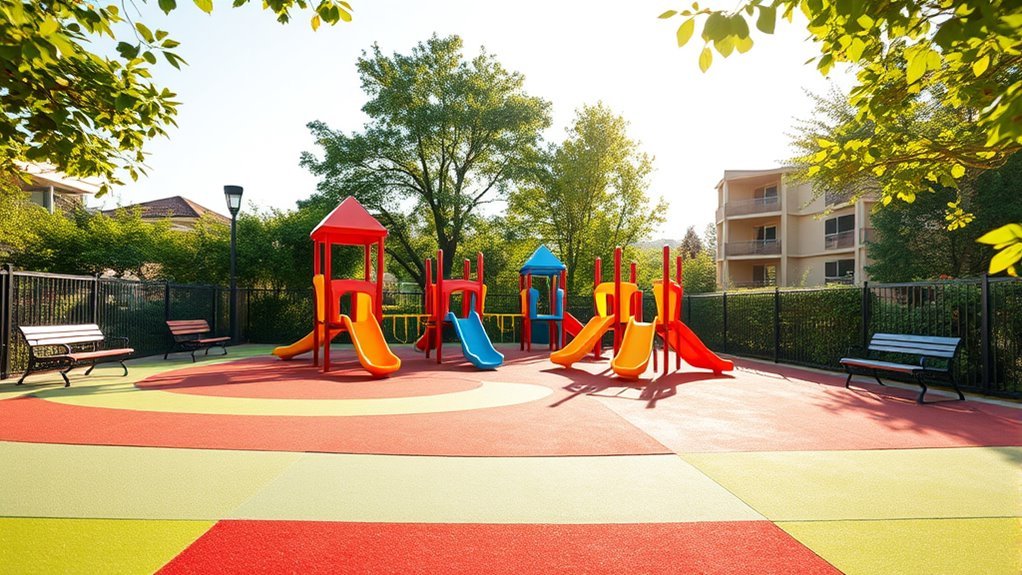
When you design a safe play area, you need to include impact-absorbing surfaces like rubber mulch or sand to cushion falls. You should guarantee all equipment is secure, stable, and free from loose parts to prevent accidents.
Guardrails must have openings between 3½ and 9 inches to avoid entrapment. Separate play zones for children under five help maintain age-appropriate safety.
Regular inspections are vital to spot hazards such as sharp edges or tripping hazards. Stability of equipment and surfaces supports playground safety, reducing injury risks.
Supervision and Maintenance Practices
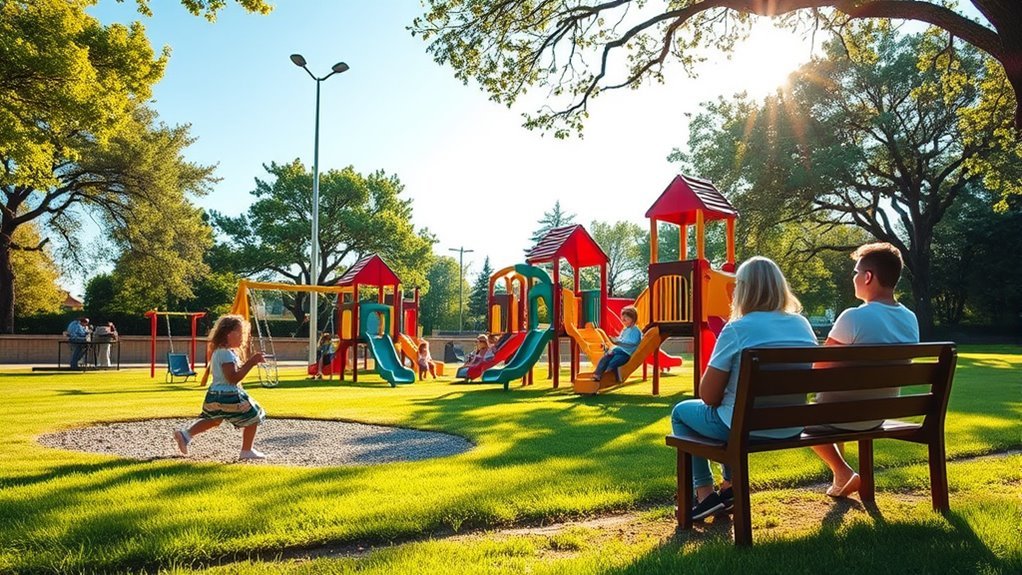
Although well-designed equipment lays the foundation for safety, continuous adult supervision guarantees children use the playground properly and stay out of harm’s way. You need to maintain constant visual contact to monitor behavior and prevent accidents.
Regular safety checks and maintenance of playground equipment help you spot hazards like loose bolts or sharp edges before they cause injury. Conduct thorough inspections of the play area, ensuring surfacing materials like rubber mulch remain intact to cushion falls.
Enforce age-appropriate rules and teach kids safe play habits to reduce risks further. Staff trained in first aid and emergency response can act swiftly if injuries occur, enhancing overall safety.
Frequently Asked Questions
What Are the 6 Areas of Risky Play?
The six areas of risky play are heights, speed, dangerous tools, near water, rough-and-tumble play, and exploring natural environments.
You should always supervise kids during these activities to keep them safe while they enjoy adventurous play. It’s all about finding that balance between fun and safety.
How Do You Ensure Children Play Safely?
You can reduce playground injuries by 30% by supervising kids closely and teaching safety rules like no roughhousing.
Regularly inspect equipment, make sure it’s age-appropriate, and encourage helmets to keep your children safe while they play. It really helps to stay involved and remind them about safety now and then.
What Is the 3 3 3 Rule for Kids?
The 3 3 3 rule means you should let kids play at least 3 minutes away from traffic, for 3 hours daily, while you supervise them closely.
This keeps playtime safe, healthy, and injury-free. It’s a simple way to make sure kids are having fun without unnecessary risks.
What Are Examples of Safe Places?
You know what they say, “Safety first.” You’ll find safe places like well-maintained playgrounds with soft surfaces, fenced parks, car-free zones, and indoor play centers—all designed to keep kids happy and protected while they play.
These spots aren’t just random; they’re carefully planned to make sure everyone has fun without worry. So next time you’re out looking for a safe hangout, keep these places in mind!
Conclusion
When you create safe play areas, you’re giving children the freedom to explore without worry. Remember, “an ounce of prevention is worth a pound of cure.”
By keeping these spaces well-maintained and supervised, you guarantee their safety and your peace of mind. So, stay vigilant and proactive—because when kids play safely, they grow happily and healthily.
You’ve got the power to make every playtime a safe adventure. Safe play areas are essential for children’s development, providing a secure environment where they can learn, have fun, and build confidence. Prioritizing safety means fewer accidents and more smiles. So, let’s commit to creating and maintaining these safe spaces where kids can enjoy their childhood to the fullest. After all, when children play safely, everyone benefits.