At What Age Do Cats Lose Baby Teeth?
You’ll notice your kitten starts losing baby teeth around 3 months old, which is a normal part of their growth. Usually, the process begins with the incisors. This teething phase lasts until about 6 to 9 months, as permanent teeth start pushing through underneath.
During this time, your kitten may chew more than usual, drool a bit, or paw at their mouth because of gum soreness. It’s pretty common and nothing to worry about, but keeping an eye on them helps.
Managing their discomfort and watching for any issues ensures healthy dental development.
If you want to help your kitten through this stage, there are simple ways to support them. Keep exploring to understand how to recognize the signs and provide the best care for your furry friend during this important time.
Key Takeaways
- Kittens start losing baby teeth around 12 weeks (3 months) of age. Baby teeth shedding usually begins with the incisors.
- Most kittens complete shedding by approximately 6 months old. But hey, some kittens might take up to 9 months to lose all their baby teeth.
- Losing baby teeth marks the start of permanent teeth development. So, it’s a sign that your kitten is growing up!
When Do Kittens Start Losing Their Baby Teeth?
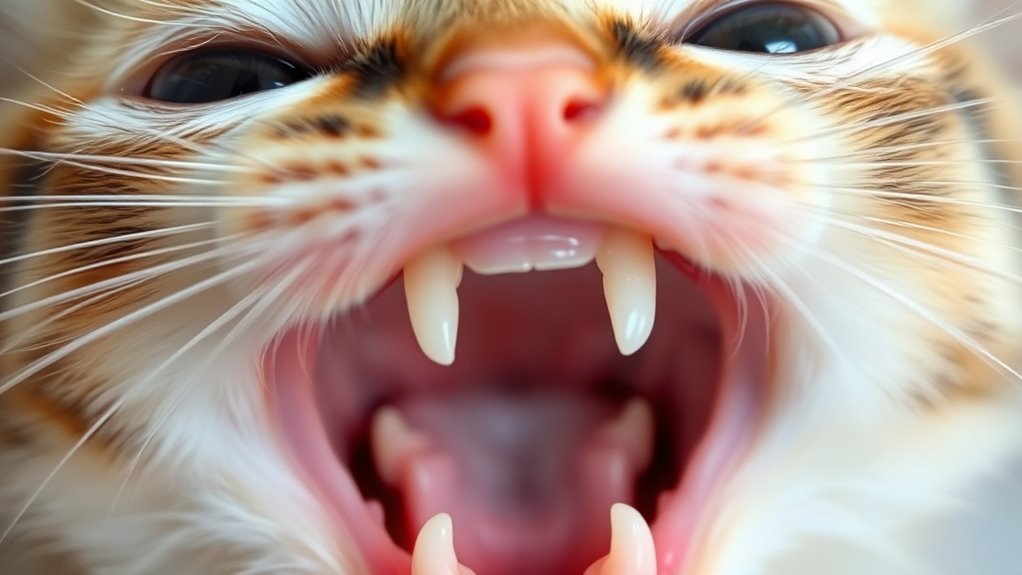
Although every kitten develops at their own pace, you’ll typically see them start losing their baby teeth around 12 weeks of age. This stage marks the beginning of teething, a vital part of their dental development.
Around three months, kittens begin to shed their deciduous teeth, usually starting with the incisors. As they lose these baby teeth, permanent teeth start to emerge underneath, gradually replacing the smaller ones.
This shedding process continues steadily, and most kittens have lost all their baby teeth by about six months old. However, some may take up to nine months to fully shed their deciduous teeth and develop a complete set of permanent teeth.
Monitoring this progression is important because retained baby teeth beyond six months can cause dental issues. Understanding when kittens start losing their baby teeth helps you anticipate changes and support their healthy dental development as they grow.
How to Recognize and Manage Kitten Teething Symptoms

When your kitten starts losing baby teeth around three months, you’ll likely notice signs like increased chewing, drooling, and pawing at their mouth. These common signs of teething signal that your kitten’s baby teeth fall out to make way for adult teeth.
Around three months, kittens may chew more and drool as baby teeth give way to adult ones.
You might spot missing baby teeth or find small swallowed teeth. Gum irritation and sore gums are typical but should improve with time.
To manage kitten teething symptoms, try this:
- Offer soft food to ease chewing discomfort.
- Provide teething toys to redirect chewing behavior safely.
- Gently check your kitten’s mouth for gum swelling or bleeding.
- Keep an eye on their behavior to ensure teething symptoms don’t worsen.
Frequently Asked Questions
Does It Hurt When Cats Lose Baby Teeth?
It usually doesn’t hurt when cats lose baby teeth because the process is gradual. You might notice mild discomfort or sensitivity, but it’s generally nothing to worry about.
That said, if your cat shows persistent pain or bleeding, you should get a vet involved. Better safe than sorry, right?
At What Age Are Kittens the Naughtiest?
You’ll find kittens the naughtiest between 8 and 16 weeks old when their energy peaks and teething discomfort makes them chew and scratch a lot.
After six months, they usually calm down and behave better.
It’s just part of growing up, really. They’re exploring the world and testing their limits!
At What Age Do Cats’ Teeth Start Going Bad?
Your cat’s teeth can start going bad as early as 1 to 2 years old if you don’t keep up with dental care.
Watch for bad breath, swollen gums, or difficulty eating. And make sure to schedule regular vet checkups.
Will My Kitten Stop Biting After Teething?
Yes, your kitten will likely stop biting as teething ends around six to seven months.
You can help by gently redirecting biting behavior and providing proper toys to soothe their gums during this phase.
It’s all about giving them the right outlets while they’re going through this teething stage. Just a little patience and some good toys will go a long way!
Conclusion
By the time your kitten is around 4 to 6 months old, they’ll start losing their baby teeth—did you know they lose about 26 tiny teeth during this phase? It’s a natural part of growing up, and while it might cause some fussiness, you can help by offering safe chew toys.
Understanding this helps you support your furry friend through teething, making the process smoother for both of you. Knowing at what age cats lose baby teeth lets you prepare and provide comfort during this stage.
So, when your kitten begins to lose those baby teeth, remember it’s a sign they’re growing up. With patience and the right care, you’ll help your cat move through teething comfortably and healthily.