Is Baby Breath Toxic to Cats and How Can You Keep Them Safe?
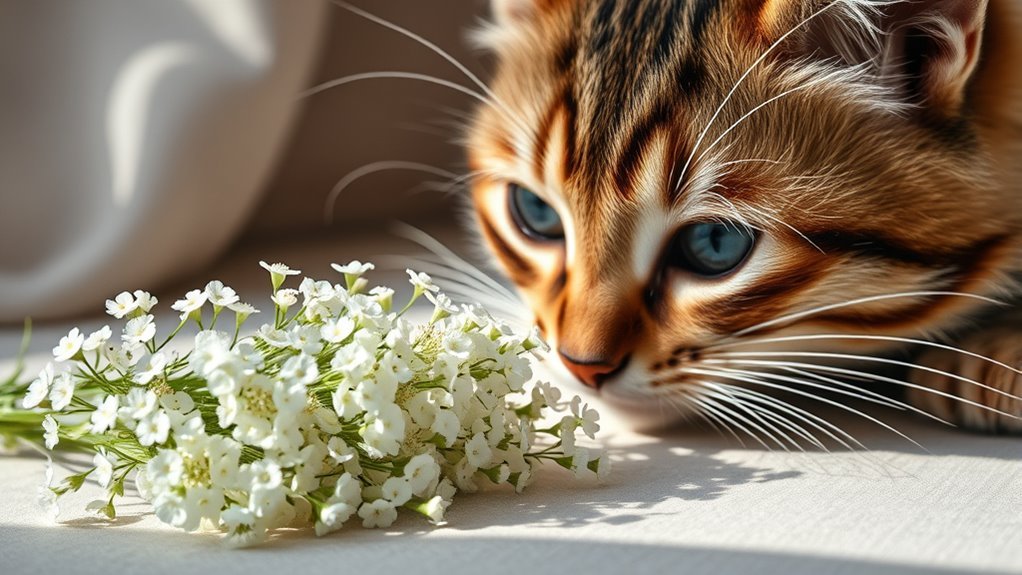
Yes, Baby’s Breath is toxic to your cat and can cause vomiting, diarrhea, and irritation if ingested or touched. It’s important to keep this common floral plant well out of your cat’s reach to prevent any accidental exposure.
Make sure to remove any dried blooms or sap quickly, as these can also pose a risk. Keep a close eye on your furry friend whenever they’re around floral arrangements that contain Baby’s Breath.
If you’re concerned about your cat’s safety, consider replacing Baby’s Breath with safer, non-toxic plants. Taking these precautions can help you avoid potential health risks and keep your feline friend happy and healthy.
There are some key symptoms and steps you’ll want to know to guarantee your cat stays safe, so stay alert and act quickly if you notice anything unusual.
Key Takeaways
- Baby’s Breath is toxic to cats. It can cause vomiting, diarrhea, hypersalivation, and gastrointestinal upset if they eat it.
- Even just skin contact with Baby’s Breath might lead to irritation, redness, and respiratory discomfort in your cat.
- It’s really important to spot symptoms early, like vomiting and lethargy, so you can get your vet involved quickly.
- To keep your cat safe, make sure to keep Baby’s Breath out of their reach. Also, remove any dried blooms and sap as soon as you can.
- A good idea is to swap Baby’s Breath for non-toxic plants. And always keep an eye on your cats when they’re around any flower arrangements.
Symptoms of Baby’s Breath Poisoning in Cats
How can you tell if your cat is suffering from Baby’s Breath poisoning? Watch closely for symptoms like vomiting, diarrhea, and loss of appetite. These usually show up within a few hours of ingestion.
These signs often indicate gastrointestinal upset, so don’t ignore them. You might also notice hypersalivation or abdominal discomfort as early warnings.
Watch for hypersalivation or abdominal discomfort—early signs of gastrointestinal upset not to be ignored.
If your cat has severe exposure, dehydration and lethargy can follow. These symptoms signal more serious poisoning.
Besides ingestion, contact with Baby’s Breath sap can cause contact dermatitis. This leads to skin irritation.
Dried blooms may irritate your cat’s eyes, nose, or sinuses, adding to their discomfort.
Recognizing these symptoms early is crucial. If you spot vomiting, diarrhea, loss of appetite, hypersalivation, skin irritation, or lethargy after your cat’s exposure to Baby’s Breath, seek veterinary care promptly.
Timely attention can prevent complications and help your cat recover quickly. Don’t wait if you notice anything unusual!
How to Protect Your Cat From Baby’s Breath
While Baby’s Breath can add charm to your home, you need to keep it well out of your cat’s reach to prevent harmful ingestion and contact irritation. Since Baby’s Breath is one of the toxic plants that can cause gastrointestinal irritation, including vomiting and diarrhea, it’s vital to practice pet-proofing around floral arrangements.
Make sure to monitor your cat closely, especially if they tend to nibble on plants. Remove dried blooms and any plant sap quickly to avoid contact dermatitis or eye irritation.
It’s important to recognize the symptoms of poisoning like lethargy, vomiting, and loss of appetite. If you notice these signs, seek veterinary help immediately.
For improved pet safety, consider replacing Baby’s Breath with safe alternatives in your bouquets and decorations. Taking these steps minimizes the risk of cat poisoning from plant ingestion and guarantees your feline friend stays healthy and protected from toxic plants.
Frequently Asked Questions
Is Baby’s Breath Safe for Cats to Smell?
Baby’s Breath is generally safe for your cat to smell in small amounts. But you shouldn’t let them get too close or inhale dust from dried flowers.
That’s because it might cause respiratory irritation or discomfort. So, it’s better to be cautious and keep an eye on your furry friend around these flowers.
What Is the Silent Killer of Cats?
The silent killer of cats is toxins like lilies, sneaking in like a thief in the night.
You can’t see symptoms early, so you’ve got to act fast and keep toxic plants far from your feline friend.
Can Cats Be Near Gypsophila?
You shouldn’t let your cat be near gypsophila because it can irritate their stomach and skin.
Keep the plant out of reach, watch your cat closely, and contact your vet if they show any symptoms.
How Do Vets Treat Baby’s Breath Poisoning in Cats?
You’ll see vets induce vomiting, give activated charcoal, and provide IV fluids. They also monitor for irritation and apply topical meds.
In severe cases, they’ll hospitalize your cat. They use anti-nausea drugs and supportive care to keep your cat safe and healthy.
Conclusion
Just like a modern-day Medusa’s gaze can turn you to stone, Baby’s Breath might silently harm your curious cat. You don’t need to be a mythic hero to safeguard your feline friend—simply keep these delicate blooms out of reach and watch for any strange symptoms.
By staying vigilant, you can guarantee your cat enjoys a safe, toxin-free environment. Keeping Baby’s Breath away from your pet turns your home into a sanctuary rather than a danger zone. Remember, protecting your cat from toxic plants like Baby’s Breath is key to their health and happiness.