What Is a Baby Goat Called?
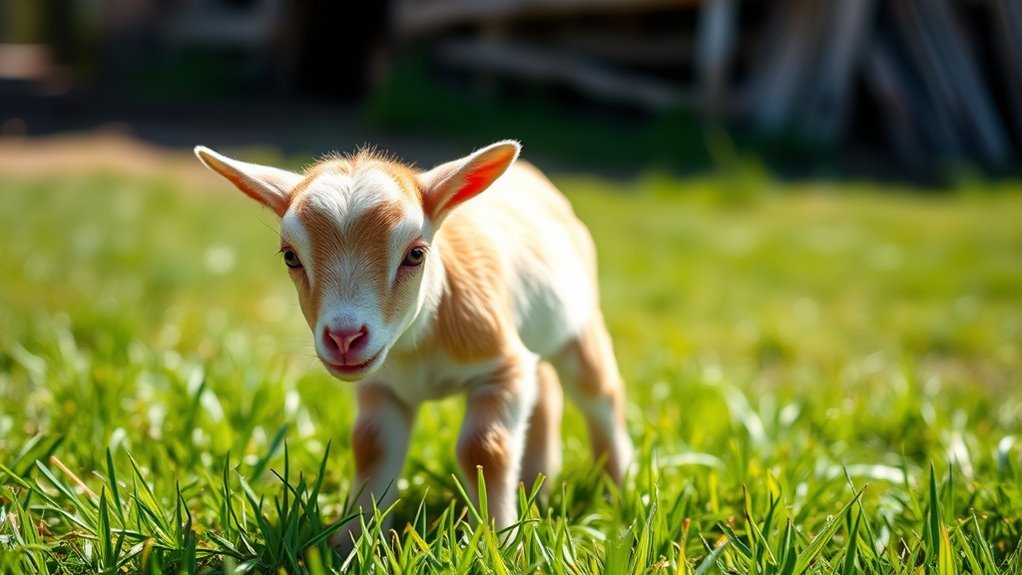
You call a baby goat a “kid,” a term used for centuries to clearly identify young goats from birth until they’re weaned, usually around 3 to 4 months old. Kids are playful, curious little animals that are a joy to watch. They’re known for their energetic hops and boundless energy.
Kids are able to stand and nurse within hours after birth, so they need immediate access to their mother’s milk for proper growth. This early nursing is crucial for their health and development.
Recognizing and caring for them well guarantees their health.
Keep exploring to better understand how to spot and care for these playful little animals. Learning the basics about baby goats helps you provide the best environment for them to thrive. It’s all about giving these kids the attention and care they deserve.
Key Takeaways
- A baby goat is called a “kid.” This term has been used for centuries and comes from Old Norse or Old English origins.
- “Kid” means a young goat from birth until it’s weaned, usually around 3 to 4 months old.
- Using this word helps farmers and animal caretakers tell young goats apart from adults.
- Newborn kids are pretty amazing—they can stand up and nurse just hours after being born.
- Also, “kid” is a casual way to refer to human children, probably because baby goats are so playful and lively.
What Is a Baby Goat Called and Why We Use the Term “Kid
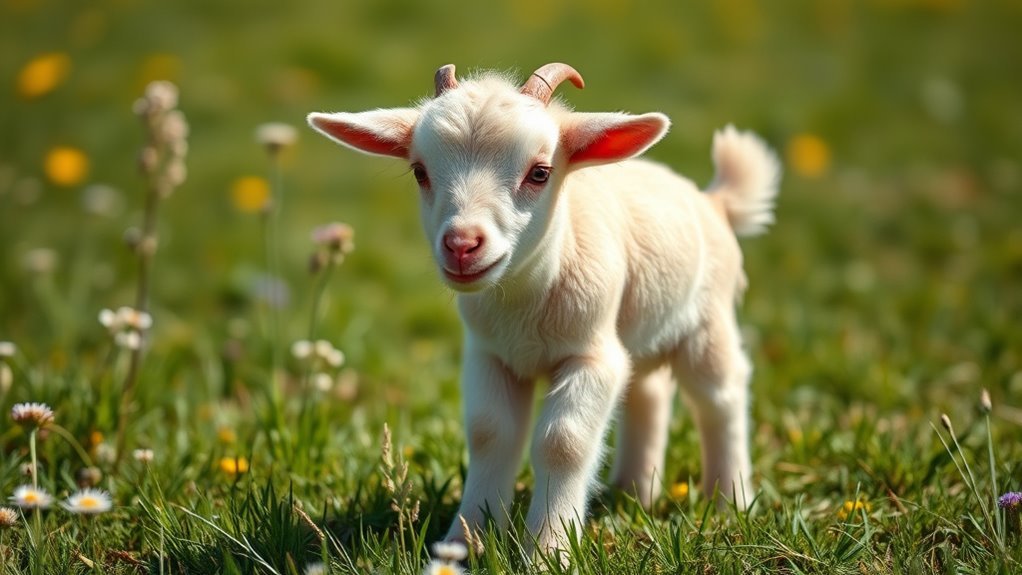
Although you might hear various names for young animals, a baby goat is specifically called a “kid.” This term has been used for centuries and likely comes from Old Norse or Old English words for young animals.
When you hear “kid,” it refers to a baby goat from birth until it’s weaned, usually around 3 to 4 months old. You’ll find the word “kid” commonly used in farming and animal husbandry to clearly distinguish a baby goat from an adult goat.
Fascinatingly, the term “kid” is also used informally for human children, probably because of the playful, youthful nature of baby goats. Knowing the correct term helps you communicate clearly whether you’re talking about livestock or just using the word in everyday life.
How to Recognize Baby Goats and Care for Their Needs
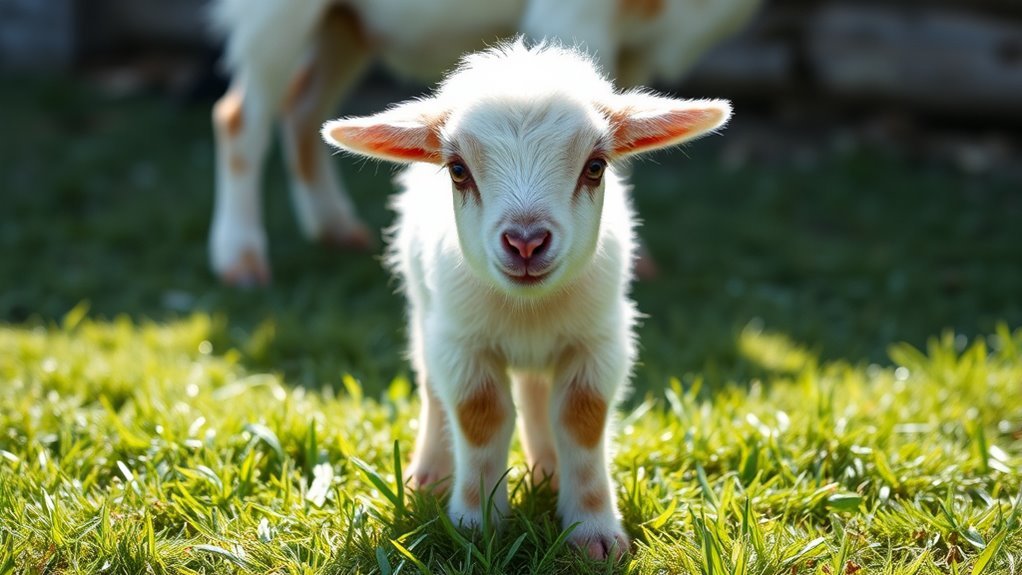
When you want to care for baby goats properly, it helps to recognize them early and understand their needs. Baby goats, or kids, are typically born after about 150 days of gestation.
You’ll notice newborn kids can stand and nurse within hours, so make sure they have immediate access to their mother’s milk. Recognizing a pregnant doe, which is a female farm animal, means spotting an enlarged abdomen and filling udders before kidding.
To care for these young goats, provide a warm, dry, and safe environment. Proper nutrition is super important, and regular health checks will help you catch any issues early on.
Don’t forget to arrange timely veterinary care. Also, encourage social interaction among the kids to support healthy growth.
Frequently Asked Questions
What Is the Slang for a Baby Goat?
The slang for a baby goat is “kid.” You’ll hear farmers and animal lovers use it affectionately.
It’s a casual way to talk about young goats, and you’ll often see it pop up in everyday conversations too. Pretty cool, right?
How Do You Say Baby Goat?
You say “kid” when referring to a baby goat. It’s the most common term you’ll hear worldwide.
If you want to be specific, you can say “doeling” for a female or “buckling” for a male kid. Easy, right?
What Is a Female Goat Called?
You’ll find female goats famously called does or nanny goats. If she’s a young, unbred gal, she’s a doeling.
When she’s recently kidded, you might hear freshened doe. These terms keep goat gatherings clear!
Why Do We Call Human Children Kids?
You call human children “kids” because the term originally described young goats, known for their playful energy. People found this similar to children’s behavior.
Over time, it became a popular, informal way to refer to kids. It just stuck!
Conclusion
Now that you know a baby goat is called a “kid,” caring for one feels like nurturing a tiny spark of wild joy. These playful bundles of energy teach you patience and love in leaps and bounds.
As you watch them grow, remember, you’re not just raising a goat—you’re tending to a lively story unfolding before your eyes, full of curiosity and bright beginnings. Embrace the adventure; the kid’s spirit is contagious.
Taking care of a kid means embracing their playful nature and endless curiosity. They bring so much joy and liveliness to your life, making every day an exciting chapter. So, whether you’re new to goats or have been around them for years, raising a baby goat is truly a rewarding experience full of love, growth, and fun.