What Do Baby Termites Look Like in Pictures
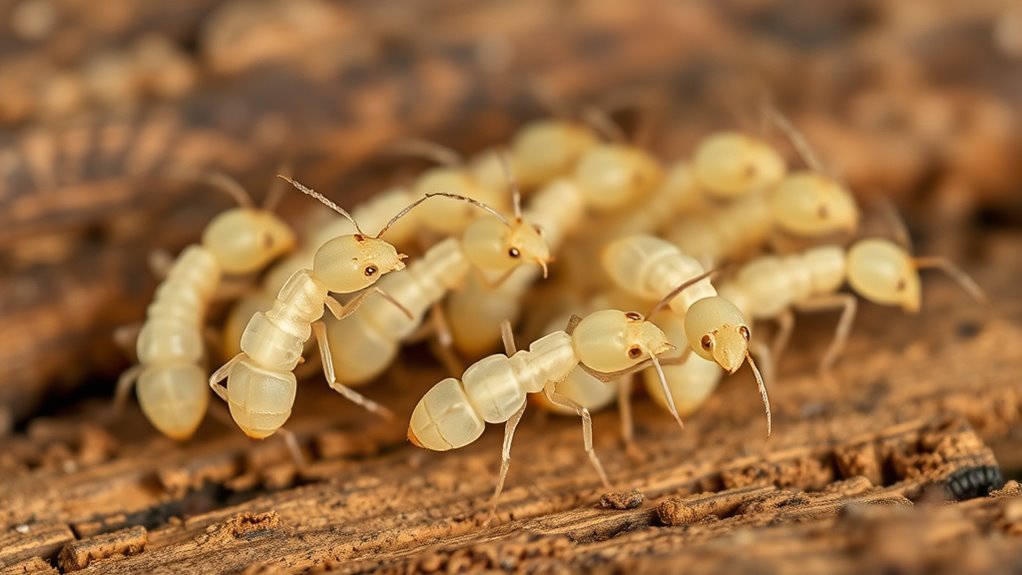
You’ll spot baby termites by their tiny, soft, pale, and translucent bodies that look like miniature adult termites without wings or dark heads. These little guys are about 1/10 inch long with oval, delicate shapes, making them really hard to see.
Usually, you’ll find them near hatch sites, inside moist wood, or hidden in wall voids and crawl spaces. If you keep an eye out, you’ll start to notice where they like to hide and how you can catch the early signs of an infestation.
It’s all about knowing what to look for—once you do, spotting baby termites becomes a lot easier. So, keep looking closely, and you’ll get a good idea of their hiding spots before things get out of hand.
Key Takeaways
- Baby termites are tiny, about 1/10 inch long, with soft, oval-shaped, pale, and translucent bodies. They don’t have wings or dark heads, which makes their bodies look see-through and delicate.
- Their body structure looks like miniature adult termites, with clear head, thorax, and abdomen segments. You’ll often find baby termites near hatch sites, inside moist wood, or within termite galleries in walls and crawl spaces.
- If you’re dealing with an early infestation, watch out for tiny tunnels in wood and clusters of small, pale insects hiding in moist areas. These little signs can help you catch a problem before it gets worse.
How to Identify Baby Termites: Key Features and Signs
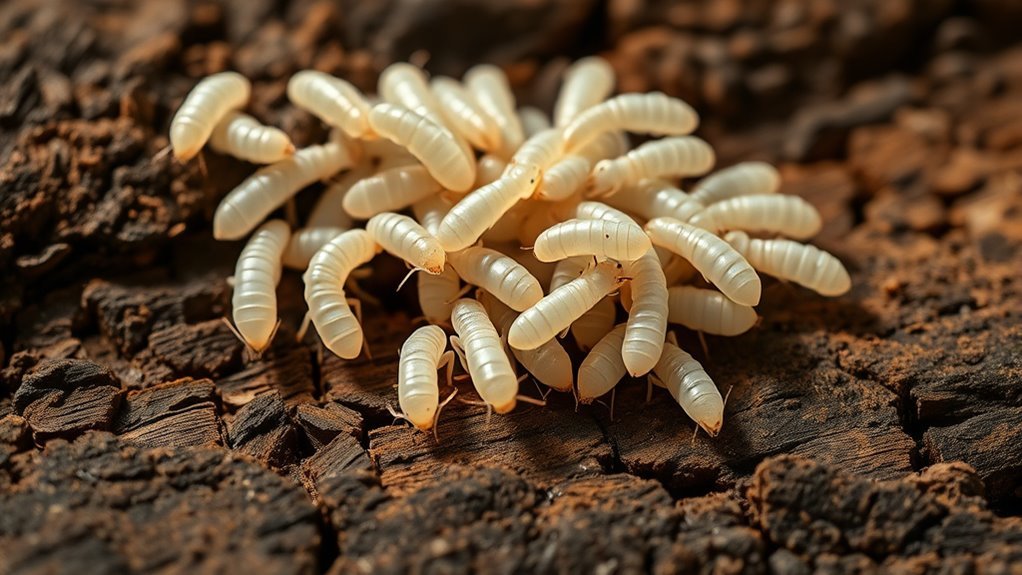
Although baby termites are tiny—about 1/10 inch long—you can identify them by their soft, oval-shaped, pale bodies and translucent appearance. Their termite appearance lacks wings and darker heads, making their soft bodies look almost see-through.
Baby termites are tiny, soft-bodied, pale, and translucent, lacking wings and dark heads.
When you focus on termite identification, look for their distinct head, thorax, and abdomen, which resemble miniature adult termites. Baby termites usually stay close to their hatch sites, often nestled within termite galleries or moist wood. These locations provide shelter and the right environment for them to thrive.
Spotting termite signs requires a close inspection since their pale color and small size make them easy to overlook. You’ll want to examine wood carefully for tiny tunnels or galleries, which often indicate the presence of these young termites.
Recognizing these key features helps you catch an infestation early before it spreads further into your property. So, keep an eye out and don’t ignore even small signs—they could be telling you there’s a termite problem nearby.
Where Baby Termites Hide: Common Habitats and Early Detection
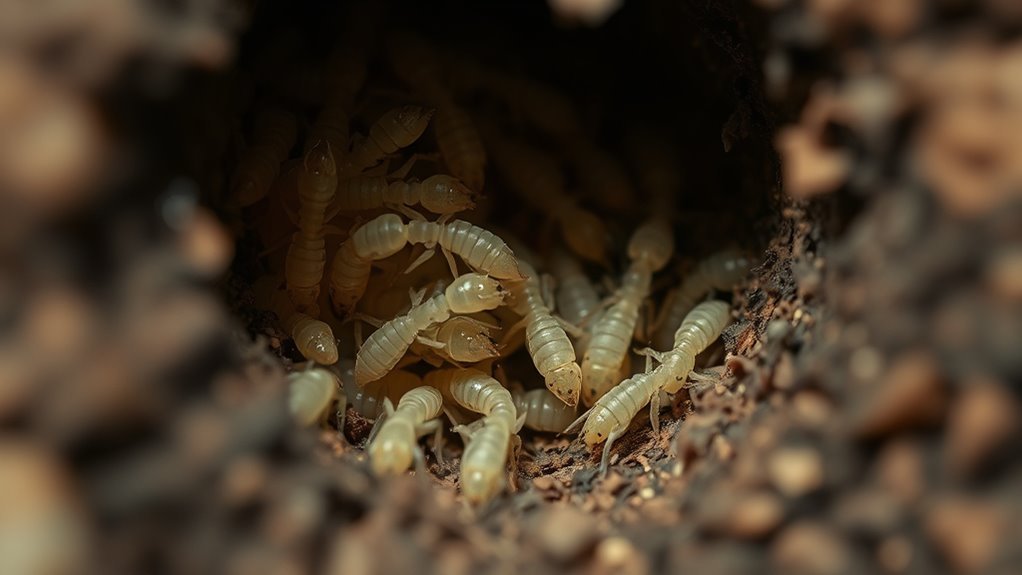
Now that you know how to spot baby termites by their soft, pale bodies and tiny size, it’s important to understand where they tend to hide. Baby termites prefer hidden habitats like moist wood and underground nests near the colony’s center.
They thrive inside termite galleries carved into infested wall voids, crawl spaces, and attic beams. These locations shield their soft bodies, making early detection tough. Outdoors, rotted logs and firewood can also harbor young termites.
To help you focus your inspection, here’s a quick reference table:
| Habitat Type | Typical Location | Why Baby Termites Hide Here |
|---|---|---|
| Moist Wood | Inside termite galleries | Provides moisture and food source |
| Infested Wall Voids | Within walls and beams | Offers protection and warmth |
| Underground Nests | Near colony’s center | Keeps them close to queen and workers |
| Outdoor Wood | Rotted logs, stumps | Initial shelter and food |
Knowing these spots really helps with early detection and control. So keep an eye out in these areas during your inspections!
Frequently Asked Questions
How Can I Identify Baby Termites?
You can identify baby termites by looking for tiny, pale, soft-bodied insects about 1/10 inch long. They lack wings and dark heads, have segmented bodies, and move slowly near their hatch site.
Often, you’ll need to take a close look to spot them since they’re so small and easy to miss. Keep an eye out for these subtle signs if you suspect termites nearby.
What Bug Can Be Mistaken for Termites?
You might think those tiny bugs are termites, but baby ants and cockroaches often get mistaken for them.
Look closely—ants have legs and curved bodies, while cockroaches are darker and more segmented than termite nymphs.
What Do Just Hatched Termites Look Like?
Just hatched termites are tiny, about 1/10 inch long, pale white or cream-colored, with soft, oval-shaped, translucent bodies. You’ll notice their slow movement and simple head, thorax, and abdomen.
They don’t have wings or dark coloring yet. Honestly, they look pretty delicate at this stage. It’s kind of fascinating to see how small and simple they start out!
How Small Can Baby Termites Be?
Baby termites can be as small as 1/10 inch (2.5 mm), so tiny you’d barely spot them without close inspection.
You’ll need a magnifying glass to see their soft, pale, oval-shaped bodies clearly.
They’re really delicate little creatures when you get up close!
Conclusion
Now that you know what baby termites look like and where they hide, you can spot them early and act fast. While they’re tiny and seemingly harmless, these little creatures can cause big damage if left unnoticed.
Don’t let their size fool you—what appears small and insignificant can quickly turn into a costly problem. Stay vigilant, and you’ll protect your home before those hidden threats multiply.
Recognizing baby termites in pictures helps you understand what to look for in real life. Early detection is key to preventing serious termite damage. So keep an eye out for these tiny pests, and take action right away if you suspect an infestation. Your home’s safety depends on spotting baby termites early and stopping them before they cause harm.