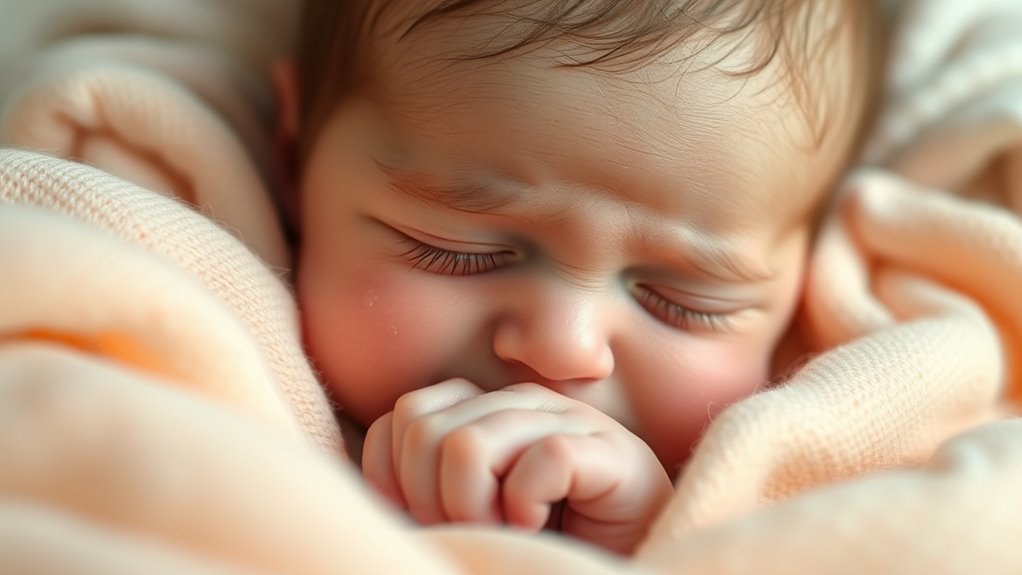
Why Does My Baby Cry in Her Sleep?
Your baby cries in her sleep because her immature nervous system causes frequent shifts between light and deep sleep stages. These shifts lead to brief awakenings that often come with fussing or crying.
Discomfort and overtiredness make these changes harder for her, increasing stress and disrupting smooth sleep. When she’s uncomfortable or overly tired, it’s tougher for her to settle back down.
Short naps and inconsistent routines can make things worse, making her more likely to cry while sleeping.
Sticking to a regular schedule and helping her get enough rest can really make a difference.
Understanding these factors can help you support her restful sleep better and reduce nighttime fussiness. It’s all about knowing why she wakes and what she needs to feel calm and secure during sleep.
Key Takeaways
- Babies often cry briefly during sleep because their nervous systems are still immature. This causes them to partially wake up between different sleep stages.
- Their sleep cycles are shorter and lighter, so they tend to fuss or cry for a little bit during these transitions.
- When babies feel uncomfortable or are overtired, their stress hormone levels go up. This makes it harder for them to sleep well and can lead to more crying.
- If their sleep routines aren’t consistent or the environment isn’t great, their nervous system gets even more sensitive. That can make the crying during sleep worse.
- To help reduce crying, try to keep naps regular and the sleep space calm. Also, make sure wake times are right for their age. This really helps minimize those sleep-time cries.
Why Do Babies Cry During Sleep Cycle Transitions?

Although it can be unsettling to hear your baby cry during sleep, this often happens because their shorter, lighter sleep cycles cause frequent shifts between deep and light sleep. During these sleep cycle changes, your infant moves through various sleep stages more often than adults do.
These sleep cycle shifts trigger partial arousals, which may lead to brief baby crying or fussing. Around 2–4 months, you might notice increased crying during these moments due to nervous system immaturity. This immaturity makes your baby more sensitive to sleep disturbances during light sleep phases.
Developmental sleep patterns play a big role here, as your baby’s nervous system is still maturing. Facial twitches, eye movements, and soft cries are common signs of these partial arousals.
How Discomfort and Overtiredness Trigger Crying in Sleep
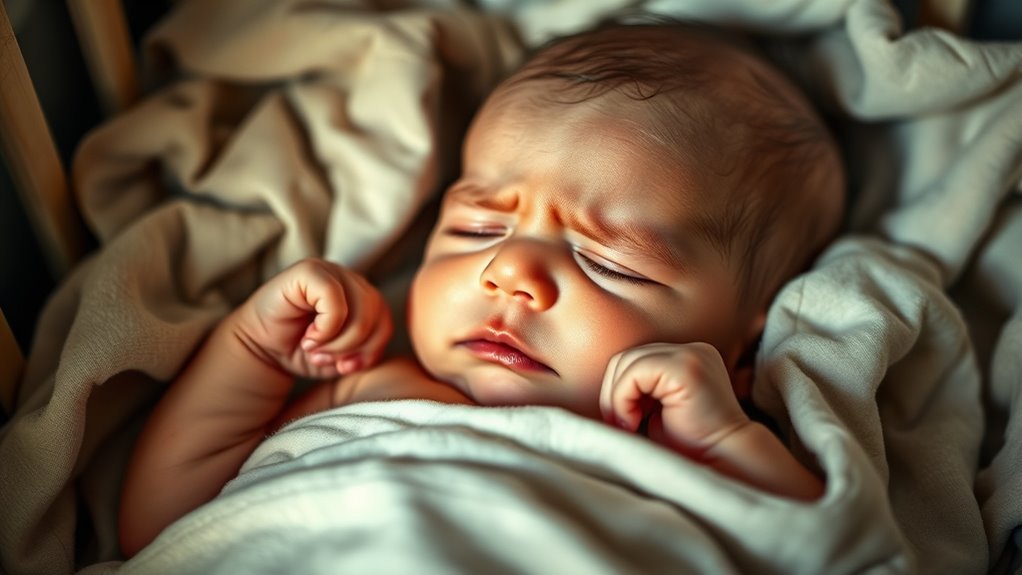
When your baby feels discomfort or becomes overtired, their chances of crying during sleep increase considerably. Overtiredness raises fatigue and stress hormones like cortisol, which disrupt the nervous system’s ability to smoothly shift between sleep cycles.
This disruption often leads to crying in sleep, as your baby struggles to settle. Short or irregular naps and late bedtimes can make this worse, making it harder for your baby to respond to sleep cues and increasing sleep disturbances.
Managing wake times carefully—following age-appropriate windows—and creating a calm sleep environment can really help prevent overtiredness. Paying attention to consistent sleep training and ensuring sufficient daytime sleep reduces stress on your baby’s nervous system, minimizing crying episodes.
Frequently Asked Questions
Why Do Babies Suddenly Cry in Their Sleep?
Babies suddenly cry in their sleep because their sleep cycles shift, causing brief awakenings. You might notice this when they’re uncomfortable, teething, or processing new skills.
But don’t worry, it’s usually normal and doesn’t need your concern. It’s just their way of reacting to changes while they sleep.
When to Worry About Baby Crying in Sleep?
When your baby’s cries become a relentless storm—lasting hours or paired with fever, vomiting, or breathing trouble—you shouldn’t wait.
Trust your instincts and seek medical help to guarantee their safety and comfort. It’s always better to be safe than sorry.
How Do I Stop My Baby From Crying in His Sleep?
You can stop your baby from crying in sleep by consistently using gentle, calming methods like soft patting or singing. Stick to a predictable bedtime routine, and stay patient.
Over time, your baby will learn to self-soothe. It might take a little while, but it’s totally worth it!
Should You Wake a Baby Crying in Their Sleep?
No, you shouldn’t snap awake a sleeping, sobbing baby. Let little lullabies lull them longer; waking worsens worries and weakens restful rhythms.
Watch wisely, wait patiently, and intervene only if illness or intense distress insists.
Conclusion
You might wonder why your baby cries in her sleep, but it’s often just a natural part of her sleep cycle shifts or discomfort from being overtired.
Remember, these cries are her way of communicating needs or adjusting to changes. So, instead of worrying, try to soothe her gently and create a calm environment.
After all, isn’t helping her feel safe and comfortable what matters most during these restless moments? Understanding why babies cry in their sleep can help you respond with patience and care, making bedtime a little easier for both of you.
By recognizing that these nighttime cries are normal, you can focus on comforting your baby and supporting healthy sleep habits, ensuring she feels secure and loved even when she’s unsettled.