When Do Babies Start Crawling: A How-To Guide for Parents
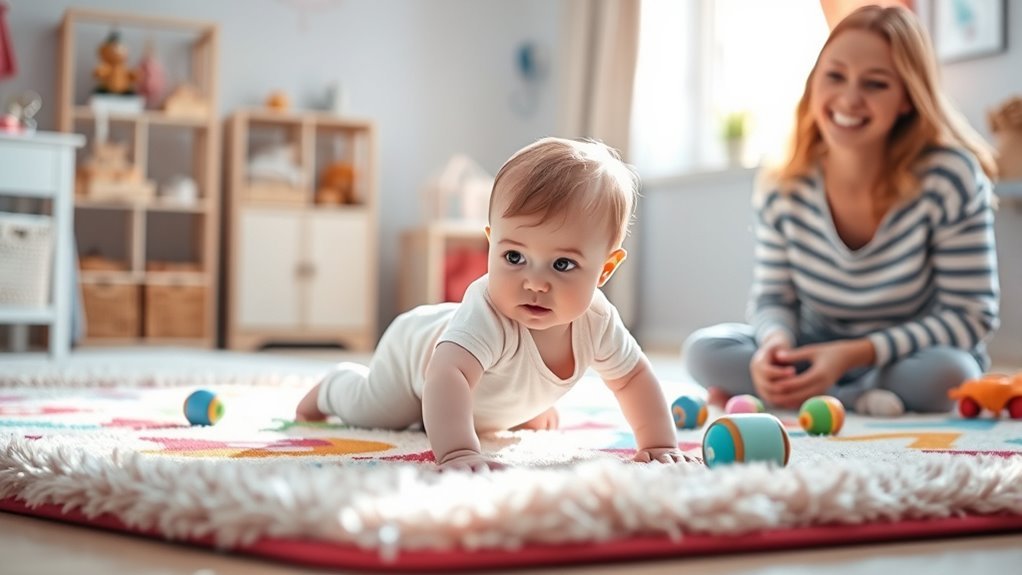
Babies usually start crawling between 6 and 10 months, though some may begin as early as 5 or 6 months with belly crawling. Crawling is an exciting milestone in your baby’s development, helping them build strength and coordination.
You might notice different styles like army crawl or hands-and-knees crawling, and it’s totally normal if your little one skips crawling altogether.
To support this stage, give plenty of supervised tummy time and create a safe space for your baby to explore. Encourage reaching for toys just out of reach to motivate movement.
These simple tips can make a big difference and help boost your baby’s crawling journey successfully. Just remember, every baby is unique, so enjoy watching them grow at their own pace!
Key Takeaways
- Most babies start crawling between 6 and 10 months, with some beginning as early as 5 or 6 months.
- Encourage crawling by providing regular supervised tummy time to strengthen muscles and improve motor skills.
- Create a safe, obstacle-free play area and place toys just out of reach to motivate crawling practice.
- Recognize that variations like army crawling or skipping crawling entirely are normal and reflect individual development.
- Be patient and use positive reinforcement to support your baby’s unique crawling timeline and build their confidence.
When Do Babies Usually Start Crawling? Key Age Ranges and Milestones

Although every baby develops at their own pace, most start crawling between 6 and 10 months. This age of crawling can vary, with some early crawling beginning as soon as 5 or 6 months, often seen as belly crawling.
Understanding crawling milestones helps you track your baby’s progress in gross motor skills and overall baby development. Tummy time plays an essential role in strengthening muscles needed for crawling and other developmental milestones.
Tracking crawling milestones reveals your baby’s growth, with tummy time crucial for building essential muscle strength.
You might notice different crawling types, such as army crawling or the classic hands-and-knees method. It’s also important to remember that some babies skip crawling altogether, moving straight to standing or walking.
This skipping crawling phase is normal and doesn’t necessarily indicate delays. Watching your baby hit these baby milestones gives you insights into their growth, but keep in mind that every infant’s timeline is unique.
Staying aware of these key age ranges and crawling milestones helps you support your baby’s development confidently.
How to Encourage Your Baby’s Crawling: Tips and Support Strategies

When you encourage your baby’s crawling, you help build their strength and coordination while boosting their confidence. Start with regular supervised tummy time to strengthen baby muscles in the neck, shoulders, and arms—key for crawling.
Create a safe play area free from obstacles where your baby can explore comfortably. Place toys just out of reach to spark baby motivation and promote crawling practice.
Get down on the floor and demonstrate crawling yourself to encourage imitation, making the activity more engaging. Use positive reinforcement by celebrating small milestones, which helps your baby associate crawling with success and fun.
Remember, crawling encouragement is about patience and consistent support while your baby reaches developmental milestones. This approach nurtures baby exploration and builds the foundation for future mobility.
Frequently Asked Questions
At What Age Do Most Babies Learn How to Crawl?
Most babies start crawling between 6 and 10 months.
You’ll likely see your little one begin belly crawling around 5 or 6 months, then shift to hands-and-knees crawling closer to 8 or 9 months.
What Are Signs of High IQ in Babies?
Wondering how to spot a genius baby? You’ll notice early problem-solving, a big vocabulary, intense curiosity, sharp memory, and quick learning.
When your baby focuses deeply and connects ideas, you’re likely seeing signs of high IQ.
Is Crawling at 4 Months Early?
Yes, crawling at 4 months is early. You might see your baby scooting or pushing forward, showing strength and coordination, but full crawling usually develops closer to 8–9 months.
It’s pretty exciting to see those early moves! Just make sure you’re always keeping an eye on safety. And if you have any concerns, don’t hesitate to check with your pediatrician.
Is It Normal for a 3-Month-Old Baby to Be Trying to Crawl?
Only about 5% of babies show crawling attempts by 3 months, so it’s not typical.
If your baby’s trying, that’s impressive. But you should check with a pediatrician to make sure their development is on track.
Conclusion
Remember, most babies start crawling between 6 to 10 months, but 15% skip crawling altogether and go straight to walking. This shows every baby’s unique path to mobility.
You can encourage crawling by creating a safe, engaging space and spending plenty of tummy time with your little one. Stay patient and supportive—your baby will find their own rhythm.
Crawling is just one exciting step in their amazing development journey! Encouraging crawling helps build strength and coordination, setting the foundation for walking and other motor skills. So, keep providing tummy time and a safe environment to support your baby’s growth. Remember, every baby’s timeline is different, and whether they crawl or skip right to walking, they’re making incredible progress. Crawling is a wonderful milestone to celebrate on the road to your baby’s mobility and independence.